0000-00
Choosing the right Laminated wood processing equipment for transformer insulation requires more than comparing price or output. For technical evaluators, insulation accuracy, dimensional stability, machining consistency, and long-term reliability are the factors that truly affect transformer performance. This guide outlines the key criteria for assessing equipment so you can make a practical, data-driven decision for high-precision insulation component manufacturing.
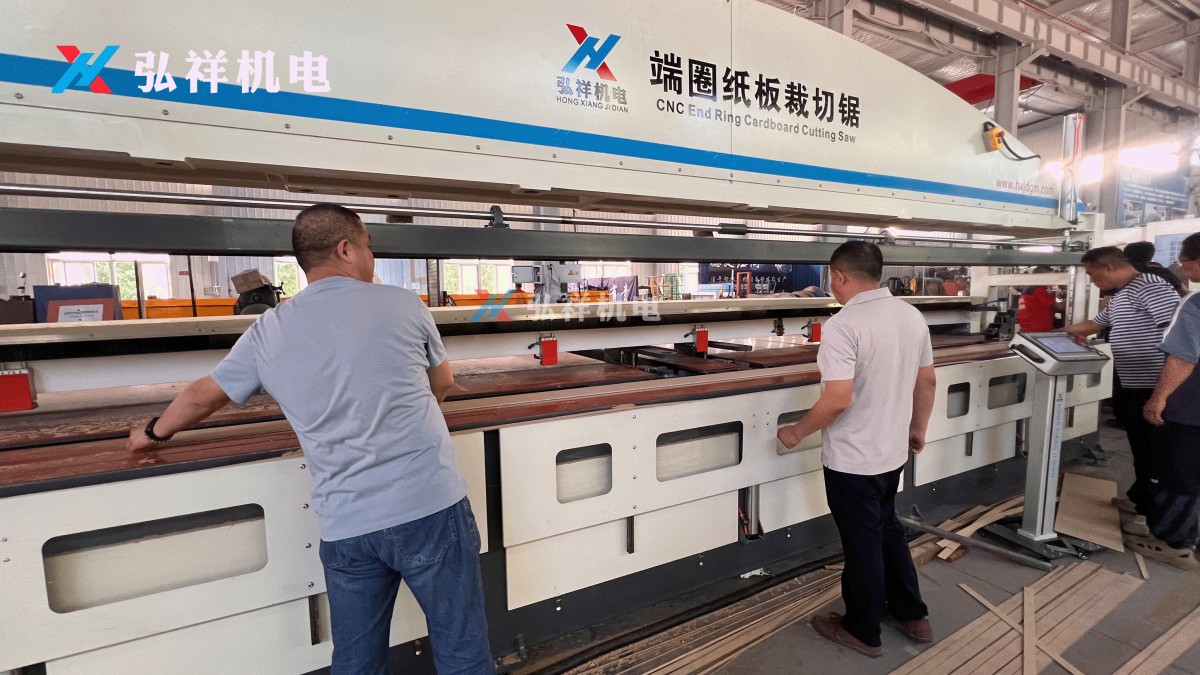
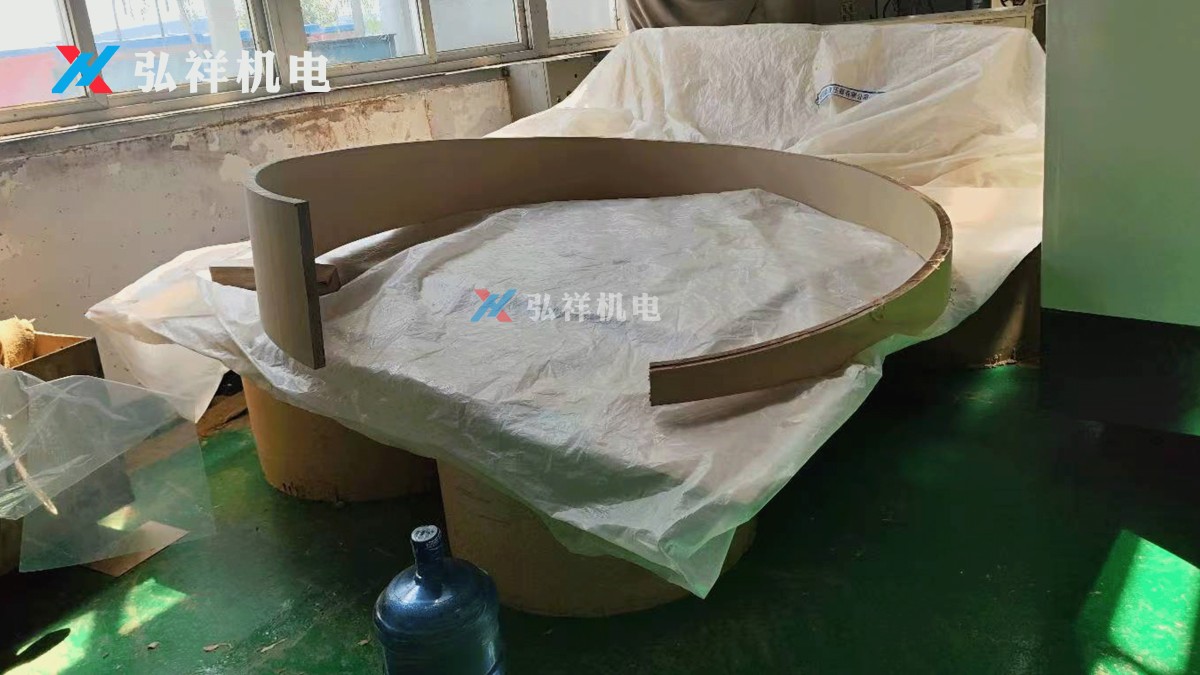
Why insulation accuracy has become a strategic evaluation point
In transformer manufacturing, the role of laminated wood parts is changing. Buyers once focused mainly on throughput, basic dimensional tolerance, and purchase cost. Today, technical evaluation teams are seeing a different pattern: higher voltage performance requirements, tighter assembly matching, shorter lead times, and more demanding consistency across batches. As a result, Laminated wood processing equipment for transformer insulation is no longer assessed only as a woodworking asset. It is increasingly treated as a precision process platform linked directly to insulation reliability and assembly quality.
This change is especially visible in operations that process insulating laminated wood, insulating board, and related transformer insulation components. The market is moving toward smaller error windows, better process traceability, and equipment that can maintain stable accuracy under continuous production. Technical evaluators therefore need to compare not just what a machine can cut, drill, or mill, but how repeatably it can do so when material properties vary, humidity shifts, and production schedules tighten.
For companies serving global transformer manufacturers, this trend also affects export competitiveness. Equipment capability now influences whether a supplier can meet the quality expectations of customers in Southeast Asia, South America, India, Pakistan, Russia, and other markets where transformer projects are becoming more specialized and time-sensitive.
The strongest market signals behind equipment comparison today
Several industry signals explain why comparison standards for Laminated wood processing equipment for transformer insulation are rising. First, transformer manufacturers increasingly want stable insulation behavior across entire production lots, not just compliance on sample pieces. Second, machining departments are under pressure to reduce manual fitting during assembly. Third, labor structures are changing, which means equipment must depend less on operator intuition and more on built-in process control.
Another important signal is the integration of upstream and downstream processes. Equipment is now expected to fit into broader manufacturing systems that include CAD data, nesting, tool management, inspection routines, and after-sales training. This is why machine tool buyers are paying closer attention to software compatibility, servo stability, spindle quality, and compensation logic rather than evaluating machines as isolated units.
What technical evaluators should compare beyond advertised tolerance
The most common mistake in comparing Laminated wood processing equipment for transformer insulation is relying too heavily on brochure tolerance values. Advertised positioning accuracy can be useful, but it does not reveal how the equipment performs under real conditions. Laminated insulating wood behaves differently from standard wood materials. Density variation, internal stress, moisture sensitivity, and layer structure can all affect machining results. Technical evaluation must therefore move from static specification review to process-based verification.
1. Structural rigidity and vibration control
For insulation parts, surface damage, edge breakout, and micro-deformation can reduce fit quality and downstream confidence. A rigid machine frame, stable spindle system, and controlled feed behavior help maintain machining integrity. Evaluators should ask whether the machine preserves tolerance not only in light cutting, but also during repeated operations over long production cycles.
2. Repeatability across batch production
One accurate sample is not enough. The real comparison point is whether the machine can hold the same dimensions over dozens or hundreds of parts. Repeatability affects assembly matching, scrap rate, and inspection workload. In transformer insulation manufacturing, stable repeatability often matters more than extreme peak accuracy achieved under ideal conditions.
3. Tooling compatibility and wear management
Machining laminated insulation materials creates distinct wear patterns. Equipment should support tool configurations suitable for cutting, slotting, drilling, and contour finishing without excessive setup disruption. A machine that lacks good tool management may begin with strong accuracy but lose consistency quickly as wear accumulates.
4. Workholding and part stability
Insulating laminated wood components often require secure positioning without introducing distortion. Poor clamping can produce dimensional variation that appears to be a machine issue but is really a fixture problem. Evaluators should compare fixture adaptability, vacuum or mechanical holding effectiveness, and suitability for small or irregular transformer insulation parts.
5. Control system intelligence
As production teams face labor changes, machines with better control logic become more valuable. Program consistency, parameter management, error alarms, and compensation functions help reduce dependence on highly specialized operators. This is a major trend in machine tool equipment selection and should be part of any technical scoring model.
How changing production demands are reshaping the ideal equipment profile
The ideal Laminated wood processing equipment for transformer insulation is no longer defined by a single capability. Demand is shifting toward balanced equipment that combines precision, adaptability, maintainability, and process support. This reflects a broader manufacturing upgrade in the transformer supply chain, where suppliers are expected to respond quickly to custom designs while still maintaining quality discipline.
For example, technical evaluators are increasingly interested in whether a machine can handle both standard insulating parts and special-shaped components with minimal changeover. They also want to know whether after-sales support includes operator training, process optimization advice, and practical maintenance guidance. These concerns are not secondary. In many factories, actual output quality depends as much on implementation capability as on machine hardware.
Who is most affected by these shifts in comparison standards
The changing comparison logic for Laminated wood processing equipment for transformer insulation affects several roles. Technical evaluators are the most direct audience because they must convert production needs into measurable equipment criteria. But process engineers, quality teams, procurement managers, and transformer assembly departments are also affected.
For process engineers, more precise equipment can reduce setup uncertainty and improve programming confidence. For quality teams, stable machining lowers inspection burden and reduces corrective action frequency. For procurement, the challenge is to justify why a machine with stronger control systems or better service support may create more long-term value than a cheaper alternative. For assembly teams, the benefit appears in smoother fit-up, fewer rework cycles, and improved consistency of insulation part installation.
Companies like Gaomi Hongxiang Electromechanical Technology Co., Ltd., which combine R&D, design, production, sales, installation, training, and after-sales service, are well aligned with this shift because the market increasingly values integrated support around the machine, not just the machine itself.
A practical method to compare equipment for insulation accuracy
To make comparison more objective, technical evaluators should use a staged method. This helps separate marketing claims from production reality and gives cross-functional teams a shared basis for decision-making.
Stage 1: Define the insulation-critical dimensions
List the dimensions, slot positions, hole relationships, thickness controls, and edge requirements that affect transformer insulation function or assembly. Not every feature has the same importance. Comparison should focus on the features that create the highest quality risk.
Stage 2: Simulate real material conditions
Test with actual insulating laminated wood grades used in production. Material response can differ from generic demo stock. If possible, include multiple batches to observe how the machine handles variation.
Stage 3: Measure consistency, not just best-case output
Run repeated parts and track dimensional spread, edge quality, burr behavior, and setup drift over time. This reveals the real process capability of the Laminated wood processing equipment for transformer insulation.
Stage 4: Evaluate service and training readiness
Equipment accuracy on day one is only part of the decision. Ask whether the supplier can support installation, operator training, troubleshooting, and process tuning. For global customers, responsive service can protect production schedules and quality continuity.
Signals worth monitoring over the next purchasing cycle
Looking ahead, several signals will likely shape how technical teams compare transformer insulation machining equipment. One is the growing demand for digital process visibility, including easier parameter tracking and more structured machine data. Another is the continued movement toward multi-function equipment that can support diverse insulation part families without constant manual intervention.
A third signal is the stronger connection between machine selection and downstream quality cost. As transformer manufacturers become more sensitive to hidden process losses, buyers will increasingly compare equipment based on scrap reduction, rework avoidance, and assembly efficiency. This means a technically stronger machine may gain preference even if its purchase price is higher.
Finally, supplier capability will continue to matter. In the machine tool equipment sector, customers are placing greater value on manufacturers that can support custom manufacturing needs, special machine development, and practical production integration rather than offering only standard models.
Conclusion: compare for process confidence, not just machine specification
The comparison of Laminated wood processing equipment for transformer insulation is becoming more sophisticated because transformer manufacturing itself is becoming more demanding. The central change is clear: evaluation is shifting from simple equipment parameters to process confidence. Technical teams now need to judge whether a machine can deliver insulation accuracy consistently, adapt to real material behavior, reduce manual correction, and remain stable throughout long production cycles.
If your company wants to judge how these trends affect its own operation, focus on a few practical questions: Which insulation dimensions create the highest assembly risk? How much variation can your current process tolerate? Is your equipment comparison method testing repeatability under real production conditions? And does the supplier offer enough training, installation, and after-sales support to protect long-term performance?
Answering those questions will help technical evaluators move beyond basic procurement and toward a more reliable decision on Laminated wood processing equipment for transformer insulation—one that supports precision manufacturing, export readiness, and durable transformer quality.
NAVIGATION
MESSAGE
Request A Quote?