0000-00
High scrap rates in transformer insulation production often trace back to hidden flaws in Iron yoke spacer block processing equipment, from unstable feeding to inaccurate chamfering and cutting. For buyers and engineers evaluating a Transformer insulation parts processing equipment manufacturer in China, understanding how CNC Special-shaped Cutting Saw, Fully automatic double-end chamfering machine, and CNC Double-End Chamfering Machine performance affects quality is the first step toward reducing waste, improving consistency, and protecting overall production efficiency.
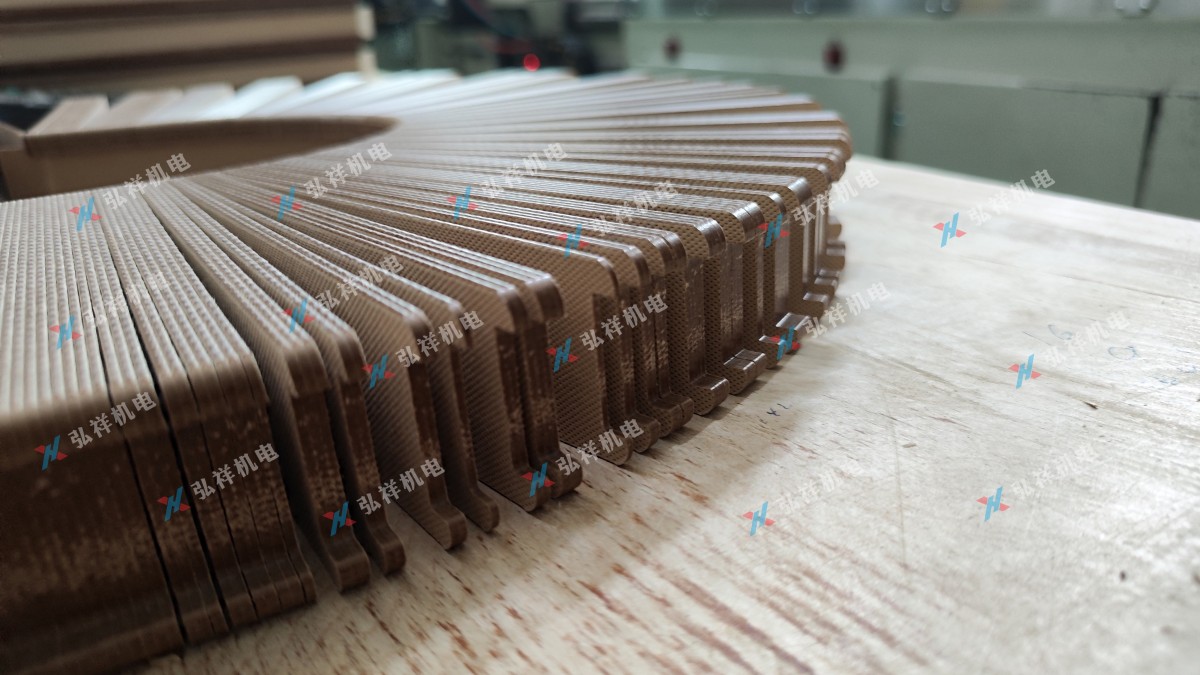
In transformer insulation part manufacturing, scrap is rarely caused by one obvious breakdown. More often, it comes from a chain of small machine defects: feed deviation of 0.5 mm to 1.5 mm, inconsistent blade wear, unstable clamping pressure, poor dust extraction, or chamfer angle drift over long production runs. These flaws directly affect iron yoke spacer block dimensional consistency, edge integrity, and assembly fit.
For operators, quality engineers, procurement teams, and business decision-makers, the real question is not only which machine can process a part, but which equipment setup can keep scrap under control across 8-hour, 12-hour, or multi-shift production. This article explains the equipment flaws that most often raise scrap rates, how to evaluate risk points during equipment selection, and what manufacturers such as Gaomi Hongxiang Electromechanical Technology Co., Ltd. should be expected to support in terms of process matching, training, installation, and after-sales service.
Why Iron Yoke Spacer Block Scrap Starts at the Equipment Level
Iron yoke spacer blocks are not large parts, but they place strict demands on machine stability. In transformer insulation production, even a slight size deviation can create assembly interference, pressure imbalance, or downstream rework. When edge chipping, non-uniform chamfering, or length inconsistency occurs repeatedly, the issue is usually rooted in machine design, setup repeatability, or maintenance condition rather than material alone.
A common misunderstanding is to judge machine quality only by cutting speed. In reality, stable feeding, clamping reliability, cutter alignment, and vibration control have a stronger influence on scrap rate than raw throughput. For example, increasing feed speed by 15% without proper support rigidity may lift burr incidence by 20% to 30% on laminated insulation materials and dense insulating board.
Another hidden source of waste is mismatch between part geometry and machine capability. A CNC Special-shaped Cutting Saw may handle profile complexity well, but if positioning logic is weak or fixture switching takes too long, small-batch mixed production becomes error-prone. Likewise, a Fully automatic double-end chamfering machine may appear efficient, yet poor synchronization between both ends can create angle inconsistency that is only discovered during final inspection.
In most transformer insulation workshops, scrap becomes commercially serious once it exceeds 3% to 5% on repeat orders, especially when material cost, labor, secondary inspection, and delayed assembly are included. At that point, equipment flaws affect not only quality control but also project scheduling, delivery reliability, and financial approval for future capital spending.
Typical machine-related causes of scrap
- Feed system fluctuation that causes length variation beyond the practical tolerance window, often around ±0.3 mm to ±1.0 mm depending on part type.
- Chamfer head misalignment that results in visible asymmetry, poor edge finish, or difficult transformer core assembly.
- Insufficient fixture pressure or uneven clamping surfaces that lead to movement, edge cracking, or corner deformation.
- Blade or tool wear monitoring that is missing or too manual, causing scrap spikes after 500 to 1,500 cycles.
- Dust accumulation around guides and sensors, which can reduce positioning accuracy during continuous operation.
These issues are especially relevant for manufacturers processing electrical insulating cardboard, insulating laminated wood, and shaped insulating parts, where the material behavior differs from metal and requires machine tuning for cutting force, hold-down pressure, and edge protection.
Key Flaws in Cutting and Chamfering Equipment That Raise Scrap Rates
The highest-risk flaws usually appear in three stages: feeding, cutting, and edge finishing. If the feed mechanism cannot hold a repeatable position, every later process is compromised. If the cutting unit produces vibration or thermal drift, the part may pass the first visual check but fail dimensionally. If the double-end chamfering station is not synchronized, opposite edges will not match, reducing fit quality and increasing rejection during assembly.
A CNC Double-End Chamfering Machine should be evaluated for axis repeatability, fixture centering, and consistency over at least 50 to 100 continuous pieces rather than only 3 sample parts. Buyers frequently accept a successful demonstration piece, but the real test is whether the machine maintains the same chamfer depth and angle after several production cycles, with normal dust and temperature changes on the shop floor.
Cutting saw problems also deserve close attention. In special-shaped cutting, scrap often rises when guide components wear faster than expected or when the blade path does not stay stable under variable thickness. This is common in mixed-product lines where operators shift between different iron yoke spacer block sizes and fail to recalibrate stop positions, support distances, or clamp settings every 20 to 30 part changes.
The table below summarizes common equipment flaws, their production symptoms, and likely scrap consequences in transformer insulation parts processing.
The key conclusion is that scrap is usually process-linked rather than isolated. A weak feed system can magnify a cutting problem, and a cutting defect can make chamfering look inaccurate even when the chamfer head itself is stable. That is why machine assessment should follow the full process route, not individual stations in isolation.
High-risk warning signs during equipment trials
What engineers should monitor
- Whether the first 10 parts and the next 50 parts remain within the same tolerance band.
- Whether tool marks increase after continuous running for 30 to 60 minutes.
- Whether different operators can reproduce the same setup result within one shift.
- Whether recipe switching introduces offset when part sizes change.
How to Evaluate Equipment Before Purchase or Technical Approval
For procurement teams and technical reviewers, buying transformer insulation parts processing equipment should never rely on catalog claims alone. A proper evaluation combines sample testing, process verification, service response review, and ownership cost analysis. This matters even more when sourcing from a Transformer insulation parts processing equipment manufacturer in China for export projects or multi-line expansion.
A practical purchasing approach is to divide the review into 4 dimensions: process fit, machine stability, maintainability, and supplier support. Process fit asks whether the machine can handle the actual material range and part geometry. Stability covers repeatability during 1 shift or more. Maintainability addresses blade changes, alignment checks, lubrication points, and spare parts access. Supplier support includes installation, training, troubleshooting, and remote service responsiveness.
For many buyers, the cost of hidden scrap is larger than the price gap between two machines. If one line reduces scrap from 6% to 2.5%, the annual savings can justify the higher equipment investment within 6 to 18 months, depending on material value, labor cost, and production volume. That is why financial approvers should ask for scrap reduction scenarios, not only machine quotations.
The evaluation checklist below can help technical, commercial, and management teams align before final approval.
This type of checklist also helps compare suppliers fairly. A machine that looks less complex may still deliver better results if its fixture logic is more stable, operator interface is clearer, and maintenance steps are simpler. In transformer insulation production, predictable output often beats flashy specifications.
Recommended purchasing steps
- Define your part family, thickness range, target tolerance, and expected daily output.
- Request trial processing with real samples, not only standard supplier test pieces.
- Measure at least length, chamfer angle, edge quality, and repeatability after continuous running.
- Review the supplier’s installation, training, and after-sales structure before issuing the order.
- Estimate total cost over 3 to 5 years, including scrap, downtime, maintenance, and tooling.
Process Control, Maintenance, and Operator Practices That Prevent Scrap
Even a well-designed machine will generate waste if setup discipline is weak. In many factories, scrap increases during shift changes, recipe changes, or after tool replacement. That is why equipment performance must be supported by process control rules. A stable machine and an unstable operating method will still produce unstable output.
The most effective control measure is a first-piece and periodic verification plan. For example, many workshops check the first 3 parts after startup, then 1 piece every 20 to 30 pieces for critical dimensions, and repeat the same check after any blade change or fixture adjustment. This method is simple, but it catches drift early before a full box of parts is lost.
Maintenance should also be tied directly to scrap prevention. Guide rail cleaning, clamping surface inspection, blade condition checks, and sensor cleaning are not generic maintenance tasks; they are quality controls. In insulation material processing, fine dust can collect quickly, and if cleaning is delayed by even 1 to 2 shifts, positioning errors and surface defects may begin to rise.
For companies serving export markets or multi-region customers, consistent training matters as much as machine hardware. Gaomi Hongxiang Electromechanical Technology Co., Ltd., as an enterprise integrating R&D, design, production, sales, installation, training, and after-sales service, is better positioned when support includes not only machine delivery but also process guidance for operators, maintenance staff, and quality teams.
Practical controls that reduce waste
- Set a fixed inspection frequency, such as every 20 pieces for critical dimensions and every 50 pieces for visual edge quality review.
- Use a tool life record so blades are replaced before edge quality degrades, not after scrap becomes visible.
- Standardize fixture pressure settings for different material thicknesses to avoid crushing or movement.
- Document recipe names and approved parameter ranges to reduce setup variation across operators and shifts.
- Clean sensors, guide paths, and dust collection points at least once per shift in high-volume production.
A simple maintenance schedule example
Daily tasks should include dust removal, clamp inspection, and trial cutting verification. Weekly tasks can include guide alignment checks, blade mounting inspection, and sensor function review. Monthly tasks should cover vibration evaluation, fastener tightening, and calibration review. This 3-level schedule is often enough to reduce sudden scrap spikes and unplanned stoppages.
Where machine uptime is critical, spare blades, clamping pads, and selected sensors should be stocked on site. Waiting 7 to 15 days for minor wear parts can cost far more in lost output than the inventory value itself.
Selecting a Reliable Manufacturing Partner and Support Model
Equipment quality is only one part of the scrap reduction strategy. The supplier’s engineering response, installation quality, training depth, and after-sales support directly affect how quickly a line reaches stable output. This is especially important for companies buying a CNC Special-shaped Cutting Saw or double-end chamfering equipment for the first time, or for those expanding into transformer insulation part production with new part families.
A capable supplier should be able to discuss material behavior, fixture matching, processing flow, and operator skill level. The conversation should move beyond a product brochure to include part drawings, production rhythm, scrap history, space constraints, and maintenance resources. When these topics are ignored during pre-sales, the risk of post-installation adjustment increases sharply.
For global customers, support readiness matters. If equipment is exported to Southeast Asia, South America, India, Pakistan, Russia, or other regions, buyers should ask about training method, remote troubleshooting, spare parts planning, and the expected commissioning sequence. A realistic startup plan may take 3 to 7 days for installation and mechanical verification, followed by process tuning and operator training depending on product complexity.
The table below outlines what different stakeholders should focus on when selecting a supplier and support package.
A strong support model reduces both direct scrap and hidden project cost. It shortens the time to stable production, lowers dependence on individual operators, and gives confidence to procurement, quality, and management teams working from different priorities.
FAQ for buyers and technical teams
How do I know if scrap is caused by equipment rather than material?
If defects repeat in a pattern such as one-sided chipping, periodic length drift, or fixed-angle chamfer mismatch, equipment is the more likely cause. Material issues usually show broader variation across sheets or batches. Running 30 to 50 pieces from the same material lot can help separate machine repeatability from material inconsistency.
What tolerance level should buyers discuss with the supplier?
The answer depends on part design and assembly needs, but buyers should always define acceptable length deviation, chamfer angle consistency, and edge quality criteria before trials. A supplier cannot match the process correctly if the quality target remains general or purely visual.
Is a fully automatic machine always better for scrap control?
Not always. Automation helps when feeding, clamping, positioning, and recipe control are designed well. But if fixture logic is weak or maintenance access is poor, an automatic machine can produce large batches of scrap faster than a semi-automatic one. Stability and process fit matter more than automation alone.
Reducing iron yoke spacer block scrap starts with identifying the real fault points inside the equipment: unstable feeding, poor clamping, blade vibration, weak dust control, and inconsistent double-end chamfering. For transformer insulation manufacturers, these are not minor defects; they influence yield, assembly quality, labor efficiency, delivery reliability, and total production cost.
For buyers looking for a Transformer insulation parts processing equipment manufacturer in China, the best results come from combining machine verification, process matching, operator training, and practical after-sales support. Gaomi Hongxiang Electromechanical Technology Co., Ltd. serves global customers with transformer assembly and manufacturing solutions, insulation material processing capability, and integrated support from design to installation and service.
If you are evaluating CNC Special-shaped Cutting Saw, Fully automatic double-end chamfering machine, or CNC Double-End Chamfering Machine solutions for transformer insulation parts, contact us to discuss your part drawings, production targets, and scrap reduction goals. Get a tailored equipment plan, technical consultation, and a more reliable path to stable production.
NAVIGATION
MESSAGE
Request A Quote?