0000-00
For technical evaluators assessing production efficiency and quality consistency, Transformer insulation cardboard processing equipment for power transformers is judged by more than output alone. Precision, material stability, automation level, and long-term reliability all directly affect transformer insulation performance and manufacturing cost. Understanding the key performance metrics behind this equipment helps buyers compare solutions more accurately and select systems that support stable, high-standard transformer production.
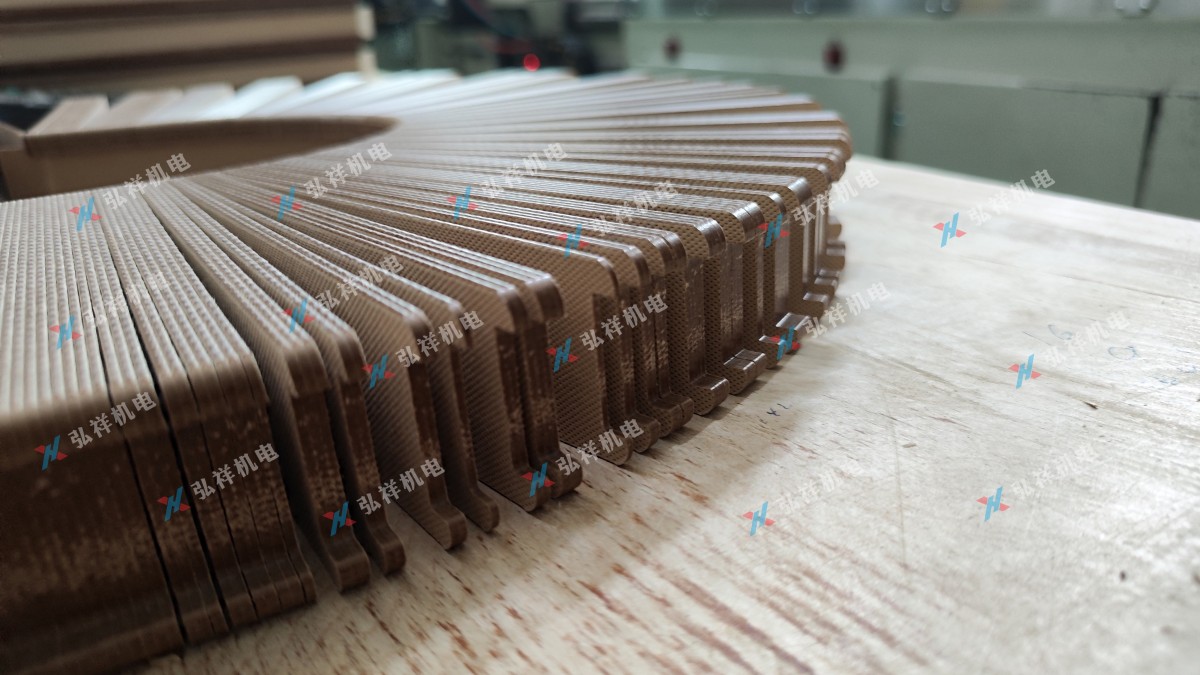
In transformer manufacturing, insulation cardboard is not a simple auxiliary material. Its dimensional accuracy, moisture behavior, surface integrity, and forming consistency influence oil-immersed insulation structures, assembly tolerance, and downstream electrical reliability.
That is why technical evaluators in the machine tool equipment sector usually assess the full production chain: cutting, slitting, punching, shaping, feeding, dust control, and process repeatability. A machine with fast cycle time but unstable thickness handling can quickly create hidden quality costs.
For companies serving global transformer markets, such as Gaomi Hongxiang Electromechanical Technology Co., Ltd., equipment capability must also align with practical plant requirements: multi-material processing, operator training, maintainability, installation support, and reliable performance across long production runs.
Core Performance Metrics That Matter Most
When evaluating Transformer insulation cardboard processing equipment for power transformers, four metrics usually carry the most weight: dimensional precision, material adaptability, throughput stability, and automation effectiveness. Each one affects both manufacturing cost and transformer insulation quality.
Precision and Tolerance Control
For insulation cardboard parts used in spacers, rings, strips, and formed components, typical tolerance targets often fall within ±0.2 mm to ±0.5 mm depending on thickness, shape complexity, and transformer design requirements. Stable tolerance is more important than occasional peak accuracy.
Technical evaluators should check repeatability over 50 to 100 consecutive pieces, not only a first-piece sample. Edge straightness, punch registration, burr level, and corner integrity should be measured together because a part can pass nominal size but still fail assembly fit.
Why repeatability is critical
- Reduces manual rework during transformer core and winding insulation assembly
- Improves part interchangeability across batches produced in 2 to 4 weeks
- Helps maintain uniform oil duct geometry and insulation clearances
- Lowers scrap rates caused by cumulative dimensional deviation
Material Stability Across Different Insulation Boards
A capable system should process multiple board grades and thickness ranges without frequent instability. In many plants, insulation cardboard thickness can vary from 1 mm to 8 mm or more, while laminated insulation wood and formed insulating parts may require different clamping and cutting responses.
Feed accuracy becomes especially important when board density, hardness, or humidity changes. Machines that maintain stable feeding under variable material conditions usually deliver better quality consistency than those optimized only for one narrow specification.
The table below highlights practical metric categories technical evaluators can use when comparing machine configurations for transformer insulation cardboard processing.
The most useful conclusion from this comparison is that no single metric should be viewed alone. A machine with tighter nominal tolerance but longer changeover and weaker material adaptability may underperform in a mixed-model transformer workshop.
Throughput Stability Instead of Peak Speed
Production speed should be measured over an 8-hour shift, not just a 10-minute demonstration. Technical evaluators should ask for average cycle output, unscheduled stoppage frequency, and scrap ratio under normal operator conditions.
In many machine tool evaluations, a scrap increase of even 2% to 4% can offset gains from higher cutting speed. This is especially true when processed insulation parts move directly into transformer assembly without a large manual correction buffer.
Automation and Human Dependency
A well-designed machine should reduce manual intervention in feeding, positioning, and repetitive trimming. Semi-automatic and automatic functions are not only about labor savings; they also improve consistency between operators across 2 or 3 shifts.
For plants with expanding export business, automation also helps standardize product quality when output grows. This is particularly relevant for suppliers processing electrical insulating cardboard, laminated wood, insulating parts, and EVA molded components within one manufacturing system.
Machine Configuration Factors Behind Real Performance
Performance results come from mechanical design, control architecture, tooling quality, and support systems. Evaluators should look beyond brochure claims and connect each metric to a specific machine configuration element.
Feed System, Cutting Unit, and Tooling Rigidity
Stable processing starts with controlled feeding. If feed rollers, guides, or clamping devices allow lateral drift of even 0.3 mm to 0.6 mm, the final part geometry may exceed tolerance, especially in narrow strips or punched profiles.
Tooling rigidity is equally important. Weak tool support can create vibration marks, edge tearing, and variable penetration depth. In insulation cardboard applications, surface damage is not only cosmetic; it can affect fitting quality and post-processing performance.
Configuration checkpoints
- Check whether the feed path supports flat entry and low deformation.
- Verify tool change convenience for 3 to 5 common part categories.
- Inspect frame rigidity under continuous operation.
- Review alignment method after blade replacement or maintenance.
Control System and Process Repeatability
For Transformer insulation cardboard processing equipment for power transformers, a stable control system should support parameter storage, repeat recipe loading, and quick switching between part programs. This reduces setup dependence on one experienced operator.
A practical benchmark is whether the machine can return to qualified production within 1 to 3 test pieces after a recipe change. If adjustment regularly takes 10 or more samples, real production efficiency will be lower than expected.
The following table links machine configuration items with common production risks and what technical evaluators should verify during inspection or factory acceptance testing.
This comparison shows that acceptance testing should simulate real production conditions. A short idle demonstration cannot reveal whether the machine remains accurate after hours of cutting dust, material variation, and repeated recipe switching.
Dust Control, Cleaning, and Maintenance Access
Insulation cardboard processing creates fine dust and debris that can affect sensors, moving guides, and cutting quality. A practical design should allow routine cleaning within 10 to 20 minutes and daily inspection without complex disassembly.
Preventive maintenance intervals should also be clear. Evaluators should ask which components need daily, weekly, and monthly checks, and whether wear parts can be replaced using standard workshop tools. This directly influences long-term uptime.
How Technical Evaluators Should Compare Suppliers and Solutions
Choosing Transformer insulation cardboard processing equipment for power transformers is not only a machine comparison. It is also an evaluation of engineering support, application understanding, commissioning quality, and after-sales responsiveness.
Match the Equipment to Actual Transformer Part Mix
A plant producing only simple strip cutting may prioritize speed and feed stability. A plant manufacturing rings, stepped shapes, insulation blocks, laminated components, and EVA related parts may need broader process flexibility even if peak speed is lower.
Technical evaluators should define at least 4 to 6 representative parts before supplier comparison. These samples should include different thicknesses, narrow geometries, and one difficult profile to expose weak points in feeding, cutting, and setup logic.
Assess Service Scope Before Purchase
For capital equipment in the machine tool field, installation and training are part of the performance package. A supplier that provides only shipment but not process guidance may leave the buyer with a longer qualification cycle and inconsistent early output.
A stronger supplier evaluation usually includes 5 service points: pre-sale technical discussion, sample verification, installation support, operator training, and after-sales troubleshooting response. These matter even more for export-oriented plants running tight delivery schedules.
Recommended supplier assessment list
- Can the supplier process insulation cardboard, laminated wood, and related insulating parts?
- Is commissioning support available for the first production batch?
- Are wear parts and maintenance instructions clearly defined?
- Can operators be trained within 1 to 3 days for standard tasks?
- Is overseas support experience relevant for Southeast Asia, South America, India, Pakistan, or Russia-bound production needs?
Watch for Common Evaluation Mistakes
One common mistake is to compare only machine price and nominal output. Another is to inspect only one material thickness. Both can lead to poor selection when actual production includes multiple board grades and frequent order switching.
A third mistake is ignoring post-installation support. Even a good machine may need process tuning during the first 2 to 6 weeks. Without timely technical communication, the user may not reach the intended performance level.
Implementation, Acceptance, and Long-Term Value
The final decision should balance immediate output with long-term operating value. In transformer insulation processing, sustainable performance comes from controlled implementation, measurable acceptance criteria, and disciplined maintenance.
Set a Practical Acceptance Standard
Before purchase, buyers should define 3 categories of acceptance criteria: dimensional quality, production stability, and operating convenience. This prevents later disputes and ensures that the equipment is judged against real manufacturing objectives.
A practical acceptance test may include 30 to 100 sample parts, at least 2 material thicknesses, one specification change, and one continuous run of 1 to 2 hours. These steps reveal whether the machine is suitable for routine transformer part production.
Estimate Long-Term Operating Cost
Long-term value depends on scrap control, labor efficiency, maintenance frequency, and spare part consumption. A machine with slightly higher purchase cost may offer lower total operating cost over 3 to 5 years if it reduces rework and unplanned downtime.
This is especially relevant for companies supplying domestic and international transformer markets, where stable quality and predictable lead time are often more valuable than short-term savings on initial procurement.
Why Integrated Capability Matters
A supplier with integrated R&D, design, production, sales, installation, training, and after-sales service can often respond faster when process adjustments are needed. This is valuable for insulation cardboard processing lines that must support changing transformer specifications.
For buyers evaluating a partner such as Gaomi Hongxiang Electromechanical Technology Co., Ltd., the relevant point is not a marketing claim. It is the practical ability to support complete implementation, from machine selection to production startup and operator readiness.
For technical evaluators, the best Transformer insulation cardboard processing equipment for power transformers is the one that delivers measurable precision, stable multi-material processing, controlled operating cost, and dependable service support over time. Output speed matters, but consistency, repeatability, and maintainability determine the true production value.
If you are comparing solutions for power transformer insulation part manufacturing, now is the right time to review your part mix, tolerance targets, and acceptance criteria in detail. Contact us to discuss your processing requirements, get a tailored equipment proposal, or learn more about complete solutions for insulating cardboard, laminated wood, insulating parts, and related transformer manufacturing equipment.
NAVIGATION
MESSAGE
Request A Quote?