0000-00
When evaluating Laminated wood processing equipment for transformer insulation, technical teams should focus on machining precision, material stability, automation reliability, and long-term service support. For transformer manufacturers, the right equipment directly affects insulation quality, production efficiency, and consistency of finished parts, making careful pre-purchase checks essential to reducing operational risk and improving overall manufacturing performance.
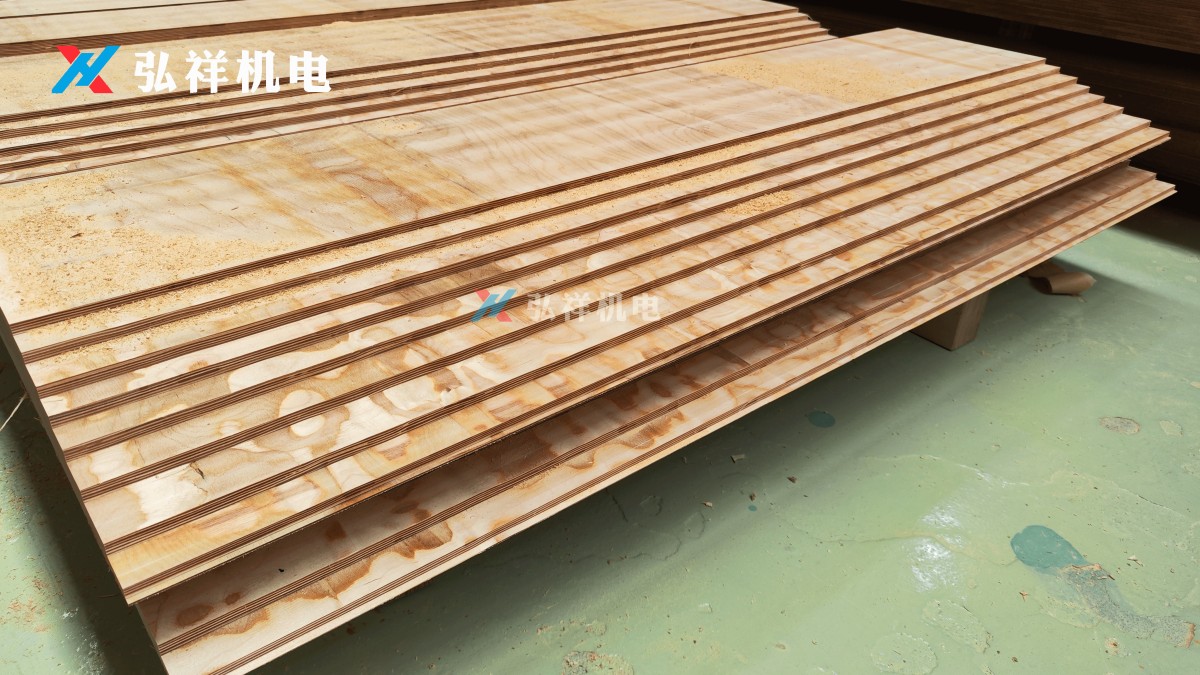
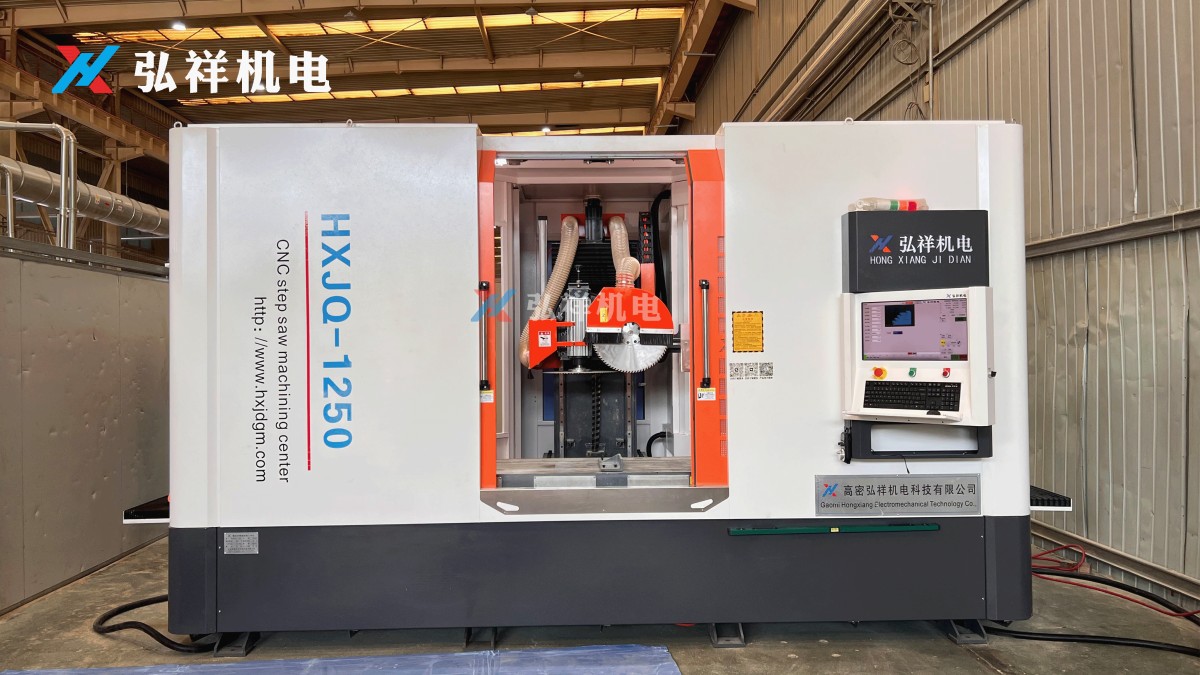
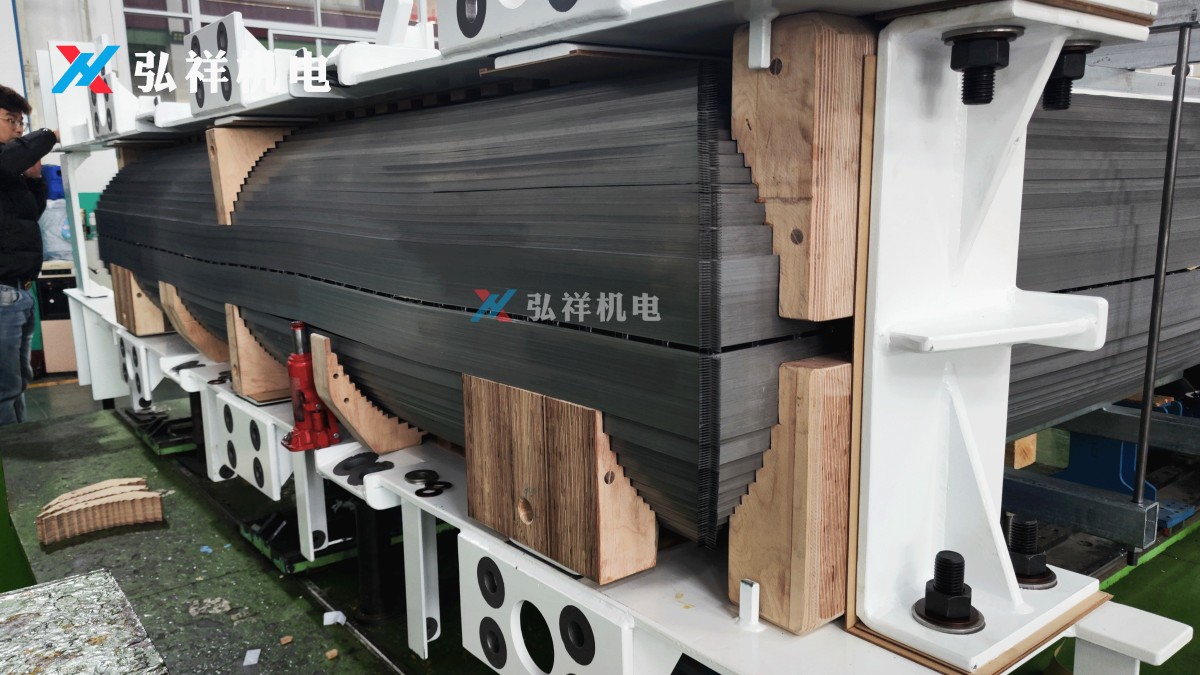
Why scenario-based evaluation matters in transformer insulation production
Technical assessment teams rarely buy Laminated wood processing equipment for transformer insulation in a vacuum. The same machine may perform well in one factory but become inefficient in another, simply because production tasks differ. A workshop producing small batches of customized insulation blocks for export transformers has very different priorities from a plant running repetitive medium-voltage parts in 2 shifts per day. That is why equipment review should begin with application scenario mapping rather than only checking brochure specifications.
In laminated wood machining for transformer insulation, the process chain often includes cutting, planing, milling, drilling, slotting, edge shaping, surface finishing, and dimensional inspection. Each step can influence dielectric performance, part fit, and downstream assembly stability. Even a tolerance drift of 0.2 mm to 0.5 mm may create installation issues in insulation structures where compression distance, oil channel geometry, or spacer positioning must remain consistent across dozens or hundreds of parts.
Another reason scenario judgment matters is that insulating laminated wood behaves differently from ordinary structural wood products. Moisture response, layer integrity, machining burr control, fiber tear-out, and thermal influence all require attention. For technical evaluators in the machine tool equipment sector, the key question is not only whether the machine cuts, but whether it cuts repeatably under transformer insulation production conditions over 6 months, 12 months, and beyond.
Typical business situations that change equipment priorities
The following scenarios usually lead to different decision criteria when reviewing Laminated wood processing equipment for transformer insulation.
- New transformer manufacturing line setup, where process completeness and training support matter more than peak speed alone.
- Capacity expansion in an existing plant, where compatibility with current fixtures, tooling, and operator habits becomes critical.
- Export-oriented production, where dimensional consistency and documentation discipline are often reviewed more strictly.
- High-mix low-volume orders, where fast changeover within 10 to 30 minutes can be more valuable than a small gain in top spindle speed.
- Special machine development for advanced manufacturing or AI-related equipment support, where customization flexibility matters from the beginning.
For companies such as Gaomi Hongxiang Electromechanical Technology Co., Ltd., which serve global transformer manufacturing and insulation part processing needs, scenario-based thinking is especially important because customers often require a combination of standard equipment capability, process adaptation, training, installation, and after-sales responsiveness across different regions.
Three common application scenarios and the checks that matter most
Scenario 1: Mass production of standardized transformer insulation parts
In standardized production environments, the main objective is repeatability. Plants producing large quantities of similar laminated wood spacers, support blocks, cleats, and structural insulation components often value stable cycle time, low scrap rate, and predictable maintenance intervals. In these factories, a 3% to 5% reduction in reject rate can be more meaningful than adding extra process functions that are rarely used.
For this scenario, technical teams should check spindle stability, fixture repeatability, feeding consistency, and dust extraction effectiveness. Laminated wood processing generates chips and fine dust that can influence surface quality and machine cleanliness over long runs. If a line is expected to run 8 to 16 hours per day, weak chip evacuation or unstable clamping will quickly show up in edge defects and dimensional variation.
Automation reliability also becomes a priority. Semi-automatic or automatic feeding, preset positioning, and recipe-based parameter storage can reduce operator influence. In practical evaluation, a machine that maintains stable accuracy over 500 to 1,000 repeated pieces usually offers more value than a faster machine that frequently needs manual correction.
Key checks for this scenario
- Repeatability across long production runs, not only first-piece accuracy.
- Tool life stability when processing laminated materials with varying density.
- Availability of preventive maintenance points at weekly and monthly intervals.
- Control system ease of use for operators handling repetitive batches.
Scenario 2: High-mix production for multiple transformer models
Some transformer manufacturers face frequent drawing changes, mixed orders, and a broad range of laminated wood dimensions. In this case, flexibility becomes the central evaluation theme. The machine should support rapid setup, easy program adjustment, and fixture adaptability. A changeover time difference of 15 minutes versus 45 minutes can have a major effect when a workshop switches products 6 to 10 times per week.
This scenario also requires careful review of software and parameter management. If dimensions, slot positions, and drilling coordinates are often modified, the control system must allow secure storage of recipes and quick retrieval by part number. Technical evaluation personnel should ask whether the operator can independently complete common setup tasks after 3 to 5 days of training, or whether repeated supplier intervention will be necessary.
Another common issue is over-specifying automation. Highly complex automation can reduce flexibility if the product family changes too often. For many transformer insulation workshops, the best solution is not maximum automation, but balanced automation that supports manual override, fixture changes, and small-lot production without causing long downtime.
Key checks for this scenario
- Part program management and recipe storage capacity.
- Fixture universality for different thicknesses and geometries.
- Setup verification steps to avoid wrong-part machining.
- Training efficiency for operators, maintenance staff, and process engineers.
Scenario 3: Precision-oriented production for export or higher-spec projects
When the factory serves export transformers, special engineering projects, or customers with tighter assembly verification procedures, consistency documentation becomes more visible. Here, Laminated wood processing equipment for transformer insulation should be judged not only by nominal precision but by process traceability, inspection compatibility, and the machine’s ability to maintain stable results under controlled material conditions.
The assessment should include dimensional control, surface finish quality, edge integrity, and the effect of machining heat on the laminated structure. In many insulation applications, burrs, chipping, and local delamination are more problematic than simple linear tolerance errors. A machine that can hold clean edges on 10 mm, 20 mm, and 40 mm laminated wood sections under stable tool conditions is usually better suited than one that only performs well on a single thickness range.
This scenario also makes support services more important. Pre-shipment trial cutting, sample confirmation, installation guidance, and after-sales troubleshooting within agreed response windows can reduce qualification risk. For technical buyers, support capability should be treated as part of the equipment package, not as an extra service considered later.
The table below compares the three scenarios in a way that helps technical evaluation teams assign decision weights before requesting quotations or trial production.
This comparison shows why a single checklist is rarely enough. The right Laminated wood processing equipment for transformer insulation must match production style, product complexity, and quality verification methods in the target plant.
Technical checks that should be verified before purchase approval
Machining capability and material handling
Technical teams should begin with process capability verification. Review the maximum and minimum workpiece dimensions, thickness range, feed stability, spindle power suitability, and compatibility with common laminated wood grades used in transformer insulation. If your plant handles boards or blocks across a 10 mm to 80 mm thickness range, the machine should be checked under multiple real part conditions rather than one demonstration sample.
Material handling is equally important. Insulating laminated wood can react to storage humidity and internal stress, so clamping and support design must prevent vibration and deformation during cutting. When reviewing a machine tool proposal, ask how the equipment manages positioning for rectangular parts, narrow strips, and shaped pieces, especially when part geometry changes within the same production week.
Dust extraction and housekeeping should not be treated as secondary topics. In practice, poor dust control affects operator visibility, motor cleanliness, guide wear, and final part surface condition. A system intended for industrial use should support stable extraction under normal production load and allow routine cleaning without excessive disassembly time.
Recommended verification points
- Confirm the actual part family to be processed, including thickness, width, length, slot depth, hole positions, and profile complexity.
- Request sample machining using representative laminated wood materials from your own production if possible.
- Check whether dimensional drift appears after continuous operation of at least 2 to 4 hours.
- Review tool replacement access and average maintenance time per shift or per week.
Control system, automation, and operator dependence
Not every factory needs the same automation level. For some lines, manual loading plus programmable positioning is sufficient. For others, automatic feeding and sequencing are needed to meet output targets. The key is to measure whether automation reduces operator dependence without making the machine difficult to adjust. An interface that shortens setup verification from 20 minutes to 8 minutes can produce meaningful gains even if the cutting speed remains unchanged.
Technical assessment personnel should also check alarm logic, parameter backup, and fault diagnosis clarity. In transformer component workshops, maintenance resources may not include full-time CNC specialists. If a machine stops, troubleshooting should be understandable for plant engineers after normal supplier training, and critical spare parts should be identified in advance.
Another practical point is recipe discipline. Laminated wood processing equipment for transformer insulation often serves parts that look similar but have different slotting or drilling requirements. The control system should minimize the risk of wrong-file selection, and ideally support step-by-step confirmation before machining starts.
Before final approval, many buyers benefit from using a structured comparison matrix. The following table helps convert engineering concerns into procurement checkpoints.
A table like this helps procurement, engineering, and production teams align on the same criteria. It also prevents price comparisons from overshadowing practical operating costs and commissioning risk.
Common misjudgments when matching equipment to real factory conditions
Choosing by maximum specification instead of usable capability
A frequent mistake is focusing on the highest spindle speed, largest work envelope, or broadest function list while ignoring everyday use. In actual transformer insulation production, what matters is whether the machine can process the plant’s common parts reliably with acceptable setup time and low quality fluctuation. Extra capacity is useful only if it supports realistic part families and future planning within the next 12 to 24 months.
Another risk is underestimating fixture design. Even good Laminated wood processing equipment for transformer insulation can perform poorly if workholding is weak, difficult to adjust, or too specialized for one part. Technical teams should ask whether fixture strategy is included in the proposal and whether spare fixture sets can be supplied when product ranges expand.
Some buyers also overlook the effect of upstream material control. If laminated wood moisture variation, storage condition, or incoming dimensional deviation is not managed, machine performance will appear inconsistent even when the machine itself is stable. Equipment assessment should therefore include a quick review of the plant’s material preparation and inspection routines.
Treating service support as a secondary issue
For machine tool equipment in insulation processing, after-sales support strongly affects total project success. Commissioning, training, wear-part planning, parameter optimization, and troubleshooting are all part of production stability. If support is slow or unclear, even a technically suitable machine may not reach expected output for several weeks.
Technical evaluators should confirm service scope in practical terms. Ask about installation support, training content, remote diagnosis options, recommended spare parts for the first 6 to 12 months, and how process optimization is handled when the customer introduces new laminated wood part designs. These details often determine whether startup is smooth or disruptive.
Companies that integrate R&D, design, production, sales, installation, training, and after-sales service can be valuable partners for plants that need not only equipment supply but also process coordination. This is particularly relevant when insulation cardboard, laminated wood, insulating parts, and custom equipment projects are connected in one manufacturing system.
How to move from evaluation to a practical selection decision
Build a scenario-based shortlist
The most effective path is to shortlist equipment according to your actual production scenario. Define whether your plant is driven mainly by throughput, flexibility, precision verification, or multi-process integration. Then map those priorities to machine structure, control mode, tooling method, and service model. In many projects, narrowing the shortlist to 2 or 3 technically suitable solutions leads to better decisions than comparing a large number of loosely matched offers.
Next, prepare a trial part package. Include common geometries, one difficult profile, and one part that reflects your strictest tolerance or edge requirement. This allows technical teams to judge real output quality instead of relying on generic demonstrations. If possible, review not only finished dimensions but also cycle stability, tool wear pattern, and operator actions during setup.
Finally, compare the full project path: quotation clarity, lead time, installation arrangement, training plan, spare part preparation, and post-acceptance support. A lead time difference of 4 weeks may be less important than the availability of a complete startup package that reduces production risk from day one.
Why choose us
Gaomi Hongxiang Electromechanical Technology Co., Ltd. focuses on assembly and manufacturing services for power transformers and supports the processing of electrical insulating cardboard, insulating laminated wood, insulating parts, and EVA molding products. This business scope gives practical understanding of how Laminated wood processing equipment for transformer insulation fits into real transformer component production rather than isolated machine supply alone.
Because the company combines R&D and design, production, sales, installation, training, and after-sales service, technical buyers can discuss not only equipment structure but also application matching, process planning, and custom machine requirements. For factories serving domestic and international markets, this integrated approach can reduce communication gaps during evaluation and commissioning.
If you are reviewing Laminated wood processing equipment for transformer insulation, you can contact us to confirm machining parameters, suitable part ranges, changeover expectations, delivery cycle planning, customization options, sample support, and quotation details. A clear discussion around your production scenario, transformer type, insulation part drawings, and target output will make the next selection step faster and more reliable.
NAVIGATION
MESSAGE
Request A Quote?