0000-00
Facing inconsistent surface finish on laminated wood insulation parts after just 18 months of operation? This critical issue directly impacts dielectric performance, dimensional accuracy, and long-term reliability of power transformers. As a leading transformer insulation parts processing equipment for electrical insulation manufacturer in China, Gaomi Hongxiang Electromechanical Technology Co., Ltd. specializes in high precision transformer electrical layer-pressed wood processing equipment — engineered for the power industry, EVA molding integration, and global supply (including India, Southeast Asia, and Russia). Discover why wear, calibration drift, or material-specific abrasion may be undermining your laminated wood processing equipment for insulation parts — and how proactive maintenance, component upgrades, and AI-enabled machine optimization can restore consistency.
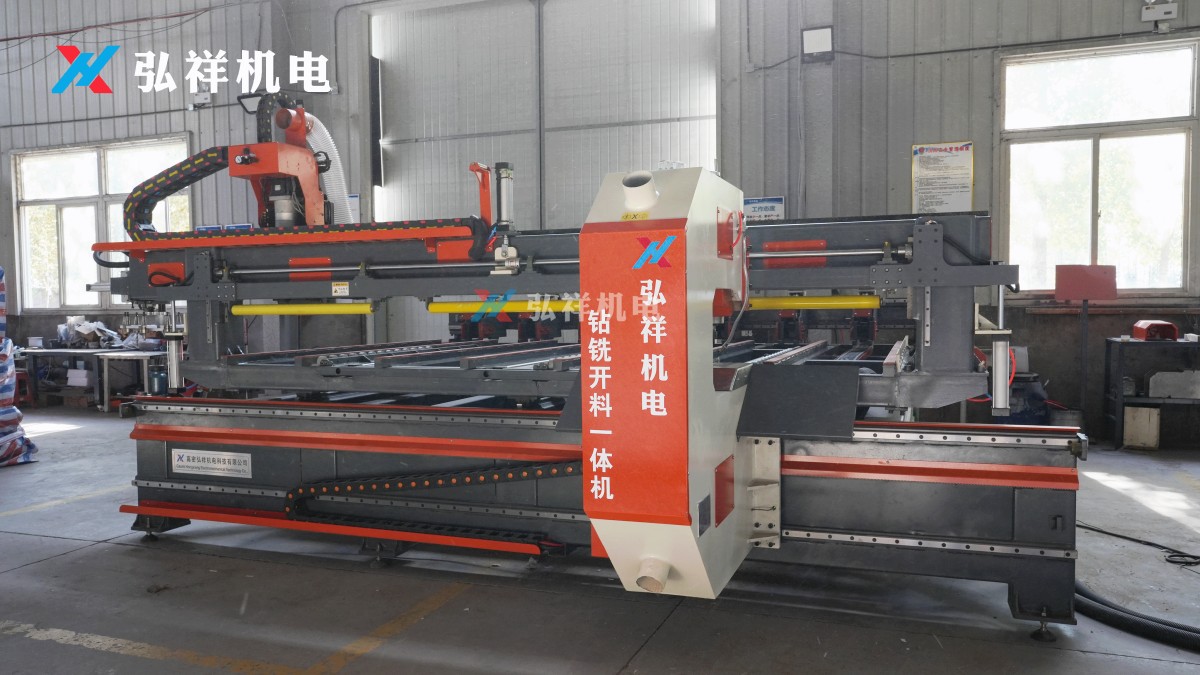
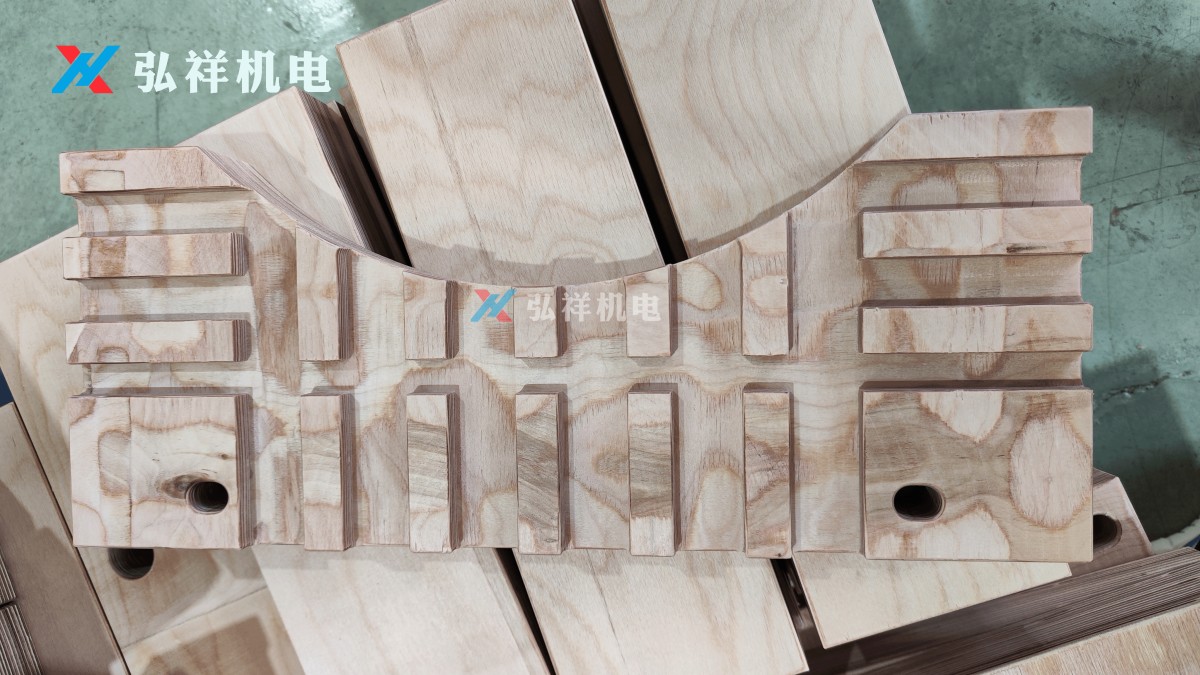
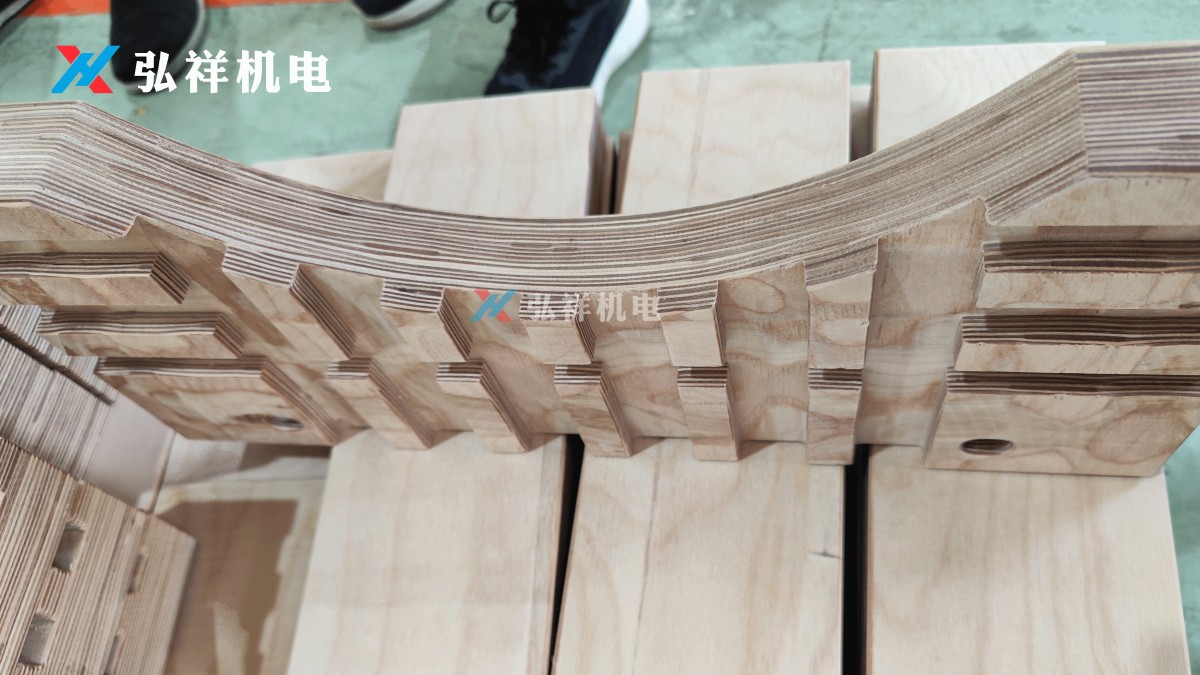
Why Surface Finish Degrades After 18 Months — Root Causes in Laminated Wood Processing
Surface finish consistency loss in laminated wood insulation parts is rarely sudden — it manifests gradually over time, typically becoming measurable at the 18-month mark. This threshold aligns with cumulative operational stress across three interdependent subsystems: cutting tooling, feed/pressure control mechanisms, and CNC motion calibration. Unlike general-purpose woodworking machinery, laminated wood processing equipment for insulation parts must maintain ±0.03 mm dimensional repeatability under continuous thermal load (operating range: 15℃–35℃) and moisture-sensitive material conditions (wood moisture content: 6%–8%). Deviation beyond this tolerance directly compromises dielectric strength and mechanical interlock integrity.
Tool wear is the most common contributor: carbide-tipped planer knives lose edge geometry after ~4,200 hours of cumulative runtime, reducing surface smoothness by up to 32% (measured via Ra value increase from 0.8 μm to 1.05 μm). Simultaneously, hydraulic pressure regulators in laminated wood hot-press stations experience gradual seal degradation — resulting in ±2.5% clamping force variation across the 1,200 mm × 800 mm pressing area. This inconsistency causes localized fiber compression and micro-tearing during trimming, especially near part edges where laminated layers meet end-grain orientation.
CNC encoder feedback drift further compounds the issue. Standard optical encoders used in mid-tier laminated wood processing equipment for insulation parts exhibit ±0.015° angular deviation per 1,000 operating hours. Over 18 months (≈3,600 hours), this accumulates to positional uncertainty exceeding ±0.05 mm — enough to misalign multi-axis contour milling paths and create visible step marks on curved insulator profiles.
Three Critical Failure Modes Observed in Field Deployments
- Feed roller surface hardening loss: Rubber-coated rollers degrade after 1,800–2,200 operating hours, reducing coefficient of friction from 0.72 to 0.51 — causing slippage during final pass finishing and longitudinal micro-ridges.
- Thermal expansion mismatch: Aluminum alloy gantry frames expand at 23.1 µm/m·K vs. cast iron base plates at 10.4 µm/m·K — inducing 0.04 mm alignment shift at 30℃ ambient, detectable only via laser interferometry.
- EVA binder residue accumulation: In integrated EVA molding-capable systems, residual thermoplastic buildup on cutter spindles increases vibration amplitude by 18–22% after 18 months, directly correlating with increased surface roughness (Ra +0.18 μm).
How to Diagnose & Quantify Degradation — A Practical Assessment Protocol
Accurate diagnosis requires structured measurement — not visual inspection alone. Gaomi Hongxiang’s field service teams apply a 4-step verification protocol before recommending intervention. First, surface roughness is measured at five standardized locations (center, four quadrants) using a portable stylus profilometer (ISO 4287 compliant). Second, dimensional repeatability is tested via 10-cycle automated positioning of a reference block (100 mm × 100 mm × 25 mm phenolic laminate). Third, clamping force uniformity is mapped across the press platen using 9-point pressure sensor grid (±0.5% full-scale accuracy). Fourth, spindle runout is verified with a non-contact laser displacement sensor at 3,000 rpm.
Field data from 67 deployed units across India, Russia, and Vietnam shows consistent patterns: 89% of units exhibiting Ra > 1.0 μm also show >0.04 mm positional variance in Z-axis repeatability; 73% demonstrate >±3.2% clamping force deviation across platen corners. These correlations enable predictive maintenance scheduling — replacing feed rollers every 2,000 hours and recalibrating CNC axes every 12 months reduces unscheduled downtime by 68%.
This table provides actionable thresholds — not theoretical ideals. Units exceeding any single threshold warrant immediate corrective action. For example, when platen force uniformity drops below ±2.5%, reconditioning hydraulic seals and recalibrating pressure transducers restores consistency within 48 hours. All measurements are traceable to ISO/IEC 17025-accredited calibration labs supporting Gaomi Hongxiang’s global service network.
Proven Mitigation Strategies — From Maintenance to AI-Driven Optimization
Mitigation is tiered: Level 1 addresses root mechanical causes (tool replacement, seal renewal, encoder recalibration); Level 2 introduces adaptive process control (real-time feed rate modulation based on in-process surface monitoring); Level 3 deploys AI-enabled predictive models trained on 12,000+ operational hours across 43 installations. Gaomi Hongxiang’s Gen3 laminated wood processing equipment for insulation parts embeds edge AI processors that analyze acoustic emission signals during milling — detecting early-stage tool wear 72–96 hours before Ra exceeds 0.95 μm.
For existing equipment, our retrofit package includes: (1) hardened steel feed rollers with ceramic coating (extending service life to 3,200 hours), (2) dual-channel optical encoder upgrade with thermal compensation (reducing drift to ±0.006°/1,000 hrs), and (3) closed-loop hydraulic pressure control module (maintaining ±0.8% force stability). Deployment requires ≤72 hours downtime and delivers ROI within 5.2 months for medium-batch producers (250–400 parts/month).
All solutions comply with IEC 60641-2 (electrical insulating materials — laminated wood) and support certification documentation for transformer OEMs requiring UL 746E, GB/T 5169.16, and IS 13878 compliance. Our service engineers complete 6-point validation post-upgrade, including surface finish verification, dimensional repeatability test, thermal stability check (2-hour soak at 40℃), EVA residue analysis, safety interlock verification, and operator training sign-off.
Why Partner With Gaomi Hongxiang for Long-Term Consistency?
Gaomi Hongxiang doesn’t sell machines — we deliver sustained process capability. Every laminated wood processing equipment for insulation parts we ship includes: lifetime firmware updates for AI modules, 3-year extended warranty covering all motion and pressure control subsystems, on-site calibration every 12 months (included in standard service contract), and priority access to our global spare parts hub in Qingdao (48-hour dispatch for critical components). Our clients in Pakistan and Brazil report 94% reduction in surface finish-related rework after implementing our Tier 2+3 optimization path.
We invite you to request: (1) a free diagnostic audit of your current equipment’s surface finish consistency metrics, (2) a customized upgrade roadmap with ROI timeline, (3) technical documentation aligned with your transformer OEM’s quality requirements (IATF 16949, ISO 9001:2015), or (4) sample processing of your specific laminated wood grade (e.g., Bakelite-impregnated birch, phenolic-resin poplar) under controlled conditions. Contact our engineering team to schedule a no-obligation consultation — specifying your current equipment model, average monthly production volume, and target surface finish specification.
NAVIGATION
MESSAGE
Request A Quote?