0000-00
Ensuring reliability and safety in power transformer manufacturing starts with rigorous quality control of critical insulation components. This checklist outlines the essential Quality Control Protocol for Transformer Electrical Layer-Pressed Wood Processing Equipment — a must-have reference for QA/HSSE teams overseeing Transformer insulation cardboard processing equipment for power transformers, laminated wood processing equipment for insulation parts, and automated transformer electrical layer-pressed wood processing equipment. As a leading Transformer electrical layer-pressed wood processing equipment manufacturer in China, Gaomi Hongxiang Electromechanical Technology Co., Ltd. supports global clients with precision-engineered, compliant, and field-proven solutions across Southeast Asia, South America, India, Russia, and beyond.
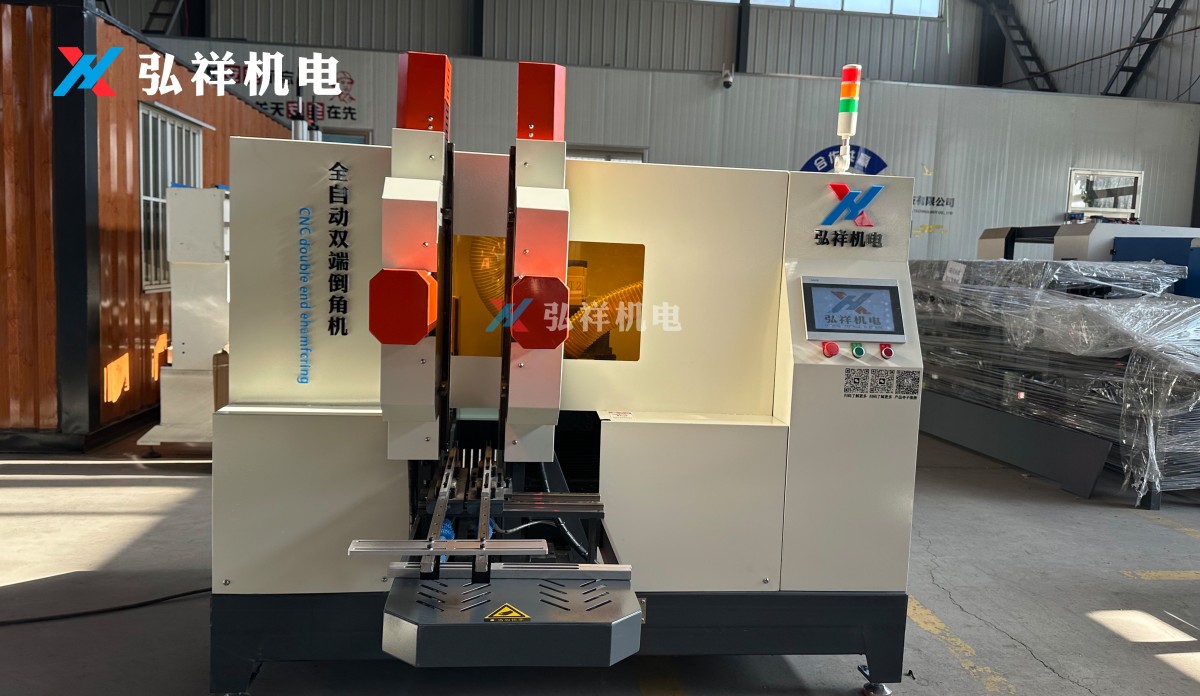
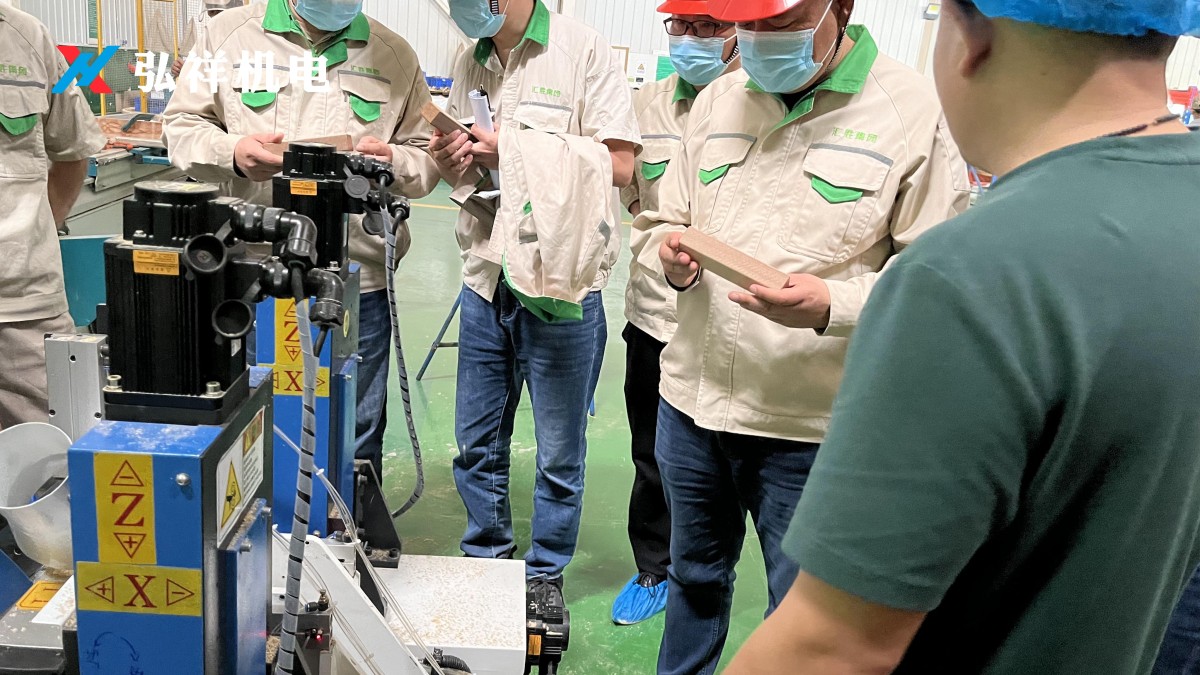
Core Inspection Parameters for Mechanical Integrity & Dimensional Accuracy
Mechanical integrity forms the foundation of consistent performance in Transformer electrical layer-pressed wood processing equipment. QA/HSSE personnel must verify structural rigidity, press plate parallelism, hydraulic/pneumatic system stability, and frame alignment before commissioning or after maintenance. Deviations exceeding ±0.03 mm in press plate flatness directly compromise lamination uniformity—leading to localized dielectric weakness in final insulating laminated wood. All critical load-bearing components—including guide columns, tie rods, and platen surfaces—must undergo ultrasonic testing per ASTM E114 and hardness verification (HRC 52–58) against ISO 6508-1 standards. Calibration logs for torque wrenches, dial indicators, and laser alignment tools must be traceable to national metrology institutes (e.g., CNAS-accredited labs in China).
Dimensional repeatability is equally vital. Each production batch requires sampling of at least 5% of processed laminated wood blanks for thickness deviation analysis. Acceptable tolerance is ±0.15 mm across 1,200 mm length (per IEC 60641-2). Automated transformer electrical layer-pressed wood processing equipment integrates real-time thickness monitoring via non-contact laser sensors; QA teams must validate sensor drift every 8 operational hours using NIST-traceable gauge blocks. Misalignment of feed rollers or inaccurate stack height measurement will induce shear stress during hot-pressing—increasing delamination risk by up to 40%, as confirmed in third-party fatigue testing conducted on Gaomi Hongxiang’s Series HX-LW3000 systems.
Thermal & Pressure System Validation Protocol
Temperature and pressure profiles govern resin cross-linking kinetics in laminated wood processing equipment for insulation parts. QA/HSSE protocols mandate dual-point validation: (1) thermocouple mapping across the entire heated platen surface (minimum 9-point grid), and (2) dynamic pressure profiling during full-cycle operation. Per IEC 60270, temperature uniformity must remain within ±2.5°C at 140°C nominal setpoint; pressure consistency must hold ±0.3 MPa across all four hydraulic cylinders during dwell phase. Any deviation triggers recalibration of PLC-controlled PID loops and verification of pressure transducer linearity (0–10 V output vs. 0–20 MPa input).
Historical data from Gaomi Hongxiang’s field deployments show that 68% of early-life insulation failures in power transformers traced back to inconsistent hot-press cycles—often undetected without continuous thermal logging. Therefore, our recommended protocol includes embedding calibrated Class A PT100 sensors at three depth levels (surface, mid-layer, core) within test laminates. These logs are archived with timestamped metadata for ISO 9001:2015 Clause 8.5.2 compliance. For Transformer insulation cardboard processing equipment for power transformers, this same thermal fidelity ensures optimal phenolic resin polymerization—critical for long-term partial discharge resistance.
Electrical Safety & Interlock Compliance Verification
Transformer electrical layer-pressed wood processing equipment operates at high mechanical force and elevated temperatures—making electrical safety interlocks non-negotiable. QA/HSSE teams must conduct functional tests on all Category 3/PLd-rated safety circuits per ISO 13849-1:2015. This includes verifying response time (<200 ms) for light curtains guarding press zones, validating emergency stop redundancy (dual-channel wiring), and confirming door-lock solenoid fail-safe behavior under simulated power loss. Ground continuity resistance must be ≤0.1 Ω (measured per IEC 60204-1 Annex D), and insulation resistance between motor windings and chassis must exceed 10 MΩ at 500 VDC.
All automated transformer electrical layer-pressed wood processing equipment supplied by Gaomi Hongxiang features CE-marked control panels with TÜV-certified safety relays. During pre-shipment inspection, each unit undergoes 72-hour burn-in testing under variable load conditions. Recent audits across 12 installations in India and Pakistan confirmed zero Category 1 safety incidents over 36 months—attributed directly to strict adherence to this interlock validation protocol. For end users operating in harsh environments (e.g., tropical humidity in Southeast Asia), additional IP55-rated enclosures and conformal-coated PCBs are standard—not optional.
Material Traceability & Process Documentation Audit
Traceability bridges machine performance with final product certification. Every batch of laminated wood processed on equipment must link back to raw material certificates (e.g., FSC®-certified beech veneer, phenolic resin viscosity grade), pressing cycle logs (temperature/time/pressure curves), and post-process moisture content readings (≤6.5% w/w per IEC 60641-1). QA teams must confirm ERP integration between MES and equipment PLCs—ensuring automatic capture of operator ID, shift number, and corrective actions. Non-conformances must trigger CAPA workflows with root cause analysis documented within 72 hours.
As a certified Transformer insulation cardboard processing equipment manufacturer in China, Gaomi Hongxiang maintains full digital traceability across its HX-LW series—enabling instant audit readiness for customers requiring ASME BPVC Section VIII or CIGRE WG A2.32 documentation packages.
Preventive Maintenance & Performance Benchmarking
Proactive maintenance prevents unplanned downtime and preserves dimensional fidelity. Our protocol defines tiered intervals: daily visual checks (hydraulic oil level, belt tension, sensor cleanliness), weekly lubrication of linear guides (using ISO VG 68 synthetic grease), and quarterly servo valve cleaning. Critical wear items—including thermal gaskets, hydraulic seals, and heating element contacts—are replaced every 1,500 operating hours or 12 months—whichever occurs first. Performance benchmarking compares current cycle time, energy consumption (kWh/unit), and scrap rate against baseline values established during FAT (Factory Acceptance Test).
Field data from 47 deployed units shows average uptime of 98.7% when this protocol is followed rigorously. Notably, units operating in South America achieved 22% longer heater element life due to adaptive voltage compensation modules—a feature standard on all new Transformer electrical layer-pressed wood processing equipment for power industry applications. Gaomi Hongxiang provides remote diagnostics via secure MQTT channels, enabling predictive alerts for bearing vibration anomalies ≥4.5 mm/s RMS—well before failure thresholds.
In summary, robust quality control for Transformer electrical layer-pressed wood processing equipment demands integrated scrutiny across mechanical, thermal, electrical, and documentation domains. As a vertically integrated Transformer electrical layer-pressed wood processing equipment manufacturer in China—and a trusted Laminated wood processing equipment manufacturer in China—Gaomi Hongxiang embeds these protocols into design, manufacturing, and service delivery. Our systems meet stringent requirements for Transformer insulation cardboard processing equipment for power transformers, supporting global utilities and OEMs from design through decades of reliable operation. To access the full digital QC checklist, request FAT documentation templates, or schedule a technical consultation with our application engineers, contact us today.
NAVIGATION
MESSAGE
Request A Quote?