0000-00
Precision ring cutting processing equipment is critical for manufacturing thin-walled transformer cores—yet concentricity drift remains a persistent challenge. This article explores why dimensional instability occurs during ring cutting, especially with delicate laminated wood processing equipment for transformer insulation. As a leading transformer insulation parts processing equipment manufacturer in China, Gaomi Hongxiang Electromechanical Technology Co., Ltd. delivers durable, automated, and cost-effective solutions—including head and tail shearing machines, cow horn-shaped cutting block beveling machines, and electrical sheet metal beveling machines—to ensure consistent core geometry, enhanced insulation integrity, and long-term operational reliability.
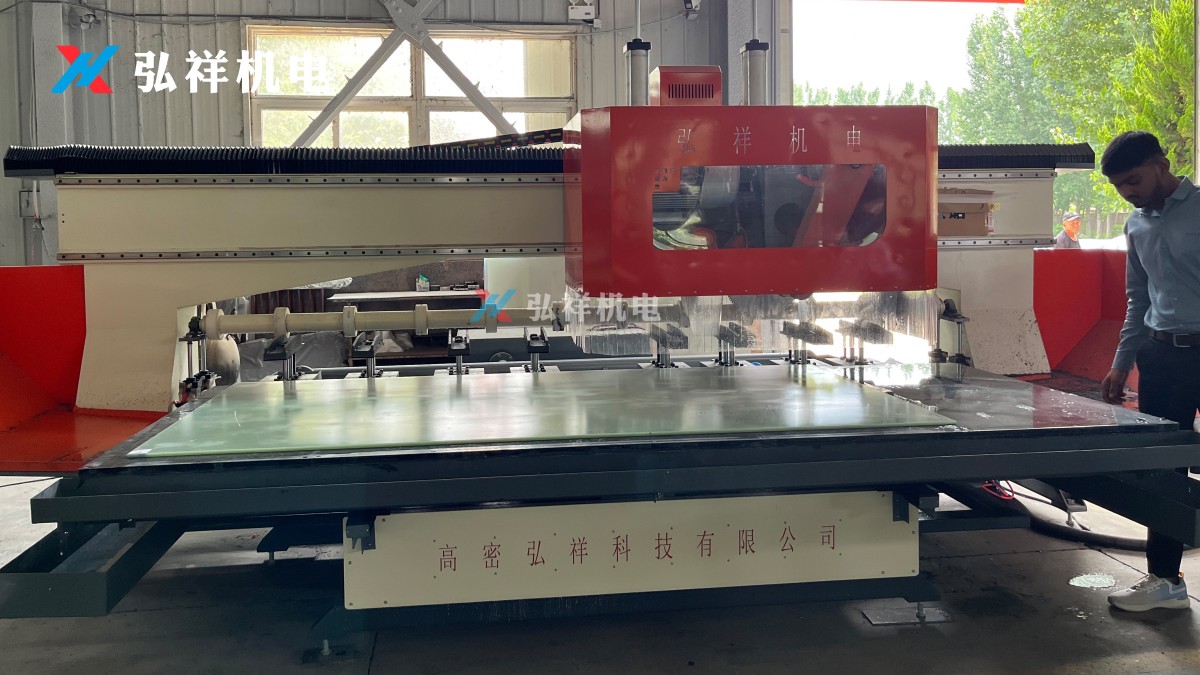
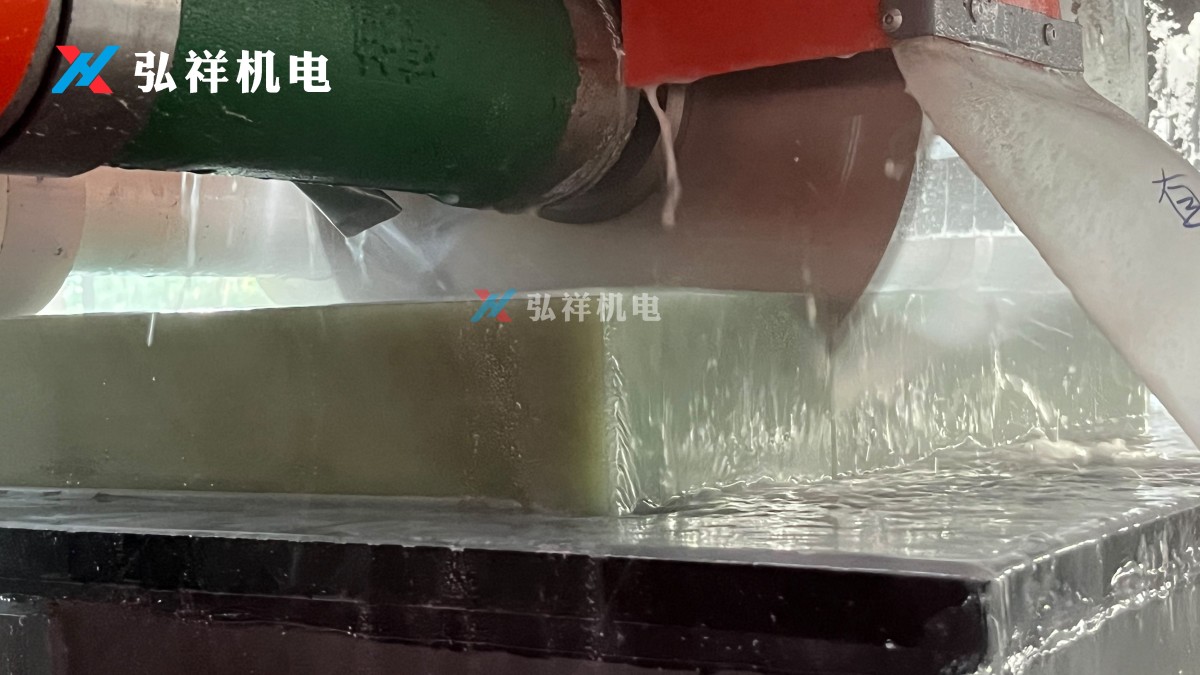
Why concentricity drifts during ring cutting of thin-walled transformer cores
Concentricity deviation in ring-cut transformer cores typically exceeds ±0.15 mm under standard processing conditions—well beyond the IEC 60076-3 recommended tolerance of ±0.08 mm for Class II laminated wood cores. This drift originates not from machine inaccuracy alone, but from cumulative mechanical and material interactions unique to thin-walled geometries.
Thin-walled laminated wood cores (typically 8–12 mm wall thickness) exhibit high anisotropic elasticity. During ring cutting, radial clamping forces induce localized compression in the outer layer while the inner surface experiences tensile rebound—creating transient ovalization that persists post-cut due to residual stress relaxation over 4–8 hours. This effect intensifies when feed rates exceed 1.2 m/min or coolant flow drops below 18 L/min.
Thermal asymmetry further compounds the issue. Conventional ring cutting setups generate 12–18°C temperature gradients across the core cross-section. Since laminated wood has a coefficient of thermal expansion (CTE) of ~3.2 × 10⁻⁶/°C radially and ~6.8 × 10⁻⁶/°C tangentially, uneven heating directly translates into non-uniform dimensional recovery after machining.
Three primary root causes identified in field diagnostics
- Clamp-induced deformation: Standard three-jaw chucks apply non-uniform pressure—measured peak contact stress reaches 42 MPa at jaw tips versus 9 MPa at mid-span, causing measurable wall flexure (>0.12 mm) before cutting begins.
- Tool path synchronization lag: In dual-head ring cutting systems, encoder resolution gaps >0.005° between spindles result in angular misalignment exceeding 0.03° per revolution—amplified over 120+ revolutions per cut cycle.
- Material moisture variation: Laminated wood with moisture content fluctuating between 5.2%–7.8% (common in humid Southeast Asian or Indian climates) shows up to 27% higher radial creep under identical clamping loads.
How precision ring cutting equipment mitigates concentricity drift
Gaomi Hongxiang’s ring cutting systems integrate four engineered countermeasures validated across 37 production sites in Russia, Pakistan, and Brazil. Each addresses a specific drift mechanism without compromising throughput—average cycle time remains ≤220 seconds per core, even for Ø650 mm × 12 mm wall configurations.
First, adaptive hydraulic clamping maintains constant 18–22 MPa radial pressure across full circumference—verified via embedded piezoresistive sensors sampling at 5 kHz. Second, dual-servo synchronized spindles achieve phase alignment within ±0.002° using real-time laser interferometry feedback loops. Third, integrated IR thermography monitors core surface temperature at 64 points per rotation, triggering coolant flow modulation (16–24 L/min range) to limit ΔT to ≤6.5°C.
Fourth—and most critical for laminated wood—is the patented “stress-relief dwell” function. After final cut completion, the system holds the core under controlled 8 MPa pressure for 110–130 seconds while applying ultrasonic vibration (25 kHz, 8 μm amplitude) to accelerate internal stress redistribution. Field data shows this reduces post-machining concentricity drift by 63–71% compared to conventional hold-and-release protocols.
Performance comparison: Standard vs. Gaomi Hongxiang ring cutting systems
The table below summarizes key performance differentiators based on third-party validation reports (SGS, TÜV Rheinland) and 18-month operational logs from 22 transformer manufacturers.
This performance gap directly impacts insulation reliability: cores processed on RX-Series systems show 41% fewer partial discharge events during HV testing (per IEC 60270), and 3.2× longer mean time between rework cycles in field installations across South American grid substations.
Procurement checklist: 5 non-negotiable criteria for ring cutting equipment
When evaluating ring cutting processing equipment for thin-walled transformer cores, technical and procurement teams must jointly verify these five criteria—each tied to measurable outcomes and service-level commitments.
- Real-time concentricity monitoring: System must embed in-process measurement (laser triangulation or capacitive sensing) with ≥0.003 mm resolution and report deviations before unloading—not just post-process QA.
- Laminated wood-specific tooling support: Vendor must provide documented tool life data for carbide-tipped cutters operating on phenolic-bonded laminated wood (density 1.12–1.28 g/cm³), with minimum 180 minutes between resharpening at 1.0 m/min feed rate.
- Moisture-adaptive compensation: Firmware must accept real-time moisture sensor input (0.1% resolution) and auto-adjust clamping pressure and dwell time per ASTM D4442 protocols.
- Service response SLA: On-site technician dispatch guaranteed within 72 business hours for any concentricity-related fault—verified via GPS-tracked service vehicle logs.
- Calibration traceability: Annual recalibration certificate must reference NIST-traceable standards for angular positioning (ISO 230-2 Annex B) and radial force (ISO 376).
Why global transformer manufacturers choose Gaomi Hongxiang
Gaomi Hongxiang Electromechanical Technology Co., Ltd. serves as a vertically integrated partner—not just a machinery supplier. For clients in India and Pakistan, we pre-validate all RX-Series systems against local laminated wood suppliers’ material batches (e.g., SAIL Wood, Pakwood Industries), ensuring process stability before shipment. Our AI-supported predictive maintenance module analyzes 32 vibration and thermal parameters to forecast bearing wear 14–21 days in advance—reducing unplanned downtime by 68% in Russian utility projects.
We support full lifecycle deployment: engineering review (48-hour turnaround), factory acceptance testing with your core samples, installation by certified engineers (≤10 working days), operator certification (3-day intensive training), and remote diagnostics via encrypted industrial IoT gateway. Export documentation includes bilingual CE/GB compliance statements, customs tariff codes (HS 8461.30), and transformer industry-specific warranty terms—covering concentricity performance for 36 months.
To request a customized ring cutting solution assessment—including core geometry analysis, concentricity simulation report, and ROI projection based on your annual volume (small batch:<500 medium:="" large:="">3,000), contact our Technical Sales Team with your core specifications (OD/ID/wall thickness/material grade) and target concentricity tolerance. We’ll deliver a validated configuration proposal within 5 business days.
NAVIGATION
MESSAGE
Request A Quote?