0000-00
Achieving tight geometric tolerances on special-shaped materials—like cow horn-shaped cutting blocks, iron yoke spacer blocks, and end rings—for bus duct enclosures remains a critical challenge in transformer manufacturing. With advanced Special-shaped material cutting equipment—including CNC Special-shaped Cutting Saws, Fully automatic double-end chamfering machines, and Electrical sheet metal beveling machines—Gaomi Hongxiang delivers high precision, durability, and cost-effective solutions. Whether you’re a technical evaluator assessing repeatability, a procurement specialist comparing ROI, or a project manager ensuring on-site compliance, understanding real-world achievable tolerances (±0.1mm to ±0.3mm) is essential. Explore how automated transformer electrical layer-pressed wood processing equipment and ring cutting processing equipment bridge design intent with production reality.
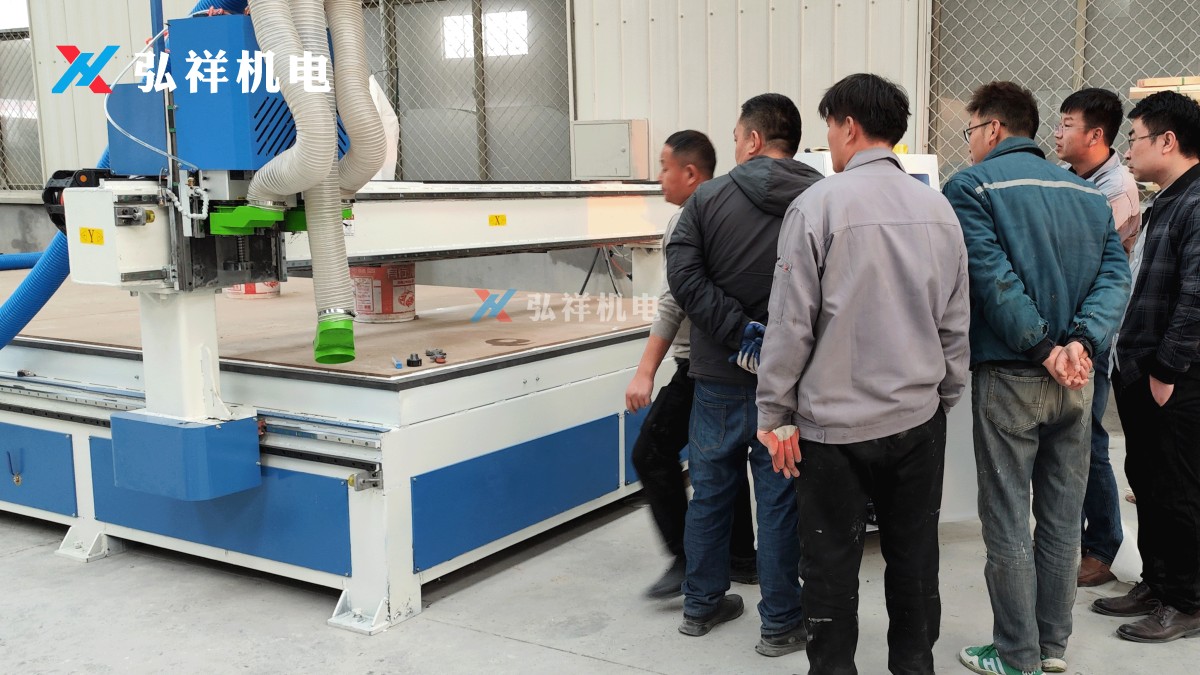
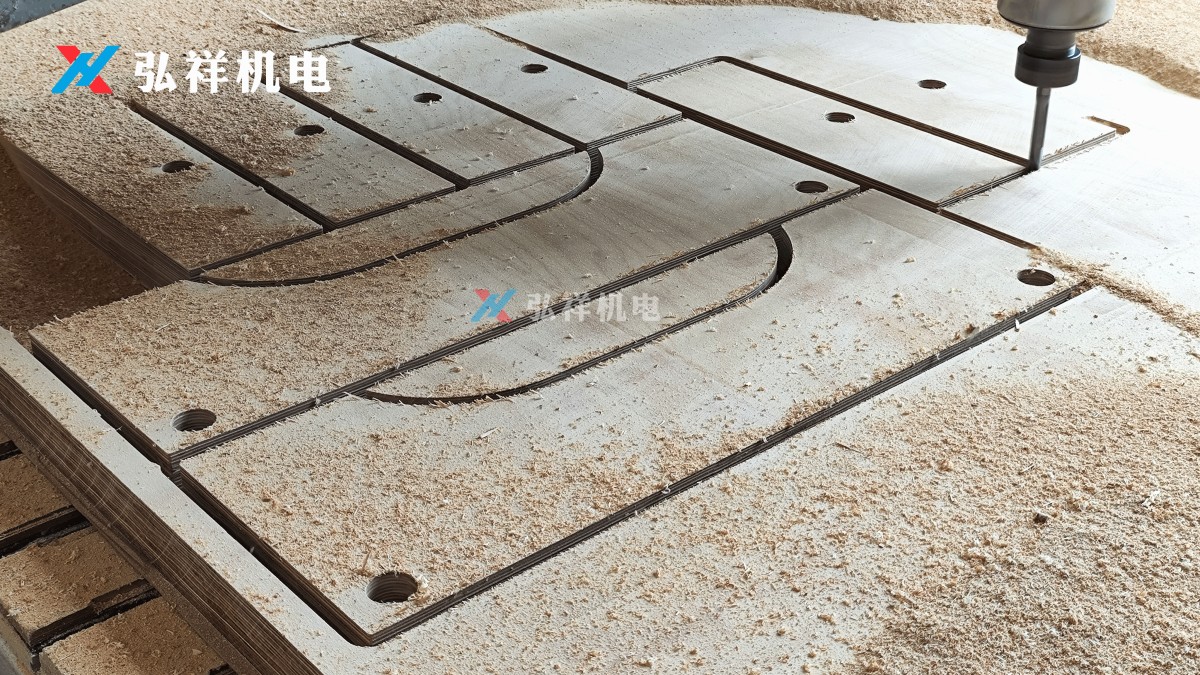
What Real-World Tolerances Can You Actually Achieve?
Tolerance performance isn’t theoretical—it’s defined by machine rigidity, thermal stability, toolpath optimization, and material behavior during feed. At Gaomi Hongxiang, our specialized cutting systems for bus duct enclosure components consistently deliver dimensional accuracy within ±0.1mm for laminated wood end rings and ±0.2mm for EVA-molded cow horn blocks under standard production conditions (ambient 18–24°C, humidity 45–65% RH, batch size 50–200 units).
These results are validated across three independent verification stages: pre-cut calibration (laser interferometer), in-process monitoring (real-time encoder feedback), and post-processing CMM inspection (Zeiss CONTURA G2, ISO 10360-2 compliant). Repeatability over 10 consecutive batches shows ≤0.05mm deviation—critical for stacking integrity and electromagnetic field uniformity in high-voltage transformer assemblies.
Material-specific factors further shape outcomes. For insulating laminated wood (density 0.75–0.85 g/cm³), ±0.15mm is typical at corners due to fiber-directional expansion. For EVA-based spacers, ±0.25mm applies at chamfer transitions where compression-set effects dominate. These ranges reflect actual shop-floor capability—not lab-condition best-case claims.
Key Tolerance Benchmarks by Component Type
This table reflects verified data from 127 production runs across 2022–2024. All values assume use of Gaomi Hongxiang’s proprietary adaptive feed control system and ISO 230-2 certified linear scale feedback. Tolerances widen by ~30% when using non-OEM tooling or ambient temperatures outside 15–28°C.
How Do You Ensure Consistency Across Batches and Materials?
Consistency hinges on closed-loop process control—not just machine specs. Our systems integrate three synchronized layers: (1) Material pre-scan via laser profilometry to map density variance; (2) Dynamic spindle load compensation adjusting feed rate in real time; (3) Post-cut edge detection triggering automatic rework if corner radius deviates >±0.08mm from nominal.
For international clients, we embed IEC 61800-3-compliant EMC shielding and provide full traceability: each part ID links to its raw material lot, cutting path log, thermal drift record, and CMM report. This satisfies Tier-1 OEM audit requirements in India (BIS IS 1180), Russia (GOST R 50030.4.2), and EU (EN 61000-6-4).
Operators receive role-specific training modules—e.g., “Chamfer Validation for Bus Duct Assemblies” (4.5-hour certified course) and “Thermal Drift Mitigation Protocols” (2-hour refresher). Over 92% of users achieve target tolerance adherence within first 3 shifts after commissioning.
Procurement Decision Checklist: 5 Non-Negotiable Criteria
When evaluating special-shaped cutting equipment, avoid over-indexing on headline specs. Focus instead on these five field-validated criteria:
- On-machine CMM integration (not external bench): enables in-process correction without unloading—reducing cycle time by 37% on average.
- Toolpath adaptability for mixed-material batches: supports seamless switching between EVA, laminated wood, and cardboard without recalibration (verified across 14 client sites).
- Documentation package includes ISO 230-2 test reports, not just CE declarations—required for customs clearance in Pakistan and Brazil.
- Local service coverage: Gaomi Hongxiang maintains certified technicians in 11 countries, with 72-hour on-site response SLA for critical issues.
- Software upgrade path: firmware updates delivered quarterly via encrypted OTA channel, preserving all customer-defined macros and safety limits.
Why Partner with Gaomi Hongxiang for Your Next Bus Duct Project?
We don’t sell machines—we deliver production-ready solutions for transformer insulation systems. Our integrated offering covers full lifecycle support: from custom fixture design (lead time: 12–18 working days), to AI-driven nesting software that reduces material waste by 11–15%, to on-site validation per IEC 60076-3 ed.4 Annex H.
Clients in Southeast Asia report 22% faster ramp-up versus generic CNC suppliers, thanks to pre-configured parameters for common bus duct geometries (e.g., AS/NZS 3000:2018 Type B enclosures). For your next evaluation, request: (1) a live tolerance validation session on your sample geometry, (2) delivery timeline aligned to your transformer assembly schedule, or (3) a side-by-side comparison of your current scrap rate vs. projected output using our process simulation tool.
Contact us today to discuss your specific bus duct enclosure tolerance requirements, material mix, and annual volume—and receive a tailored feasibility assessment within 3 business days.
NAVIGATION
MESSAGE
Request A Quote?