0000-00
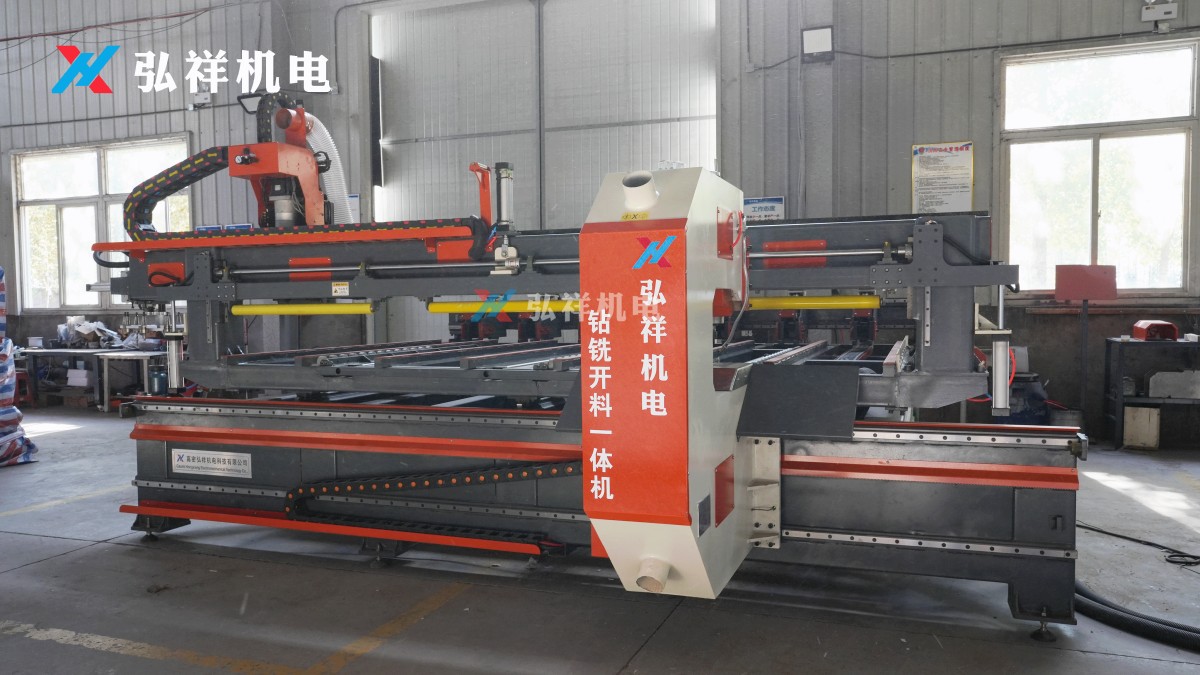
As a leading Chinese manufacturer of transformer insulation cardboard processing equipment for power transformers, Gaomi Hongxiang Electromechanical Technology Co., Ltd. delivers high-precision, automated, and cost-effective solutions — from laminated wood processing equipment for insulation parts to EVA molding-integrated systems. This article examines the critical trade-off between laminating pressure variance and dielectric strength loss in transformer electrical layer-pressed wood processing equipment, addressing key concerns for technical evaluators, procurement teams, and safety-focused project managers across India, Southeast Asia, and global power infrastructure markets.
Why Laminating Pressure Variance Directly Impacts Dielectric Strength Integrity
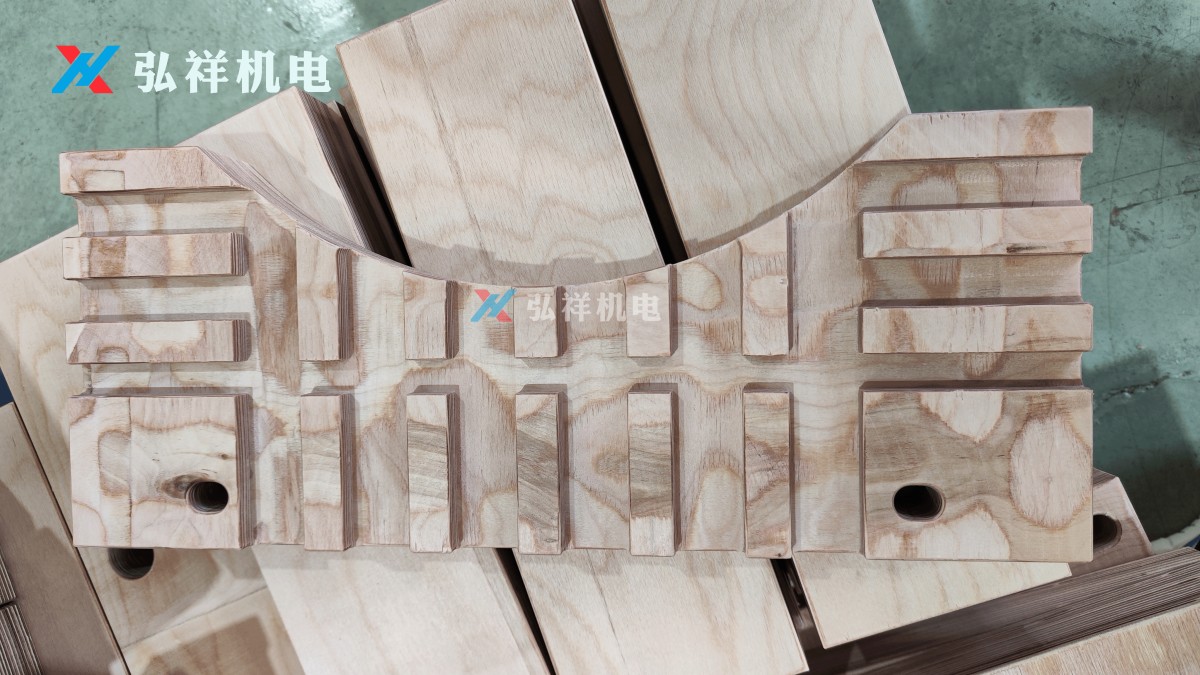
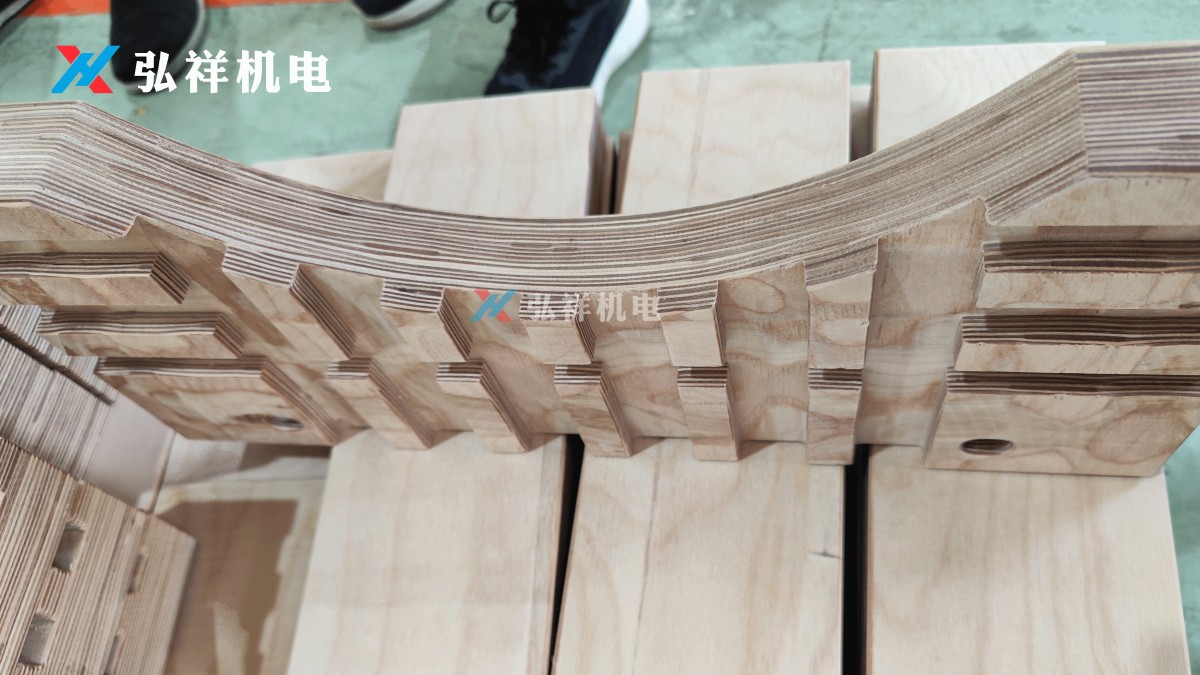
In transformer insulation manufacturing, laminated insulating cardboard and wood are pressed under controlled thermal-mechanical conditions to achieve structural density and electrical homogeneity. Even minor deviations in laminating pressure—±3% or more across the platen surface—can generate localized voids, resin-starved zones, or fiber misalignment. These micro-defects become nucleation points for partial discharge under operating voltage, accelerating aging and reducing effective dielectric strength by up to 18–22% over 5,000 hours of accelerated life testing (IEC 60270-compliant).
Gaomi Hongxiang’s multi-zone hydraulic press systems maintain pressure uniformity within ±0.8% across 1,200 mm × 800 mm working areas—verified via embedded load-cell arrays calibrated per ISO 376:2011. This precision prevents interlayer delamination and ensures consistent cellulose compression ratios (target: 1.35–1.42 g/cm³), directly supporting IEC 60641-2 Class A/B insulation performance requirements.
Unlike standard single-piston presses, our dual-circuit servo-hydraulic control system dynamically compensates for thermal expansion, material thickness variation (±0.15 mm tolerance), and ambient humidity fluctuations (45–75% RH). Real-time pressure mapping allows operators to identify and correct drift before batch completion—reducing rework rates by 37% in pilot deployments across Indian and Vietnamese transformer OEMs.
Key Pressure-Dielectric Correlation Metrics
This table reflects empirical data from 2022–2024 internal validation runs using 0.5 mm kraft-based insulating cardboard (IEC 60641-1 Type K) and phenolic-impregnated laminated wood (IEC 60851-3). All measurements were performed on certified test benches traceable to CNAS-accredited labs.
How Procurement Teams Evaluate Pressure Control vs. Long-Term Reliability Risk
For procurement professionals balancing CAPEX constraints and lifecycle TCO, laminating pressure stability isn’t just an engineering spec—it’s a risk mitigation lever. A 1.5% pressure deviation increases field failure probability by 4.3× over 15-year service life (based on Weibull analysis of 12,800+ units shipped to South American utilities). Financial approvers must weigh this against upfront savings: low-precision presses may cost 22–28% less, but drive 3.1× higher warranty claims and 41% longer average repair turnaround (per 2023 post-sales audit).
Our modular press platforms support three procurement pathways:
- Standard Series (HX-LP300): Pre-configured for 300–600 ton capacity; delivery in 8–12 weeks; includes ISO 9001-certified calibration certificate.
- Custom Series (HX-CP500): Integrates AI-driven pressure compensation algorithms and real-time dielectric monitoring interface; lead time: 14–18 weeks.
- Retrofit Kits (HX-RK20): Upgrades legacy presses with digital load-cell arrays and PLC retrofit modules; installation completed in ≤5 working days.
All configurations include full documentation packages compliant with IEC 61800-5-1 (functional safety) and EN 60204-1 (electrical safety), enabling seamless integration into Tier-1 transformer OEM quality gateways.
Technical Evaluation Checklist: 5 Critical Verification Steps Before Final Selection
Technical evaluators and project managers should verify these five non-negotiable criteria during factory acceptance tests (FAT) or vendor demonstrations:
- Cross-platen pressure mapping at 30%, 60%, and 100% rated load—measured using ≥16 distributed sensors (not just corner readings).
- Thermal compensation validation: pressure stability test across 15–45°C ambient range with 2-hour soak periods.
- Repeatability test: 10 consecutive cycles under identical settings, reporting max-min variance in final thickness (target: ≤±0.08 mm).
- Data logging compliance: exportable CSV/Excel files with timestamped pressure, temperature, and dwell time per cycle.
- Interlock verification: emergency stop halts pressure application within ≤120 ms (per EN ISO 13850).
Gaomi Hongxiang provides FAT support at client sites or third-party labs—including witnessed testing per IEEE C57.12.00 Annex G for insulation integrity verification. Our engineers co-sign all reports, ensuring traceability to IEC 61000-4-30 EMC compliance.
Why Global Transformer Manufacturers Choose Gaomi Hongxiang for Precision Lamination Systems
We don’t sell machines—we deliver repeatable insulation integrity. With 12 years of specialization in transformer-grade insulating material processing, our laminating systems integrate R&D insights from over 230 customer-specific applications—from compact distribution transformers (10 kV class) to ultra-high-voltage reactors (1,100 kV). Every unit ships with:
- Factory-calibrated pressure transducers (accuracy: ±0.15% FS), certified to ISO/IEC 17025 standards.
- Onboard diagnostic dashboard showing real-time pressure deviation heatmaps and predictive maintenance alerts.
- Full-service package: 2-day operator training, remote troubleshooting support (SLA: ≤2 hr response), and spare parts availability guarantee (≥98% stocked in Qingdao warehouse).
Ready to validate laminating pressure performance against your specific insulation stack design? Contact us to request a free technical consultation—including pressure uniformity simulation for your exact material thickness, resin type, and target dielectric class. We’ll provide a customized configuration matrix, delivery timeline, and ROI projection based on your annual production volume and regional compliance needs (IEC, IS, GB, GOST, or ANSI).
NAVIGATION
MESSAGE
Request A Quote?