0000-00
When Transformer insulation components show unstable dimensions, manufacturers need precision-focused processing solutions from a reliable Transformer insulation parts processing equipment manufacturer in China. For electrical cardboard, Electrical laminated wood, and other Transformer insulation components, advanced CNC Special-shaped Cutting Saw, CNC Double-End Chamfering Machine, and special-shaped material cutting equipment help improve consistency, reduce waste, and support stable transformer assembly quality.
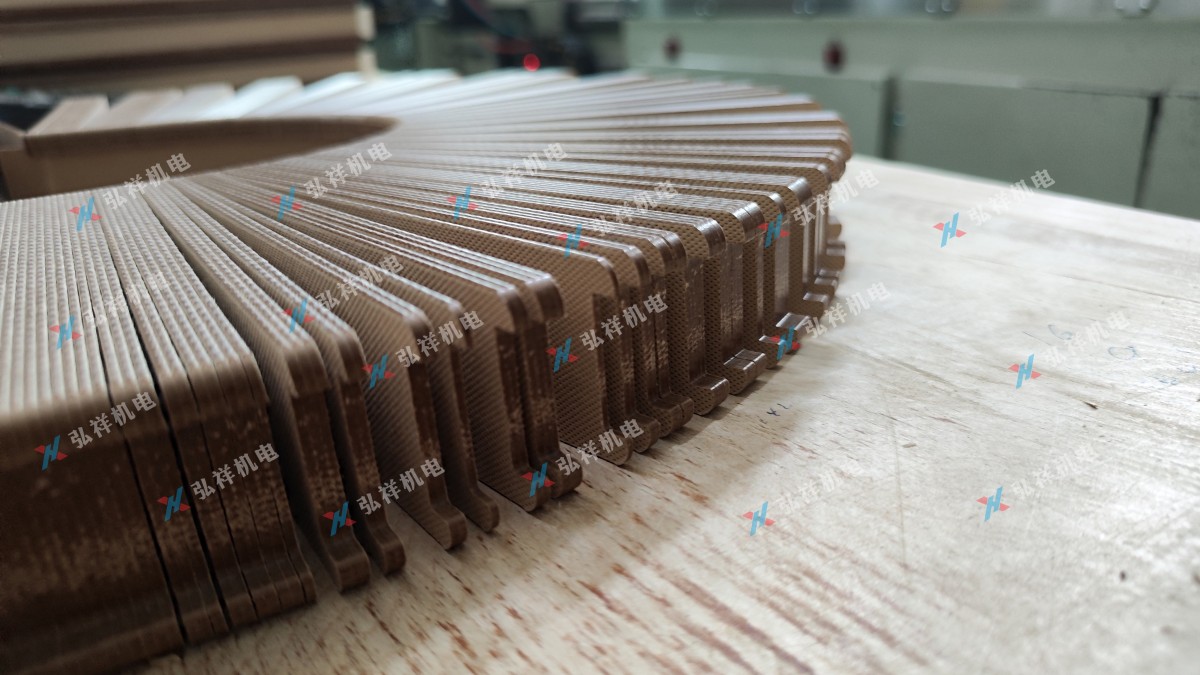
For buyers, operators, quality teams, and engineering managers, unstable dimensions are not a minor workshop issue. A deviation of even ±0.3 mm to ±1.0 mm on insulation parts can affect fit-up, chamfer accuracy, stacking consistency, oil gap control, and final transformer assembly rhythm. In machine tool equipment selection, the real question is not only what machine cuts the material, but what process combination keeps dimensions stable batch after batch.
Gaomi Hongxiang Electromechanical Technology Co., Ltd. serves global customers with transformer assembly and manufacturing support, covering electrical insulating cardboard, insulating laminated wood, insulating parts, and EVA molding processing. For companies evaluating machine tool solutions, the focus should be on dimensional control capability, material adaptability, operator usability, service response, and long-term production economics rather than only initial machine price.
Why transformer insulation components become dimensionally unstable
Dimensional instability in transformer insulation components usually comes from a combination of material behavior, equipment precision limits, and process inconsistency. Electrical insulating cardboard and laminated wood are both sensitive to moisture, storage conditions, cutting force, and tool condition. If humidity fluctuates by 10% to 20%, or if material acclimatization is skipped before machining, the same drawing size may produce different physical results across shifts.
Another common cause is mismatch between machine structure and part geometry. Special-shaped insulation parts often include angled edges, multi-side cuts, slots, and chamfers. If a factory relies on general cutting equipment instead of dedicated machine tool equipment, cumulative error increases at each step. A part that starts with a 0.2 mm cut error may end with a 0.8 mm assembly mismatch after secondary trimming, chamfering, and stacking.
Tool wear is also frequently underestimated. On laminated wood and dense insulation board, saw blade wear or guide rail looseness can affect edge straightness within 200 to 500 cutting cycles, depending on thickness and feed rate. Operators may try to compensate manually, but manual adjustment often introduces variation between batches, especially when production volumes exceed 300 to 1,000 pieces per lot.
Process sequencing matters as much as machine rigidity. If blanking, special-shaped cutting, chamfering, and inspection are not standardized into a 3-step or 4-step routing, dimensions may shift because each workstation uses a different reference edge. In transformer insulation parts, poor datum control causes rework, scrap, and unstable fitting during core coil assembly.
Typical causes seen in transformer insulation parts workshops
- Material moisture content varies before machining, especially after long-distance transport or mixed warehouse storage.
- General-purpose saws are used for special-shaped profiles, leading to unstable positioning and poor repeatability.
- Blade change intervals are not defined, so dimensional drift appears gradually instead of suddenly.
- Different operators set different reference points, causing lot-to-lot inconsistency.
- Chamfering and cutting are separated without coordinated fixtures, increasing transfer error.
For technical evaluators and quality managers, the practical response is to identify which variation source is dominant. If dimensional drift mainly appears after cutting, machine rigidity and fixture repeatability should be checked first. If drift appears after storage or before assembly, material conditioning and environmental control may be the primary correction point.
What fix works best: process-oriented machine tool solutions
The most effective fix is usually not a single machine, but a coordinated processing route built around the material and part family. For transformer insulation components, three equipment types are especially important: CNC Special-shaped Cutting Saw for contour accuracy, CNC Double-End Chamfering Machine for edge consistency, and special-shaped material cutting equipment for non-standard geometries. Together, they reduce human variability and stabilize dimensional output across repeated production runs.
A CNC Special-shaped Cutting Saw improves positioning consistency by reducing manual alignment. In typical workshop conditions, this can help keep repeated dimensions within a narrower working range such as ±0.2 mm to ±0.5 mm, depending on material thickness, part size, and operator discipline. For companies processing multiple insulation board formats in one day, CNC recipe storage also shortens setup time from 20 to 30 minutes to roughly 8 to 15 minutes for repeat jobs.
A CNC Double-End Chamfering Machine is valuable because chamfer quality directly affects fit, insulation spacing, and downstream handling safety. If chamfers are produced manually or on non-dedicated equipment, edge angle and depth may vary noticeably between left and right ends. Dedicated double-end chamfering improves parallelism and keeps end geometry more consistent, which supports assembly quality and reduces edge cracking risk on brittle sections.
Special-shaped material cutting equipment is essential when factories process irregular insulation parts rather than only straight rectangular blanks. Transformer plants increasingly need small-batch, multi-specification production. In this scenario, flexible cutting equipment with stable fixture design can reduce unnecessary material waste by 5% to 12% compared with repeated manual trial cutting, especially for irregular nested shapes.
Machine role comparison for dimensional stability
The table below shows how different machine tool equipment types address different sources of dimensional instability in transformer insulation parts processing.
The key takeaway is that dimensional stability comes from process matching. A factory focused only on straight cutting may not need the same machine combination as one producing 20 to 50 irregular insulation part types per month. The right fix depends on part complexity, batch size, and required downstream assembly consistency.
Recommended correction sequence
- Verify material condition before machining, including storage time and moisture exposure.
- Standardize reference positioning so all cutting and chamfering use the same datum logic.
- Use dedicated CNC equipment for special-shaped cutting instead of repeated manual correction.
- Create a blade maintenance interval based on cutting hours or lot count.
- Add first-piece and patrol inspection every 20 to 50 pieces for key dimensions.
How buyers and engineers should evaluate machine tool equipment
For procurement teams and engineering managers, machine selection should be based on measurable production needs rather than generic claims. Start with 4 core questions: What materials are being processed, what dimensional tolerance is required, how many part types are produced each month, and how often do drawings change? These answers determine whether a workshop needs a dedicated line, a flexible CNC setup, or a phased investment path.
Material thickness range is one of the first filters. Electrical insulating cardboard and laminated wood may vary substantially in density and machinability. If a machine performs well on thin board but loses edge quality on thicker laminated wood, the dimensional problem simply shifts downstream. Buyers should ask suppliers for the realistic working range under continuous production, not only the nominal maximum capacity.
Repeatability matters more than one-time test accuracy. A machine that cuts one sample well but drifts after 6 hours of operation creates hidden cost through inspection pressure and scrap. Technical teams should evaluate fixture repeatability, servo stability, guide structure, adjustment convenience, and operator interface. For many factories, daily usability is as important as headline precision.
After-sales support is also a hard procurement factor. For exported transformer manufacturing projects or distributed production sites, response speed within 24 to 72 hours can significantly reduce downtime impact. Gaomi Hongxiang Electromechanical Technology Co., Ltd. combines R&D, design, production, sales, installation, training, and after-sales service, which is especially relevant for enterprises that need process guidance in addition to machine delivery.
Practical evaluation checklist
The following table can be used by technical evaluators, purchasers, financial approvers, and project managers when comparing transformer insulation parts processing equipment suppliers.
This evaluation framework helps align technical and commercial decisions. Finance teams can better justify investment when reduced scrap, fewer manual correction hours, and shorter setup time are visible in the assessment model. A machine with a higher purchase price may still deliver a better 12- to 24-month operating outcome if it lowers rework and stabilizes output.
Common selection mistakes
- Choosing only by initial price without calculating scrap reduction and labor savings.
- Ignoring future product mix changes and buying equipment with limited flexibility.
- Testing only one material grade while actual production includes several densities and thicknesses.
- Overlooking training requirements for operators and maintenance personnel.
Implementation, quality control, and maintenance after machine purchase
Even the right machine tool equipment cannot solve unstable dimensions if implementation is weak. A practical rollout usually requires 3 stages: pre-installation process review, machine commissioning with sample verification, and controlled production ramp-up. This staged approach helps transform a machine purchase into a repeatable manufacturing system rather than an isolated asset.
During commissioning, factories should define 3 categories of inspection points: critical overall size, position-related dimensions, and edge/chamfer quality. First-piece inspection should be mandatory at the beginning of each shift and after any tool change. For higher-risk parts, patrol checks every 30 minutes or every 20 to 50 pieces are usually more effective than relying only on end-of-batch inspection.
Maintenance also plays a direct role in dimensional stability. Saw blades, clamping systems, guide mechanisms, and calibration points should follow a visible service plan. In many transformer insulation parts workshops, a weekly inspection of mechanical looseness and a monthly calibration review can prevent slow dimensional drift. If the plant runs two shifts, maintenance frequency often needs to be increased accordingly.
For after-sales teams and maintenance staff, operator training should include not only machine startup and shutdown but also error recognition. When operators can identify early signs such as burr increase, edge burning, abnormal vibration, or repeated offset correction, intervention happens sooner and defect accumulation drops. This is especially important in export-oriented production where delivery windows may be only 2 to 4 weeks.
Recommended control points after installation
The table below outlines a practical control structure for keeping transformer insulation component dimensions stable after equipment deployment.
With this approach, machine tool equipment becomes part of a quality loop. The result is not just better cutting performance, but more reliable transformer assembly planning, lower rejection risk, and clearer production forecasting for project managers and decision-makers.
FAQ: practical questions from buyers and production teams
How much dimensional variation is usually considered risky?
The answer depends on part function, but once deviation starts affecting fit-up, rework, or insulation spacing, it becomes operationally risky. In many workshops, variation beyond ±0.5 mm on critical insulation parts already triggers additional inspection or manual correction. For high-volume repeat parts, even smaller drift can accumulate into noticeable assembly inefficiency.
Is one machine enough to solve unstable dimensions?
Not always. If the problem includes blanking error, chamfer inconsistency, and irregular profile cutting, a single machine rarely addresses all sources. A process chain using CNC Special-shaped Cutting Saw, CNC Double-End Chamfering Machine, and suitable special-shaped material cutting equipment is often more effective for transformer insulation parts production.
What delivery and ramp-up timeline is realistic?
For many industrial projects, equipment lead time may range from several weeks to a few months depending on scope, customization, and installation planning. The more important point is to reserve 1 to 2 weeks for training, sample validation, and process stabilization after installation rather than expecting instant full-capacity output on day one.
Who should be involved in the purchase decision?
The best decisions usually involve at least 5 roles: production, engineering, quality, procurement, and finance. For larger projects, project managers and after-sales maintenance personnel should also participate. This cross-functional review prevents buying a machine that looks acceptable on paper but performs poorly in real workshop conditions.
Choosing a long-term manufacturing partner for transformer insulation parts equipment
Stable dimensions are the result of equipment capability, process understanding, and service continuity. In transformer insulation parts processing, suppliers that understand both machine tool equipment and material-specific production problems can usually provide more practical value than vendors who only quote machine specifications. This matters for domestic manufacturing and even more for export-oriented projects that need dependable support.
Gaomi Hongxiang Electromechanical Technology Co., Ltd. focuses on assembly and manufacturing services for power transformers and supports processing of electrical insulating cardboard, insulating laminated wood, insulating parts, and EVA molding products. As a private enterprise integrating R&D and design, production, sales, installation, training, and after-sales service, it is positioned to support customers looking for a more complete equipment and process collaboration model.
For distributors, project owners, and end users across Southeast Asia, South America, India, Pakistan, Russia, and other markets, the value of a capable supplier often lies in practical coordination: matching equipment to part types, reducing startup risk, supporting installation, and helping teams maintain consistent production. In transformer manufacturing, stable insulation part dimensions directly support assembly quality, schedule reliability, and lower hidden cost.
If your transformer insulation components show unstable dimensions, the most effective fix is a structured one: review the material condition, define the tolerance target, select suitable CNC cutting and chamfering equipment, and build an inspection-and-maintenance routine around actual production. To discuss your materials, part drawings, and processing challenges, contact us now to get a tailored solution, consult equipment details, and explore more transformer insulation parts processing solutions.
NAVIGATION
MESSAGE
Request A Quote?