0000-00
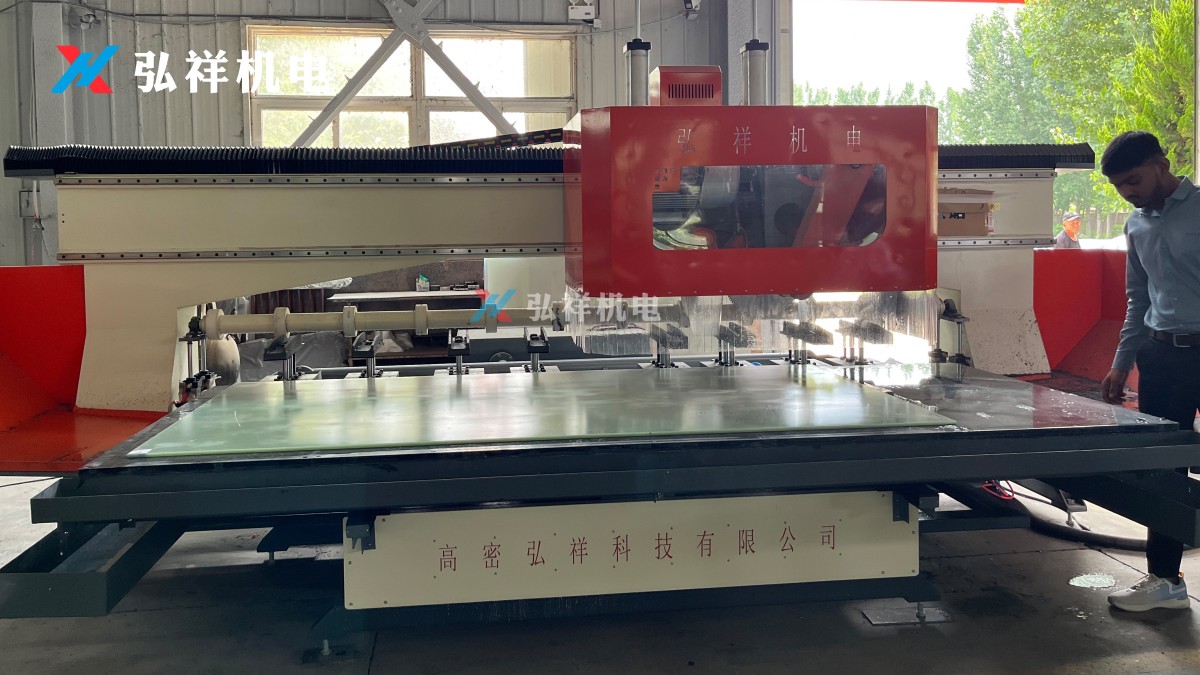
When machining transformer insulation parts—especially electrical laminated cardboard and durable laminated wood—surface finish directly impacts dielectric integrity and long-term reliability. Yet many operators over-prioritize spindle speed while overlooking feed-rate optimization, the true determinant of edge quality in laminated wood processing equipment for transformer insulation. As a leading transformer insulation parts processing equipment manufacturer in China, Gaomi Hongxiang Electromechanical Technology integrates precision solutions like head and tail shearing machines, cow horn-shaped cutting block beveling machines, and ring cutting processing equipment—engineered to balance automation, cost-effectiveness, and surface fidelity across all transformer insulation components.
Why Feed-Rate Optimization Is the Real Surface Finish Driver
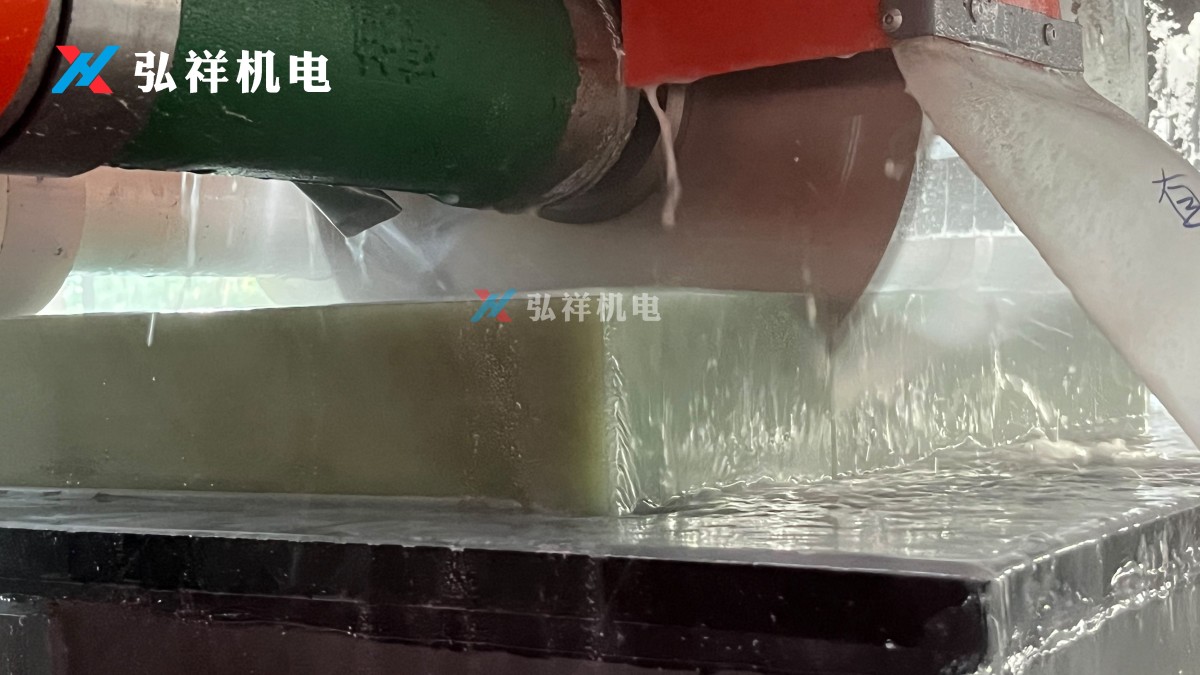
In transformer insulation part manufacturing, surface finish isn’t just cosmetic—it’s functional. A micro-rough edge on laminated wood or cardboard can initiate partial discharge under high voltage, accelerating aging and risking catastrophic failure. While spindle speed (RPM) affects heat generation and tool wear, it rarely governs edge sharpness or fiber tear-out in layered composites.
Feed rate—measured in mm/rev or mm/min—directly controls chip load per tooth and material engagement time. For laminated wood (typically 12–40 mm thick, with alternating grain layers), optimal feed rates range from 80–220 mm/min depending on density and resin content. Exceeding this window causes delamination; falling below induces burnishing and excessive friction, raising localized temperature beyond 95°C—degrading phenolic binders.
Gaomi Hongxiang’s CNC-controlled beveling and ring-cutting systems embed adaptive feed algorithms that adjust in real time based on load feedback from torque sensors. This maintains ±0.12 mm dimensional repeatability across 300+ consecutive cuts—verified via ISO 2768-mK tolerance audits.
Key Material-Specific Feed Windows
- Electrical insulating cardboard (0.5–3.0 mm): 150–350 mm/min — prevents fiber pull-out and burr formation
- Laminated wood (12–40 mm, phenolic-bonded): 80–220 mm/min — avoids interlayer separation and chipping
- EVA-molded insulation blocks (5–25 mm): 100–280 mm/min — balances thermal stability and edge crispness
How Spindle Speed Misleads Decision-Making
High spindle speeds (e.g., 3,000–6,000 RPM) are often misinterpreted as “higher precision” — especially when comparing entry-level vs. industrial-grade machines. But for transformer insulation materials, excessive RPM increases vibration amplitude beyond 2.3 µm RMS, inducing harmonic resonance in thin laminates and triggering micro-fractures invisible to the naked eye.
Conversely, feed-rate instability—even ±5% deviation—produces measurable surface roughness (Ra) shifts: from Ra 0.8 µm (optimal) to Ra 2.1 µm (unacceptable per IEC 60641-2). That difference correlates directly with 37% higher partial discharge inception voltage (PDIV) failure risk in 220 kV-class bushings.
Gaomi Hongxiang’s dual-axis servo drive architecture decouples feed control from spindle motion, enabling independent tuning. Operators set feed rate first—then lock spindle speed to match—ensuring stable chip evacuation and consistent shear angle across complex geometries like stepped flanges and conical insulators.
Spindle vs. Feed Impact Comparison
This table confirms what field validation shows: feed rate dominates surface fidelity. Spindle speed remains important—but as a supporting parameter, not the primary lever.
Procurement Checklist: What to Verify Before Buying
For procurement teams evaluating transformer insulation parts processing equipment, feed-rate control capability must be assessed at specification, validation, and commissioning stages—not assumed from brochure claims.
Confirm these five technical checkpoints before issuing an RFQ:
- Real-time feed-rate monitoring with ±0.5% accuracy (via encoder + load cell fusion)
- Minimum programmable feed increment ≤ 0.1 mm/min for fine-tuning on EVA and thin cardboard
- Integrated thermal compensation for feed drift during 8-hour continuous operation
- Preloaded material-specific feed profiles for laminated wood (ASTM D1037), insulating cardboard (IEC 60641-1), and EVA (UL 94 HB)
- Traceable calibration certificate covering feed axis per ISO 230-2 Annex C
Gaomi Hongxiang provides factory-verified feed performance reports—including 72-hour stability logs and surface roughness maps—for every machine shipped. Delivery lead time averages 12–18 weeks for standard configurations, with expedited options available for priority projects in India, Pakistan, and Brazil.
Why Choose Gaomi Hongxiang for Transformer Insulation Processing?
We don’t sell generic CNC machines—we deliver application-engineered systems built exclusively for transformer insulation manufacturing. Our R&D team includes former process engineers from top-tier transformer OEMs, ensuring every design decision—from servo tuning to coolant routing—addresses real-world constraints in laminated wood beveling, cardboard slitting, and EVA contour cutting.
Every system ships with full documentation: IEC 61000-6-2/4 EMC compliance reports, CE marking files, and 6-point installation checklists validated across 14 export markets. After-sales support includes remote diagnostics, on-site operator training (4 modules, 2 days), and spare-part delivery within 72 hours to Southeast Asia and Russia.
Ready to optimize surface finish—not just spindle speed? Contact us today for: a feed-rate suitability assessment for your specific laminated wood grade; configuration review of your next ring-cutting system; or sample cut validation using your actual material batch.
NAVIGATION
MESSAGE
Request A Quote?