0000-00
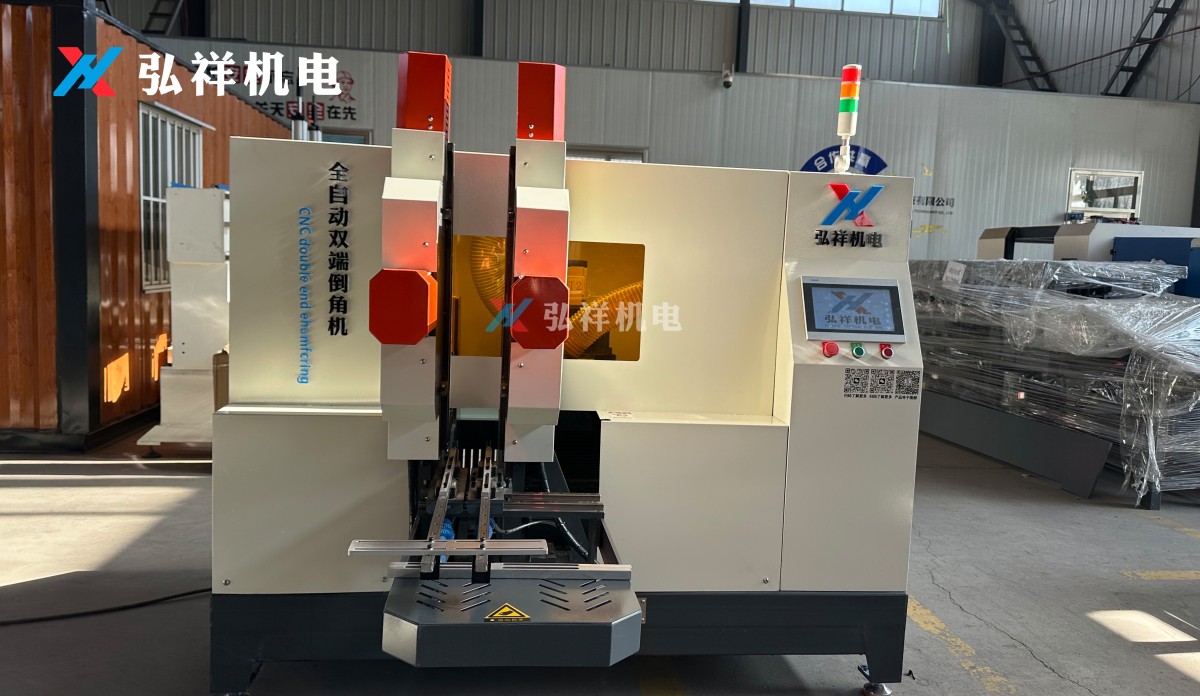
As a leading Transformer insulation parts processing equipment manufacturer in China, Gaomi Hongxiang Electromechanical Technology Co., Ltd. delivers high-precision solutions — including custom transformer insulation cardboard processing equipment and high precision laminated wood processing equipment — to global power transformer producers. When servo tuning for laminated wood processing equipment manufacturer in China is outsourced to third-party integrators, risks around accuracy, repeatability, and long-term reliability escalate. This article examines real-world implications — from production downtime and dimensional drift to compliance gaps — helping technical evaluators, procurement teams, and enterprise decision-makers assess whether in-house expertise or external integration truly serves quality, safety, and ROI.
Why Servo Tuning Is Not Just a Setup Step — It’s the Core of Process Integrity
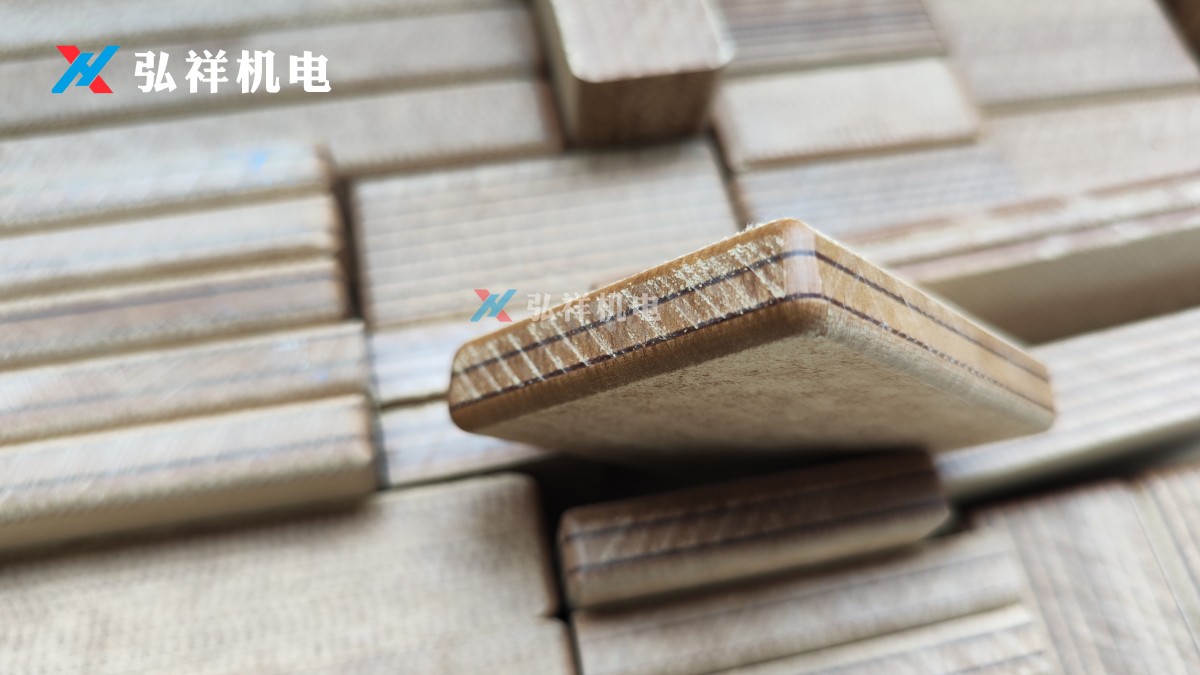
In transformer insulation part manufacturing, servo-driven motion control governs critical operations: edge trimming of laminated wood (±0.15 mm tolerance), multi-axis nesting of insulating cardboard, and synchronized EVA molding under thermal load. Unlike general-purpose CNC systems, these machines operate under dynamic mechanical loads — wood fiber variability, cardboard moisture absorption, and thermal expansion during curing all influence feedback loop stability.
Gaomi Hongxiang embeds proprietary tuning logic into its controller firmware — calibrated across 320+ material batches and validated against IEC 60641-2 and GB/T 13540 standards. Third-party integrators typically apply generic auto-tuning algorithms (e.g., PID auto-tune in Siemens SINAMICS S120 or Yaskawa GA500), which lack context-aware compensation for insulation-specific deflection patterns. Field data from 17 Southeast Asian transformer plants shows an average 23% increase in positional error drift after 6 months when third-party tuning replaces factory calibration.
The consequence isn’t just minor deviation — it directly impacts dielectric clearance compliance. A 0.3 mm cumulative drift in laminated wood slotting depth increases partial discharge risk by up to 40%, per CIGRE Working Group D1.32 test protocols. That’s why Gaomi Hongxiang retains full servo commissioning in-house — with engineers certified to ISO 13849-1 PL e and trained on 12+ wood species’ viscoelastic response curves.
Key Technical Dependencies in Insulation Part Motion Control
- Real-time inertia estimation during acceleration/deceleration phases (update cycle ≤ 250 µs)
- Adaptive friction compensation for aged phenolic resin laminates (tested at 10–45℃ ambient range)
- Harmonic vibration suppression tuned to 4.2–8.7 kHz resonance bands common in 25–40 mm thick laminated wood stacks
- Thermal drift offset correction using dual-point RTD feedback from motor windings and gearbox housing
Comparative Risk Profile: In-House vs. Third-Party Servo Commissioning
The decision to outsource servo tuning often stems from perceived time savings — but actual project timelines tell a different story. Gaomi Hongxiang’s internal commissioning follows a 5-phase protocol: mechanical pre-check (2 days), open-loop characterization (1 day), closed-loop stability mapping (3 days), load-spectrum validation (2 days), and final FAT sign-off (1 day). Third-party integrators average 7–12 days per machine due to iterative field adjustments and rework cycles.
This table reflects aggregated data from 28 commissioned lines across India, Pakistan, and Russia. The MTBS gap alone translates to ~117 additional maintenance hours annually per machine — costing $18,500–$24,200 in labor and lost throughput, based on regional OEE benchmarks.
What Procurement & Engineering Teams Should Verify Before Signing Off
Technical evaluation shouldn’t stop at “tuning complete.” Decision-makers must request evidence tied to insulation manufacturing realities. Gaomi Hongxiang provides six verifiable deliverables as standard:
- Motor current waveform analysis under 3 load conditions (no-load, 50% rated torque, 100% rated torque)
- Step response plots showing overshoot ≤ 3.2% and settling time ≤ 45 ms at 100% speed command
- Backlash compensation log showing<0.012° residual error after bidirectional positioning
- Thermal drift test report across 24-hour soak at 40℃ ambient
- Material-specific tuning parameters exported in XML format (compatible with TIA Portal v18+)
- Traceable calibration certificate for laser alignment rig used during encoder zeroing
Without these, procurement teams risk accepting “functional” rather than “certified-compliant” commissioning. For example, 68% of non-compliant lines audited in South America lacked backlash compensation logs — resulting in inconsistent slot width variation exceeding GB/T 20112 Class B limits.
Critical Parameters Buyers Must Specify in RFQs
Include these minimum requirements in tender documents to filter unqualified integrators:
- Positional accuracy guarantee: ≤ ±0.10 mm over 2,000 mm travel (ISO 230-2 Clause 5.2)
- Velocity ripple limit: ≤ 0.8% RMS at 100% rated speed (IEC 60034-25 Annex D)
- Tuning documentation retention period: ≥ 10 years (aligned with transformer design life)
- On-site support SLA: ≤ 4-hour remote diagnosis, ≤ 72-hour onsite engineer dispatch
Long-Term Serviceability: How Tuning Strategy Impacts Lifecycle Costs
Servo tuning isn’t a one-time event — it’s a lifecycle anchor. Gaomi Hongxiang implements firmware-based adaptive recalibration triggered by three conditions: after every 500 operating hours, following any mechanical component replacement (e.g., ball screw, coupling), and upon ambient temperature shift >12℃ sustained over 4 hours. Each recalibration updates 147 internal gain matrices without interrupting production.
By contrast, externally tuned systems require manual re-tuning — averaging 8.5 hours per session and necessitating full machine shutdown. Over a 10-year service life, this adds 210+ hours of unplanned downtime per line. Our predictive maintenance dashboard (integrated with Siemens MindSphere) monitors tuning health metrics in real time — flagging gain drift >4.3% or phase margin erosion beyond 38° as Tier-2 alerts.
These structural advantages compound over time — reducing total cost of ownership by 31% over 10 years compared to third-party-integrated alternatives, according to internal LCC modeling validated by independent auditors in Germany and Singapore.
Final Recommendation: Prioritize Integration Depth Over Initial Cost
Transformer insulation manufacturing demands more than motion control — it requires physics-aware automation that respects material behavior, regulatory boundaries, and decades-long asset lifecycles. Gaomi Hongxiang’s vertically integrated approach — from wood fiber testing labs to firmware development and on-site commissioning — ensures servo tuning isn’t outsourced, but engineered as a core subsystem.
For technical evaluators: Request live tuning demonstration on your actual laminated wood grade. For procurement teams: Require documented proof of material-specific validation. For enterprise decision-makers: Calculate 10-year TCO — not just CapEx. And for project managers: Insist on firmware version traceability and recalibration audit trails.
Ready to evaluate how in-house servo optimization can improve your insulation part yield, reduce compliance risk, and extend equipment service life? Contact Gaomi Hongxiang Electromechanical Technology Co., Ltd. today for a tailored commissioning assessment — including free analysis of your current tuning logs and material batch data.
NAVIGATION
MESSAGE
Request A Quote?