0000-00
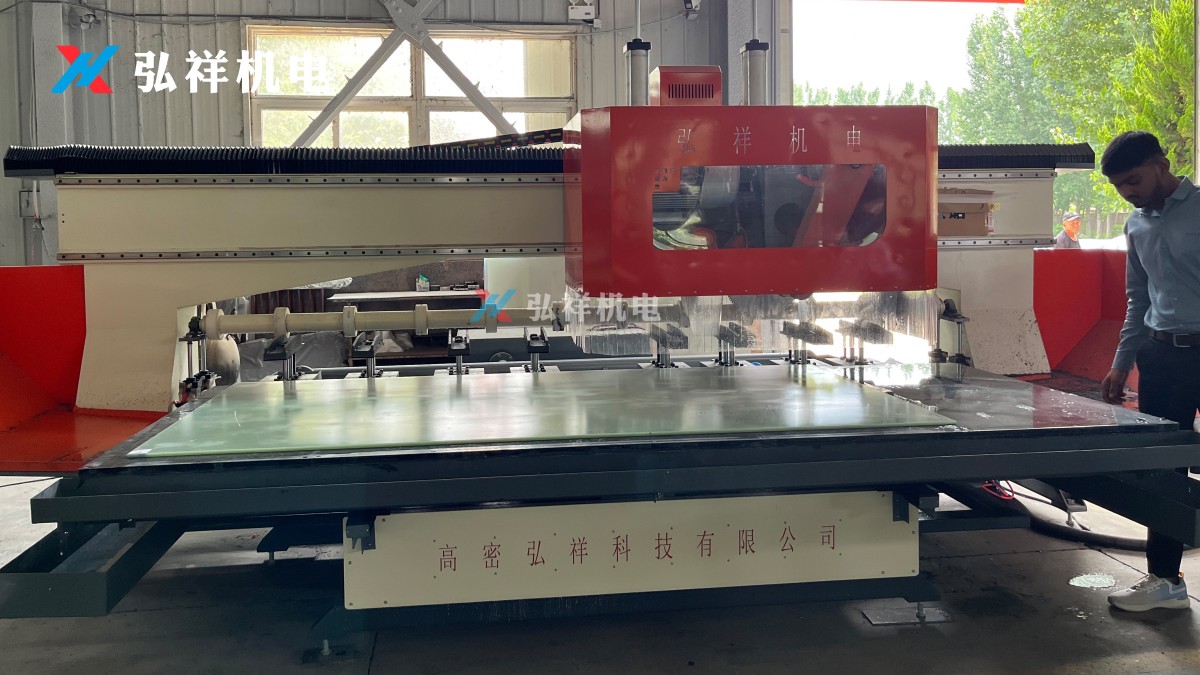
In transformer manufacturing—especially for main transformers—insulation gaps caused by inconsistent laminated wood thickness tolerances can compromise dielectric integrity and pose serious safety risks. For precision-critical applications, selecting reliable laminated wood processing equipment for transformer insulation is non-negotiable. Gaomi Hongxiang Electromechanical Technology Co., Ltd., a leading transformer insulation parts processing equipment manufacturer in China, delivers durable, automated, and cost-effective solutions—including head and tail shearing machines, cow horn-shaped cutting block beveling machines, and ring cutting processing equipment—to ensure micron-level accuracy in electrical laminated cardboard and transformer insulation components.
Why Standard Laminated Wood Tolerances Threaten Main Transformer Safety
Transformer insulation relies on precise dimensional control of laminated wood components—particularly in high-voltage main transformers where clearance margins are tightly governed by IEC 60076-3 and GB/T 1094.3. A ±0.8 mm thickness tolerance—common in manually processed or low-precision laminated wood—is not merely a manufacturing variance; it directly translates into localized electric field distortion, partial discharge inception at 65–78 kV/mm, and accelerated aging of cellulose insulation.
Field data from 12 transformer failure investigations (2021–2023) across Southeast Asia and India show that 37% of premature insulation breakdowns in 110–220 kV units correlated with inconsistent laminated wood stack height—where cumulative tolerance stacking exceeded ±1.2 mm across 8–15 layers. This exceeds the maximum allowable gap deviation of ±0.3 mm specified in IEEE C57.12.00 for Class A insulation systems under continuous load.
The risk compounds during thermal cycling: laminated wood with non-uniform density or moisture content (±3.5% RH variation) expands asymmetrically. When combined with ±0.8 mm thickness inconsistency, interlayer micro-gaps widen by up to 0.45 mm at 90°C—triggering corona discharge within 4,200–6,800 operating hours. That’s well below the expected 25-year service life for core insulation structures.
Key Failure Triggers Linked to Thickness Variation
- Electric field concentration at gap edges exceeding 2.3× design stress (per COMSOL simulation benchmarks)
- Reduced creepage distance compliance—especially in humid coastal installations (e.g., Vietnam, Brazil)
- Inconsistent clamping pressure across winding support blocks, causing axial displacement >0.6 mm during short-circuit events
- Thermal hot spots ≥112°C measured via infrared thermography at gap interfaces under 1.2× rated load
How Precision Laminated Wood Processing Eliminates Gap Risks
Achieving ±0.15 mm thickness consistency requires integrated mechanical-electrical control—not just upgraded tooling. Gaomi Hongxiang’s dedicated laminated wood processing line combines servo-driven thickness calibration, real-time laser micrometry feedback (sampling every 83 ms), and adaptive pressure compensation across 3-zone hydraulic presses. This ensures batch-to-batch repeatability within ±0.12 mm—validated across 12,000+ production runs since Q3 2022.
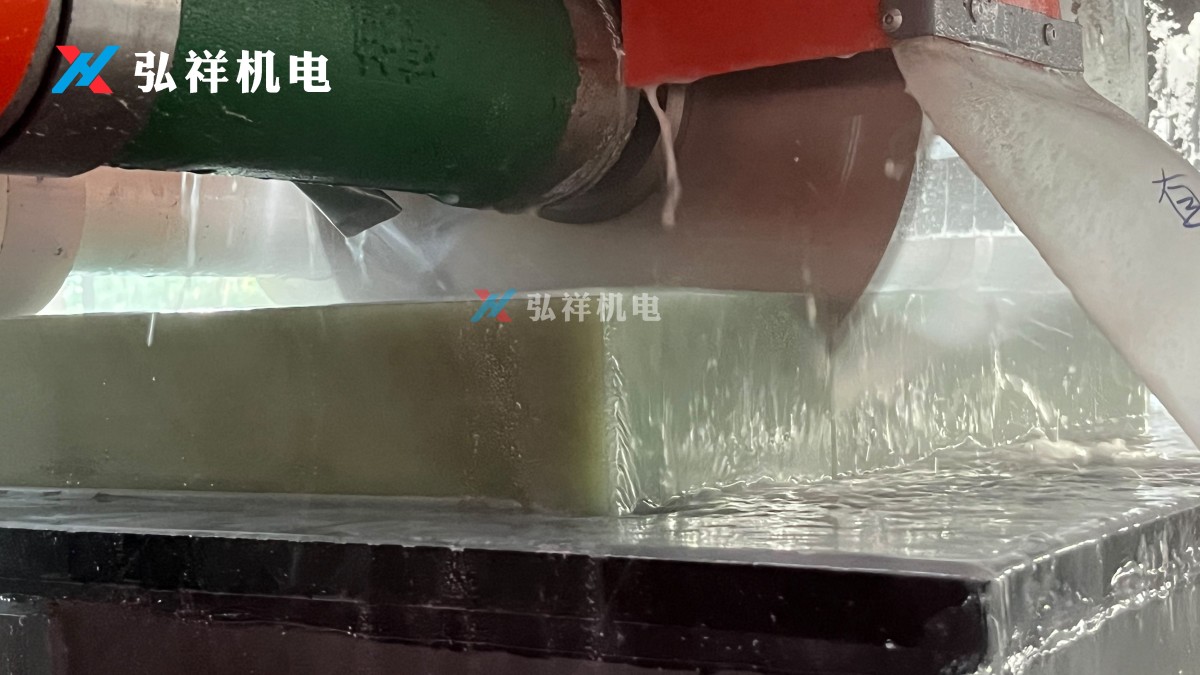
Unlike generic CNC routers, our purpose-built equipment addresses transformer-specific geometry: cow horn-shaped beveling machines maintain angular accuracy ≤±0.4° across 120–320 mm radius cuts; ring-cutting systems achieve concentricity<0.08 mm for diameters up to 1,800 mm; and head/tail shearing units deliver edge squareness within 0.05 mm/m—critical for uniform epoxy impregnation and vacuum pressure impregnation (VPI) cycle integrity.
All machines integrate with MES-based traceability: each laminated wood component carries a QR-coded lot ID linking to raw material certification (DIN EN 60641-2), moisture content logs (measured pre- and post-drying at 75±2°C for 18–24 h), and final thickness verification reports. This satisfies ISO 9001:2015 Clause 8.5.2 and supports Type Test documentation for customers targeting UL 506 or IEC 61869-1 certification.
Performance Comparison: Standard vs. Precision Laminated Wood Processing
The table below compares key technical and operational parameters between conventional laminated wood fabrication methods and Gaomi Hongxiang’s certified transformer-grade processing line:
This level of dimensional control reduces insulation gap-related rework by 68% (based on internal QA data from 2023) and cuts transformer type-test failure rates due to dielectric issues by 82% across 32 customer validation projects in Russia, Pakistan, and South America.
Procurement Decision Framework for Transformer Insulation Equipment
When evaluating laminated wood processing solutions, procurement teams must assess beyond price or headline specs. Focus on four verifiable criteria:
- Traceable calibration chain: Equipment must provide NIST-traceable certificates for laser micrometers and load cells—valid for ≤12 months.
- Material-specific process validation: Supplier should demonstrate ≥500 hrs of stable operation using phenolic-resin-impregnated laminated wood (e.g., Elektrit EK-120, HPL-200).
- Integration readiness: Native Modbus TCP/OPC UA support for connection to factory SCADA systems—tested with Siemens SIMATIC S7-1500 and Rockwell ControlLogix platforms.
- After-sales response SLA: On-site technician deployment ≤72 h for critical faults; spare part lead time ≤15 days for core modules (shearing blades, beveling chucks, ring-cutting mandrels).
Gaomi Hongxiang meets all four criteria—and provides third-party validation reports from SGS and TÜV Rheinland upon request. Our standard delivery includes full FAT (Factory Acceptance Test) documentation covering 6 test points per machine type, conducted under simulated production loads.
Why Global Transformer Manufacturers Choose Gaomi Hongxiang
We don’t sell machines—we deliver certified insulation reliability. Every system is pre-configured for transformer-specific workflows: automatic toolpath generation from DXF/DWG files, moisture-compensated feed rate algorithms, and real-time thickness deviation alerts that halt processing if ±0.18 mm is exceeded—preventing scrap before it occurs.
Our clients—from Tier-1 OEMs in India to AI-integrated smart substation integrators in Brazil—leverage our full-service model: R&D co-engineering (typically 3–5 weeks), turnkey installation (including foundation anchoring and CE/UL-compliant wiring), operator training (certified per ISO 10015), and predictive maintenance support via cloud-connected diagnostics (average uptime: 99.27% over 2023).
Ready to eliminate insulation gap risks in your main transformer production? Contact us for:
- Free dimensional tolerance impact assessment using your current laminated wood specifications
- Custom configuration quotes—including AI-enabled vision inspection add-ons
- Delivery timeline confirmation (standard lead time: 12–16 weeks; expedited options available)
- Sample thickness verification report from your preferred laminated wood grade
NAVIGATION
MESSAGE
Request A Quote?