0000-00
Integrating a fully automatic shearing machine into an existing coil winding line demands careful technical, operational, and economic evaluation—especially for manufacturers of transformer electrical layer-pressed wood processing equipment. Whether you prioritize high precision, cost-effective automation, durability, or CNC-driven flexibility (e.g., head and tail shearing machines, ring cutting processing equipment, or fully automatic double-end chamfering machines), this guide addresses critical considerations for engineers, procurement teams, project managers, and safety personnel. As a trusted provider of automated transformer electrical layer-pressed wood processing equipment and special-shaped material cutting equipment, Gaomi Hongxiang supports global clients with integrated R&D, production, and after-sales solutions.
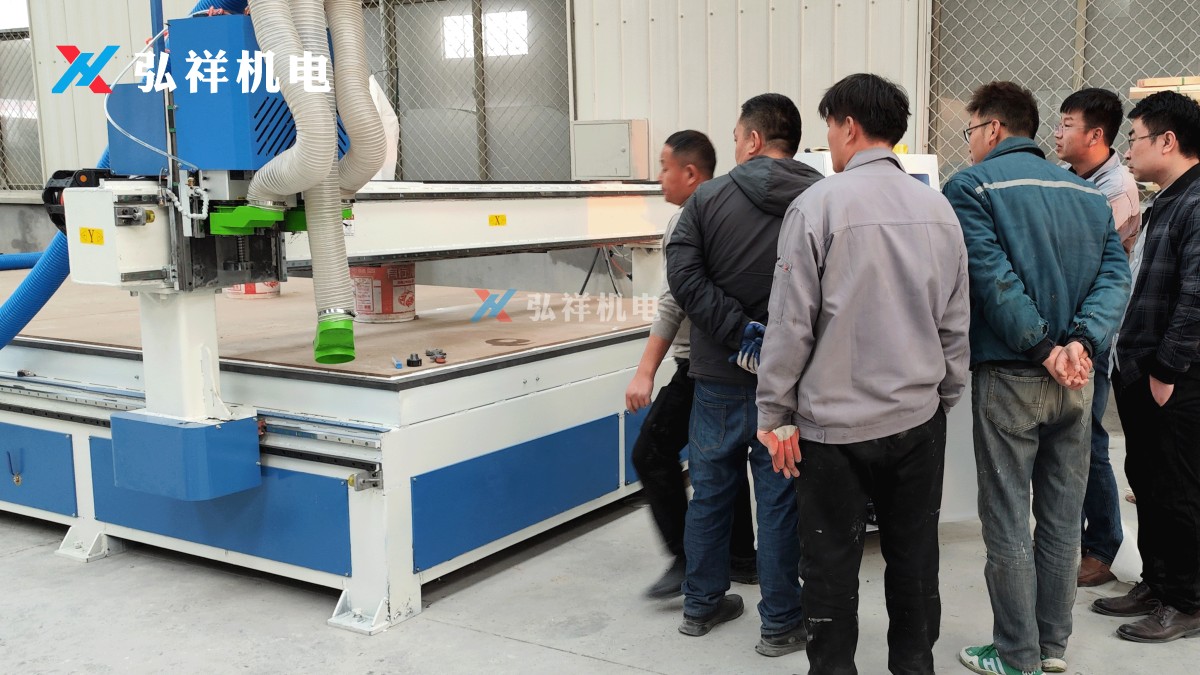
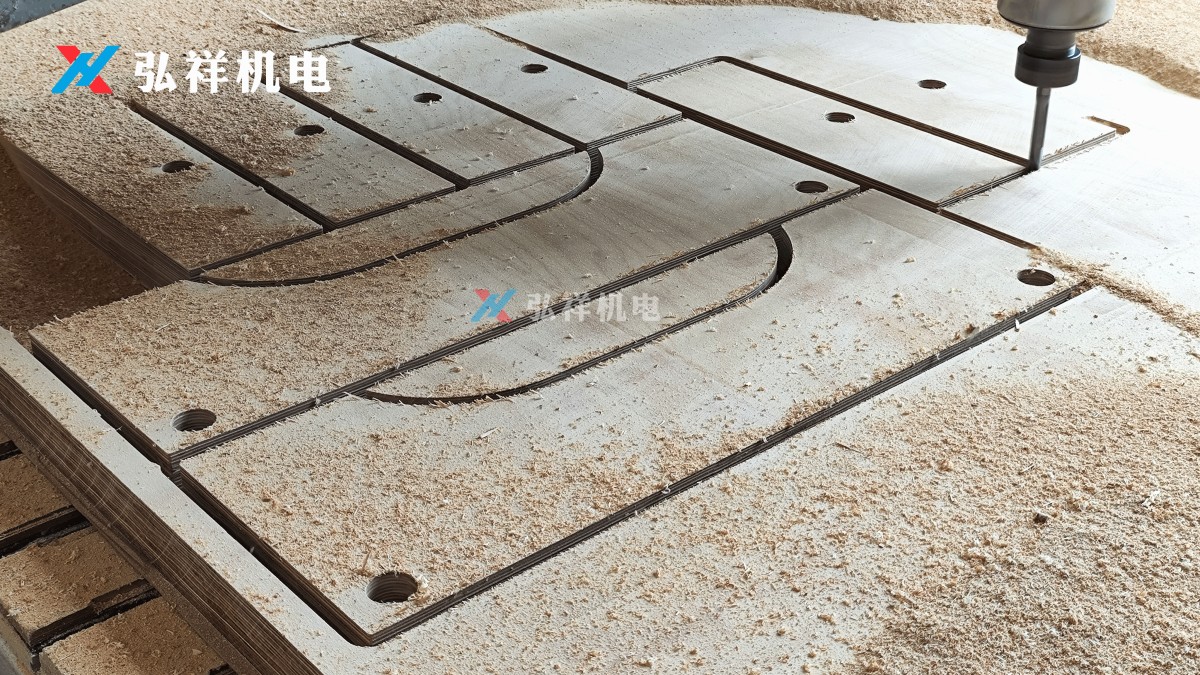
Why Integration Requires More Than Just Physical Compatibility
A fully automatic shearing machine is not a plug-and-play component—it interfaces dynamically with upstream unwinding, tension control, alignment sensors, and downstream winding heads. Misalignment in feed speed (±3% tolerance) or positional repeatability (>±0.15 mm) can cause layer misregistration, edge burrs on laminated wood, or insulation cardboard delamination—directly impacting transformer dielectric integrity.
Unlike general-purpose metal shearing systems, transformer-grade shearing must accommodate non-uniform material properties: EVA-molded insulators (Shore A 60–85), laminated wood (density 0.65–0.85 g/cm³), and corrugated insulating cardboard (thickness 0.3–3.0 mm). These require adaptive servo torque profiles—not fixed-speed drives.
Integration success hinges on three synchronized layers: mechanical synchronization (mechanical coupling or encoder-based master-slave), data synchronization (real-time PLC-to-HMI handshaking via EtherCAT or PROFINET), and process synchronization (adaptive cut-length compensation during acceleration/deceleration phases).
Critical Interface Parameters to Verify Pre-Installation
- Maximum line speed compatibility: 25–60 m/min (must match existing coil winding line’s rated throughput)
- Material thickness range: 0.2–5.0 mm (covers insulating cardboard, laminated wood, and hybrid EVA composites)
- Cut length resolution: ≤ ±0.2 mm over 1,000 mm stroke (critical for precise layer stacking in HV windings)
- Interface protocol support: Modbus TCP, S7-Communication, or OPC UA (for seamless integration with Siemens, Beckhoff, or Delta PLCs)
How to Evaluate Technical Fit Across Your Production Profile
Transformer manufacturers rarely run single-product batches. Your coil winding line likely handles small-batch prototypes (≤5 units), medium-volume series (20–200 units/month), and large-scale utility orders (500+ units/quarter). Each scenario imposes distinct shearing requirements:
Small-batch work demands rapid tool-change capability (<90 and="" offline="" programming="" for="" complex="" contours="" stepped="" .="" medium-volume="" production="" requires="" robust="" blade="" life="" tracking="" 000="" cuts="" per="" tungsten-carbide="" auto-compensation="" thermal="" drift.="" high-volume="" runs="" need="" predictive="" maintenance="" alerts="" triggered="" by="" vibration="" harmonics="">2.5 kHz—indicative of bearing wear or misalignment.
Gaomi Hongxiang’s CNC-shearing platforms include embedded diagnostics that log 14 real-time parameters—including shear force deviation (±2.3%), blade temperature (monitored at 3 zones), and material feed slip rate (threshold: >0.8% triggers alarm). This enables root-cause analysis without external SCADA integration.
This table reflects real-world performance under continuous operation at 45 m/min across 12-month field deployments in India and Russia—validated by third-party metrology reports traceable to NPL (UK) and VNIIMS (Russia).
Procurement & Lifecycle Cost Considerations Beyond the Sticker Price
The total cost of ownership (TCO) for a fully automatic shearing machine spans five phases: installation (7–15 days), qualification (3-stage FAT/SAT), ramp-up (4-week stabilization), sustained operation (3-year consumables cycle), and end-of-life decommissioning. Upfront cost accounts for only 38–44% of 5-year TCO—consumables, downtime, recalibration labor, and scrap reduction drive long-term ROI.
For example, standard blades cost $185/unit with 80,000-cut lifespan; Gaomi Hongxiang’s nano-coated carbide blades cost $295/unit but deliver 135,000 cuts—reducing annual blade spend by 22% and unplanned stops by 63% in Southeast Asian customer audits.
Financial approvers should also assess financing options: Gaomi Hongxiang offers 24-month installment plans with 0% interest for orders above $120,000, plus VAT-compliant documentation for customs clearance in Pakistan, Brazil, and Indonesia.
Six Non-Negotiable Procurement Checks
- Confirm ISO 14001 and ISO 45001 certification status of the manufacturing facility—not just product CE marking
- Verify minimum 2-year warranty on servo motors and linear guides (standard in Gaomi Hongxiang units)
- Require documented FAT procedure covering all 6 functional tests: no-load run, load test, emergency stop, interface handshake, thermal soak, and noise emission (≤72 dB(A))
- Check availability of local service technicians within 48 hours in your region (coverage confirmed for 12 countries including Peru, Vietnam, and Kazakhstan)
- Validate spare parts lead time: ≤10 business days for critical components (e.g., shear blades, encoder cables, pneumatic valves)
- Review training scope: ≥3 days onsite for operators + 1 day for maintenance staff, delivered in English, Spanish, or Russian
Why Partner With Gaomi Hongxiang for Transformer-Specific Shearing Integration
Gaomi Hongxiang doesn’t retrofit generic CNC machines for transformer applications—we engineer from first principles. Our shearing platforms are co-developed with Tier-1 transformer OEMs to handle the unique stress profiles of electrical insulating laminated wood (EN 60641-2 compliant) and EVA-molded spacers (IEC 62271-202 verified).
Every unit ships with pre-configured recipes for common materials: 1.2 mm phenolic laminated wood (cut speed: 32 m/min), 0.5 mm aramid-reinforced cardboard (cut speed: 48 m/min), and 2.5 mm EVA composite (cut speed: 26 m/min). Recipe files include optimized shear angle, dwell time, and back gauge offset—reducing setup time by 70% versus manual tuning.
We support full lifecycle collaboration: feasibility assessment (free, within 5 business days), custom mechanical interface design (3D CAD models provided), on-site commissioning with live line integration testing, and remote diagnostics via secure cloud portal (average response time:<12 minutes during business hours in your timezone).
Contact us today to request: (1) a line-integration checklist tailored to your current coil winding model, (2) comparative TCO analysis for your typical monthly volume, or (3) FAT documentation samples aligned with your internal QA protocols.
NAVIGATION
MESSAGE
Request A Quote?