0000-00
What High-Precision Laminated Wood Processing Equipment Means for Dimensional Accuracy
For technical evaluation, dimensional accuracy is rarely just a machining issue. In laminated wood parts used for transformer insulation, structural support, or engineered electrical assemblies, dimensional stability affects assembly fit, dielectric spacing, downstream finishing, and long-term consistency from batch to batch. That is why high precision laminated wood processing equipment deserves closer attention than a simple claim of “better accuracy.” The real question is what kind of accuracy the equipment can hold, under what material conditions, and across which operations.
This matters even more with laminated wood than with many standard metalworking or plastics applications. Laminated wood is not isotropic. Its layered structure, moisture response, adhesive characteristics, and internal stress behavior all influence how the material reacts during cutting, drilling, slotting, and edge finishing. A machine may show acceptable positioning performance in a dry test, yet still produce variable results on real parts if feed control, fixturing, spindle behavior, or dust extraction are not matched to the material.
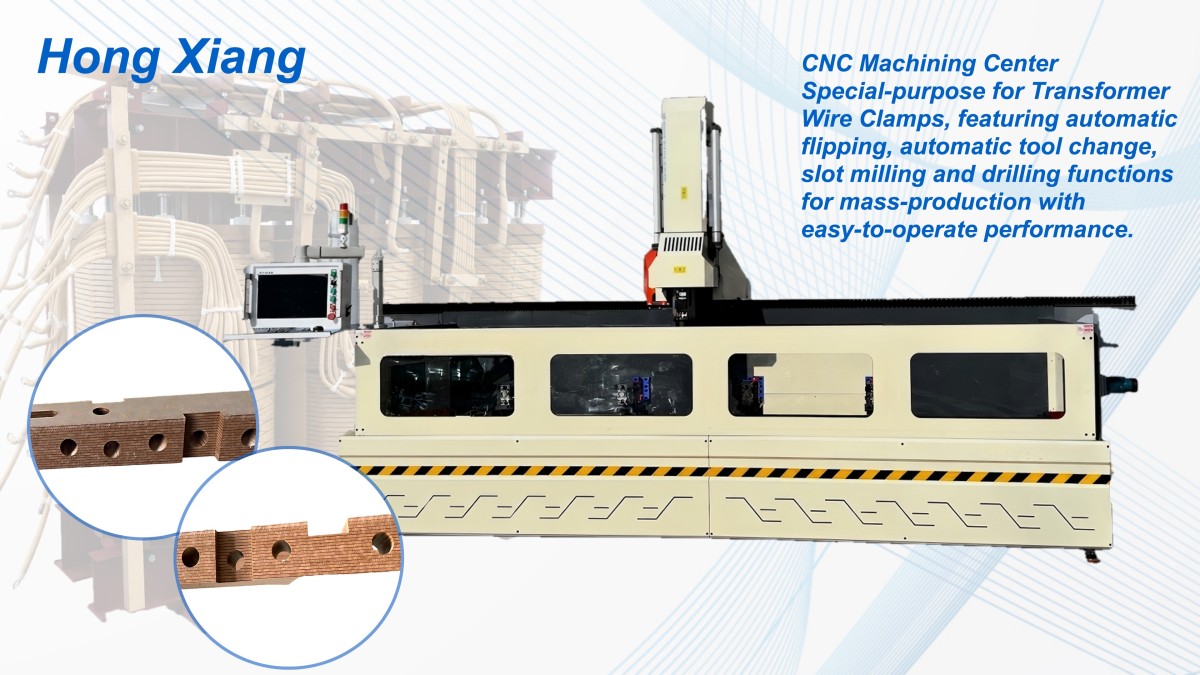
Accuracy starts before the cutting tool touches the workpiece
When engineers discuss dimensional accuracy, they often focus on finished size tolerance. That is necessary, but incomplete. In laminated wood processing, finished dimensions depend on several upstream variables: panel flatness, internal bonding uniformity, storage condition, workholding stability, and the machine’s ability to follow programmed geometry without vibration or thermal drift.
A high-precision machine platform usually improves results in four practical ways. It provides more stable axis motion, better repeatability across cycles, cleaner spindle performance, and more controlled material support during machining. These are not abstract benefits. They directly affect whether slots stay parallel, whether multi-hole patterns align during assembly, whether shoulders remain square, and whether a part cut in the morning matches one produced later in the shift.
For technical reviewers, the useful distinction is between nominal machine accuracy and process-capable accuracy. Nominal figures from a brochure may describe axis positioning under test conditions. Process-capable accuracy asks something harder: can the equipment maintain the required part dimensions on laminated wood, with realistic tool wear, routine operator variation, and production throughput targets?
Why laminated wood is a demanding material from a tolerance standpoint
Engineered laminated wood used in electrical applications is chosen for mechanical strength and insulation-related performance, but it presents machining challenges that do not disappear just because the machine is numerically controlled. The material can chip at edges, compress slightly under clamping, or respond differently along and across its grain structure. Layer interfaces may also influence tool load during contouring and hole-making.
That means dimensional deviation is often a combined effect of machine, tool, fixture, and material behavior. If any of these are weak, the finished part reflects it. A rigid machine with poor vacuum or clamping design may still allow panel shift. A good spindle with unstable tool holding may introduce edge taper or inconsistent bore quality. Even a well-built machine may struggle if process parameters are copied from ordinary wood machining rather than adapted for laminated electrical materials.
In transformer-related manufacturing, these details become less forgiving. Parts frequently need to mate with other insulating components, maintain consistent clearances, or fit assembly processes that assume repeatable geometry. Small dimensional differences can turn into manual fitting, rework, or rejection later, especially where multiple machined parts stack together.
What to examine in high precision laminated wood processing equipment
If the goal is dimensional accuracy rather than general productivity, the evaluation should go deeper than spindle power and table size.
Machine structure comes first. Frame rigidity, guideway quality, and vibration behavior have a direct effect on contour stability and edge straightness. Laminated wood may not generate the same cutting forces as heavy metal removal, but it can still expose dynamic weakness, particularly during high-speed routing, deep slotting, or repetitive drilling patterns.
Motion control is just as important. Servo tuning, interpolation quality, backlash control, and repeatability under actual cycle conditions all influence the consistency of part geometry. For evaluators, repeatability often deserves more attention than a single maximum positioning number, because production value depends on whether the hundredth part matches the first one.
Spindle and tooling interface should not be treated as secondary. Runout, bearing stability, tool clamping precision, and spindle thermal behavior affect hole diameter, wall finish, edge breakout, and tool life. In laminated wood processing, where clean edges and accurate thickness transitions may matter, spindle quality becomes part of the dimensional control chain.
Workholding deserves careful scrutiny. Flatness control and anti-movement support are critical, especially for thinner boards, longer components, or multi-operation parts. Vacuum systems, mechanical fixtures, and custom jigs each have their place, but the method must match the part geometry and the material’s tendency to move under load.
Dust extraction also enters the accuracy discussion. Fine debris trapped between workpiece and support surface can alter height reference and part seating. In drilling and pocketing operations, poor chip evacuation may increase heat, degrade cut quality, and affect dimensional consistency over time.
Tolerance control is a system, not a machine label
One common mistake in equipment selection is assuming that a more expensive or more automated machine automatically guarantees tighter tolerances. In practice, the accuracy outcome depends on how the machine integrates with process engineering.
A technically sound evaluation usually asks for evidence around the full process chain: material preparation, reference setup, clamping, tooling strategy, cutting parameters, inspection method, and maintenance routine. Without that context, “high precision” remains a vague marketing phrase.
This is where manufacturers with experience in transformer-related insulating materials often have an advantage. Companies such as Gaomi Hongxiang Electromechanical Technology Co., Ltd., which work across power transformer assembly and the processing of electrical insulating cardboard, insulating laminated wood, and insulating parts, tend to understand that dimensional accuracy is inseparable from application context. Integration of R&D, design, production, installation, training, and after-sales service can matter because precision problems in this field are often solved by adjusting the process, fixture, or machine configuration together rather than by changing one component in isolation.
That does not mean every integrated supplier will automatically fit every project. It means the evaluation should include whether the supplier understands the material and application well enough to define a realistic tolerance strategy.
Questions that reveal real capability
Technical assessors often get more useful answers by changing the questions they ask. Instead of only requesting general precision specifications, ask how the machine performs on laminated wood with similar thickness, density, and feature complexity to the target part. Ask what fixturing method is recommended and why. Ask how tool wear is monitored and how often recalibration is typically needed under production conditions. If the process includes hole arrays, stepped surfaces, or long narrow slots, ask how consistency is verified across the full working area.
It is also worth clarifying how dimensional inspection is defined. Some suppliers refer to machine repeatability; others refer to finished-part measurement. These are not interchangeable. Finished-part capability is the more relevant standard for procurement decisions, but it usually requires agreed measurement methods, environmental conditions, and acceptance criteria.
For export-oriented projects, additional alignment may be needed around local operating expectations, training level, spare parts access, and after-sales responsiveness. A machine that performs well in trial production can still create accuracy risk later if operators are not trained on fixture setup, tool replacement standards, or maintenance routines.
Where dimensional errors usually appear
In laminated wood machining, dimensional problems often show up in recognizable patterns. Hole centers drift because the board was not fully supported. Slot widths vary because tool wear was not compensated. Outer contours remain within size, but edge quality deteriorates because spindle condition or feed rate is no longer appropriate. Thickness-related features go out of tolerance because the panel reference plane changed between operations.
These are not minor shop-floor issues. They indicate whether the equipment and process are robust enough for scale. A technically strong line should help reduce dependence on operator correction and manual fitting. When parts require frequent hand adjustment to pass assembly, the problem is often not the operator. It is usually a mismatch between required dimensional control and actual process capability.
How to compare equipment without oversimplifying the decision
A useful comparison framework balances machine specifications with application proof. Evaluators should look at structural rigidity, control system quality, spindle and tool interface, fixture adaptability, dust handling, and maintainability. But those features only become meaningful when tied to the target part family.
For example, if the application involves transformer insulation components with repeated drilled features and tight assembly fit, hole position repeatability and board stabilization may be more important than maximum cutting speed. If the parts include larger contours with multiple edge transitions, interpolation smoothness and vibration control may matter more than a nominal travel speed figure.
This is also why generalized woodworking equipment is not always enough. High precision laminated wood processing equipment intended for industrial insulating materials usually needs to account for stricter dimensional expectations, more specialized part geometry, and the cost of downstream nonconformance.
The practical meaning of precision in delivery and long-term use
Precision is not only what the machine can do on acceptance day. It is what the production system can keep doing after installation, training, shift changes, and normal wear. For that reason, technical evaluation should include serviceability, calibration access, spare part support, software usability, and operator training requirements.
Suppliers serving multiple overseas markets, including Southeast Asia, South America, India, Pakistan, and Russia, often encounter different shop-floor conditions and user expectations. That experience can be relevant when evaluating whether a machine solution is likely to remain stable outside an ideal demonstration setting. The point is not geography by itself; it is whether the supplier has enough implementation depth to translate machine precision into sustained dimensional consistency.
For most projects, the best next step is not to ask who offers the highest precision in theory. It is to define the part tolerances that actually matter, confirm the measurement method, review process assumptions, and test whether the proposed equipment can hold those requirements on laminated wood under realistic conditions. That is where dimensional accuracy stops being a brochure term and becomes an engineering decision.
NAVIGATION
MESSAGE
Request A Quote?