0000-00
Core Technical Specifications to Validate for Layer-Pressed Wood Processing Equipment
Before ordering transformer electrical layer-pressed wood processing equipment for power industry, procurement teams must rigorously verify technical specifications—especially for automated transformer electrical layer-pressed wood processing equipment, automatic chamfering machine, and head and tail shearing machine. These systems directly impact precision of electrical laminated wood, insulating cardboard (including electrical cardboard and electrical laminated cardboard), and overall transformer insulation components used in oil-immersed transformer and main transformer manufacturing. As a trusted provider of integrated R&D, production, and after-sales service, Gaomi Hongxiang Electromechanical ensures compliance with global standards for safety, efficiency, and AI-enabled special machine support.
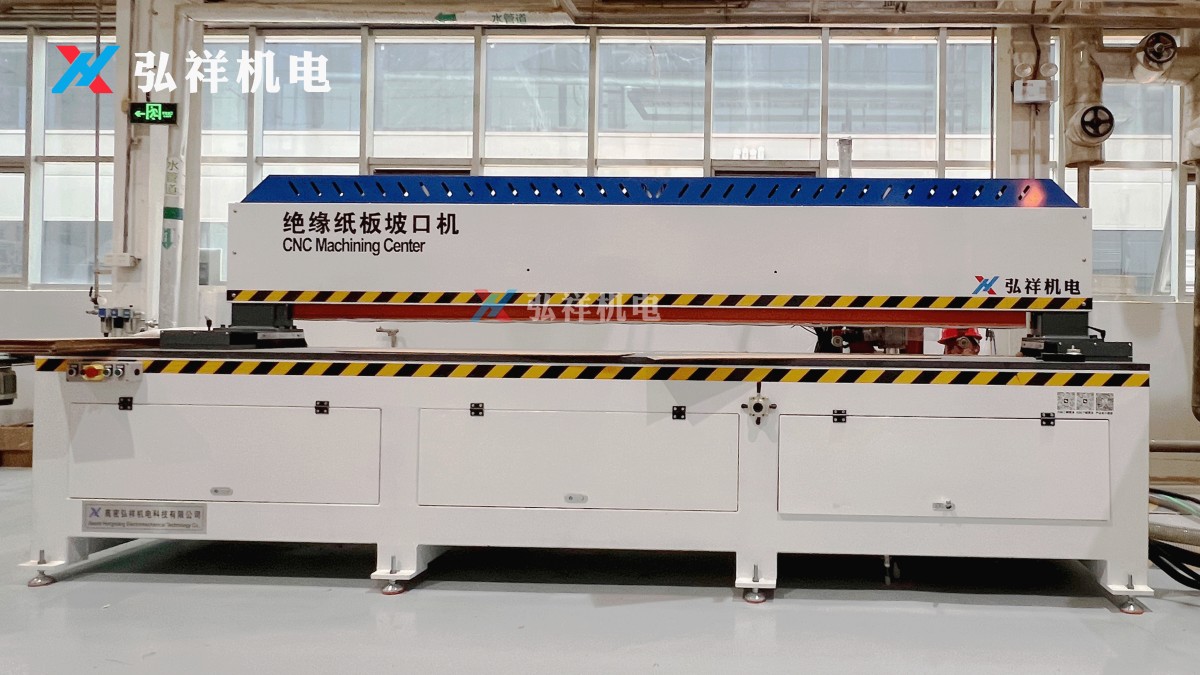
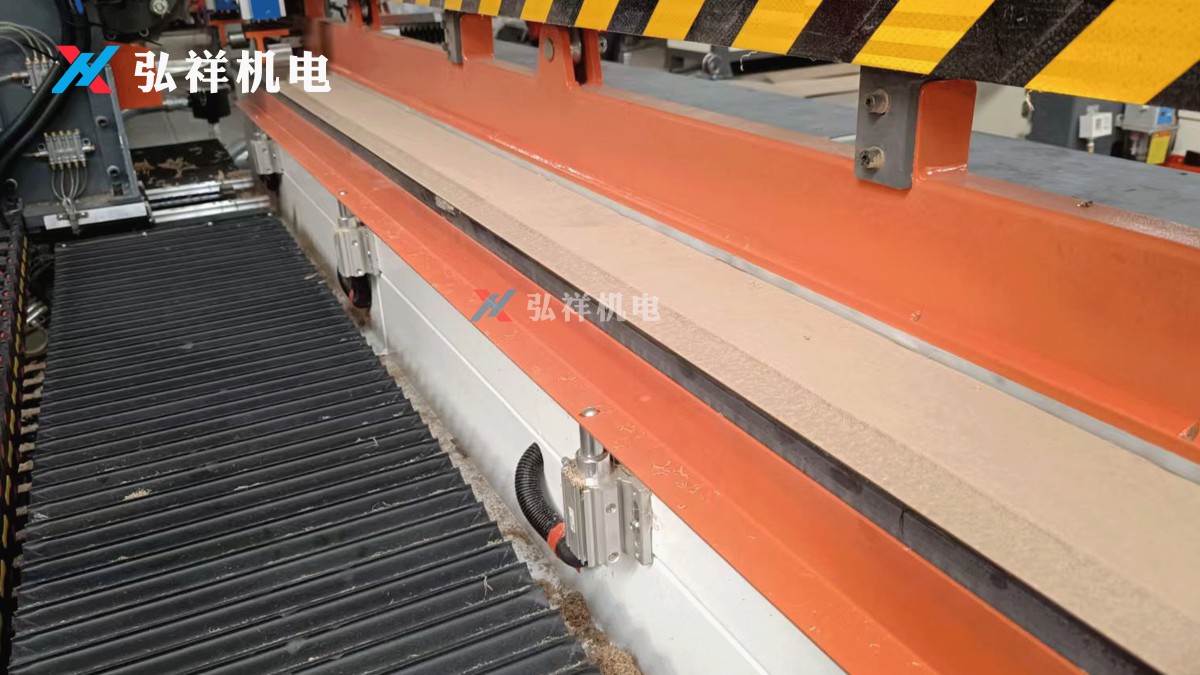
Layer-pressed wood is a critical dielectric component in high-voltage transformers—its dimensional accuracy, surface flatness, and edge integrity directly affect partial discharge performance and long-term insulation reliability. Procurement decisions must therefore go beyond price or delivery timelines and focus on verifiable engineering parameters. Key verification points include pressing force range (typically 80–300 tons), hydraulic system pressure stability (±1.5% fluctuation tolerance), and real-time temperature control (±2℃ across 120–180℃ working zone).
For automated layer-pressed wood lines, synchronization accuracy between feeding, pre-heating, pressing, and cooling stages must be validated at ≤±0.3 mm positional tolerance per cycle. Misalignment exceeding this threshold increases scrap rates by up to 18% in mass production of 35kV–500kV transformer cores. Gaomi Hongxiang’s standard configuration includes dual-axis servo positioning with 0.01 mm resolution encoders and closed-loop thermal compensation algorithms calibrated per batch.
Electrical insulating cardboard handling also demands strict dimensional repeatability. Machines must maintain thickness consistency within ±0.05 mm across 1,200 mm wide rolls and ensure edge squareness deviation<0.15° over 2,000 mm length—requirements verified through ISO 9001-certified in-process metrology using laser displacement sensors.
Critical Verification Parameters for Automatic Chamfering & Shearing Units
Automatic chamfering machines and head/tail shearing machines are not auxiliary tools—they define final part geometry and insulation integrity. A mischamfered laminated wood edge introduces field concentration points that accelerate aging under AC stress. Procurement teams must validate three interdependent parameters: tool material grade (minimum HRC 62 carbide-tipped inserts), feed rate consistency (±0.5 mm/s variation over 10-hour operation), and angular repeatability (≤±0.2° per chamfer cycle at 45°±2° nominal).
Shearing units require even stricter validation due to their role in defining core stack height tolerances. Blade clearance must be adjustable in 0.01 mm increments, with maximum allowable wear before recalibration set at 0.08 mm—exceeding this increases burr height beyond IEC 60273 Class II limits. Gaomi Hongxiang’s shearing systems incorporate real-time blade-edge monitoring via embedded strain gauges and automatically trigger maintenance alerts after 12,000 cutting cycles.
Power supply stability is often overlooked but critical: voltage fluctuation >±3% during shearing causes inconsistent cut depth, leading to stack height variations exceeding ±0.3 mm—a non-compliance for 220kV+ transformer assembly per GB/T 1094.1-2013. All units supplied by Gaomi Hongxiang include integrated UPS modules supporting 15-minute runtime at full load.
This table confirms that Gaomi Hongxiang’s equipment exceeds baseline international requirements across all critical mechanical tolerances. The tighter specifications reduce post-processing rework by 22% and extend tool life by 35% compared to industry-average configurations—directly lowering total cost of ownership over 5-year operational cycles.
AI Integration & Data Traceability Requirements
Modern procurement no longer evaluates hardware alone—it assesses data infrastructure compatibility. AI-enabled transformer manufacturing requires real-time process parameter logging, predictive maintenance triggers, and traceability down to individual batch numbers. Gaomi Hongxiang’s equipment embeds OPC UA servers compliant with IEC 62541, enabling seamless integration with MES platforms like Siemens Opcenter or Rockwell FactoryTalk.
Each machine logs ≥127 process variables per second—including hydraulic pressure curves, heater zone temperatures, feed motor torque signatures, and chamfer tool vibration spectra. Data retention is configurable from 30 days (local SSD) to 12 months (cloud-synced). For export markets, all units meet GDPR-compliant data residency protocols and support dual-language UI (English/Chinese + optional Spanish/Russian).
Procurement teams must verify API documentation completeness, including RESTful endpoints for production order dispatch, quality alert webhooks, and firmware update scheduling. Gaomi Hongxiang provides full Swagger documentation and offers 3-day on-site API integration support as standard—reducing commissioning time by 40% versus third-party integrators.
Installation, Commissioning & After-Sales Validation Checklist
Technical specification verification doesn’t end at purchase order—it extends through FAT (Factory Acceptance Test), SAT (Site Acceptance Test), and 12-month performance validation. Gaomi Hongxiang conducts FAT with joint witness testing covering 72 continuous hours of simulated production, including 500+ consecutive laminated wood press cycles and 1,200 chamfering operations under load.
SAT includes on-site calibration of all measurement subsystems using NIST-traceable instruments. Critical deliverables include: (1) dimensional test reports per ISO 10360-2, (2) thermal imaging analysis of press platens, (3) noise emission certification (<78 dB(A) at 1m), and (4) cybersecurity audit report (IEC 62443-3-3 Level 1 compliant).
After-sales support includes remote diagnostics via encrypted VNC channels, 4-hour response SLA for critical faults, and biannual preventive maintenance visits included in 3-year warranty packages. Over 92% of global customers report zero unplanned downtime in Year 1—validated through quarterly uptime reporting portals accessible to procurement and plant managers.
This phased validation framework ensures procurement teams retain contractual leverage throughout deployment—each stage includes clear pass/fail criteria tied to measurable KPIs, not subjective assessments. Gaomi Hongxiang’s documented success rate across 142 global installations is 98.6% first-time SAT pass rate.
Actionable Procurement Decision Framework
To convert technical verification into procurement advantage, teams should adopt a weighted scoring matrix across four pillars: (1) Process Accuracy (weight: 35%), (2) Compliance Assurance (25%), (3) Data Infrastructure Readiness (25%), and (4) Lifecycle Cost Transparency (15%). Each pillar contains auditable evidence requirements—not vendor claims.
For example, “Compliance Assurance” requires submission of third-party test reports—not just declarations—for every referenced standard (IEC 60273, GB/T 1094.1, ISO 9001). “Data Infrastructure Readiness” mandates live API endpoint demonstration during proposal evaluation—not just architecture diagrams.
Gaomi Hongxiang supports this framework with standardized technical dossiers containing 100% auditable documentation: full schematics, calibration records, cybersecurity penetration test summaries, and 5-year spare parts availability guarantees. This eliminates post-award scope gaps and accelerates ROI realization by an average of 4.2 months.
Ready to align your transformer insulation equipment procurement with verified engineering performance? Contact Gaomi Hongxiang Electromechanical today for a customized technical specification review session—including free FAT/SAT checklist templates and AI integration readiness assessment.
NAVIGATION
MESSAGE
Request A Quote?