0000-00
In laminated wood processing, cutting quality depends on machine precision, tool condition, feed stability, material consistency, and process control. For buyers seeking Transformer insulation parts processing equipment for laminated wood, reliable solutions such as CNC Special-shaped Cutting Saw and Double-ended chamfering machine systems directly affect the accuracy, efficiency, and surface finish of Transformer insulation components and Electrical laminated wood production.
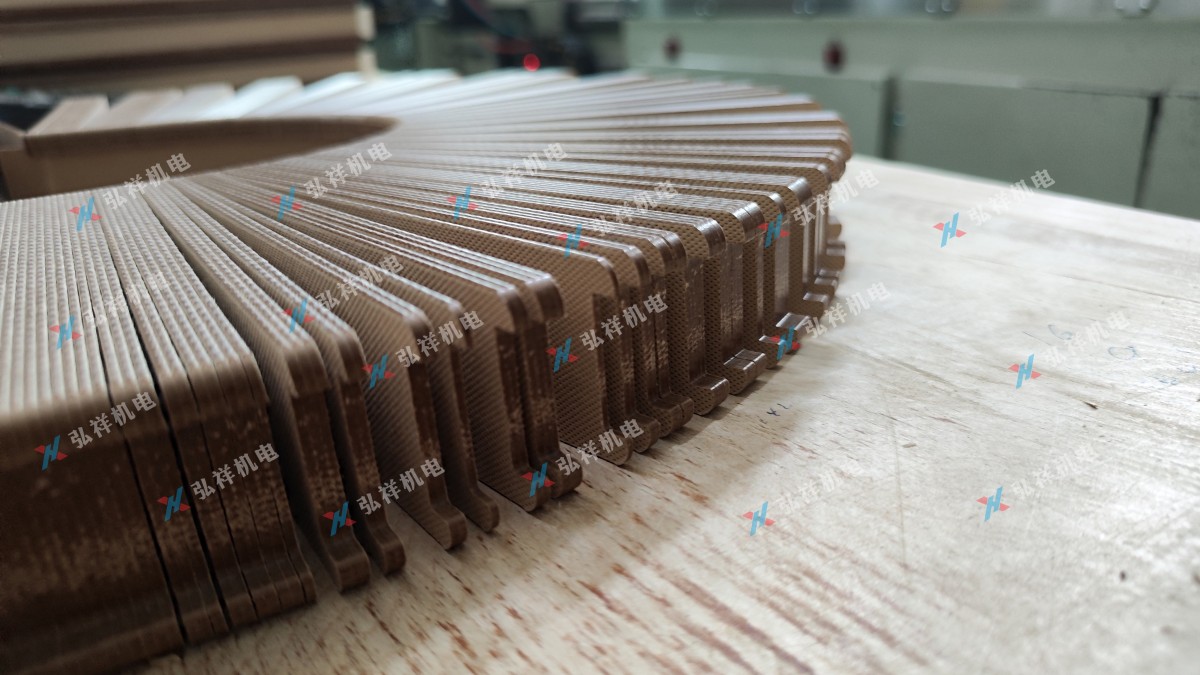
Why cutting quality matters more than many buyers first expect
In the machine tool equipment sector, laminated wood cutting quality is not only about appearance. It directly influences dimensional stability, downstream assembly fit, insulation part consistency, rework rate, and the overall production rhythm of transformer-related components. When laminated wood is used for electrical insulation structures, an edge defect of even a small range can create later difficulties in chamfering, drilling, bonding, or final inspection.
For operators, poor cutting quality usually appears as chipping, burning, burrs, edge tearing, angle deviation, or unstable repeatability between the first and the fiftieth piece. For technical evaluators and quality managers, the bigger issue is process capability: can the equipment maintain stable results across 1 shift, 2 shifts, or continuous batch production? For procurement and finance teams, the hidden cost comes from scrap, blade consumption, downtime, and delayed delivery.
In laminated wood processing equipment, cutting quality is shaped by a chain of factors rather than one single machine parameter. Typical decision points include machine rigidity, spindle or saw unit stability, tool geometry, feed control, dust extraction, fixture design, operator training, and the consistency of incoming material. If one of these links is weak, final quality will fluctuate even when the nominal machine specification looks acceptable on paper.
For companies manufacturing transformer insulation parts, the target is usually not the highest speed alone but a balanced output: acceptable surface finish, controlled tolerance, stable throughput, and predictable maintenance intervals. In practical factory planning, many users evaluate performance over 3 dimensions: cutting accuracy, hourly output, and maintenance burden over a 3–6 month operating cycle.
Who is most affected by cutting instability?
- Operators and maintenance teams, because unstable cutting increases blade changes, adjustment time, and fault tracing during every shift.
- Quality and safety personnel, because poor edge quality may trigger failed inspections, unsafe dust accumulation, or nonconforming finished parts.
- Project managers and decision makers, because unstable output affects delivery deadlines, customer confidence, and budget control.
- Distributors and agents, because after-sales pressure rises sharply when application matching is incomplete during the quotation stage.
This is why equipment selection for laminated wood processing should start from application requirements, not only from price comparison. In many real purchasing discussions, the more useful question is: which variables can be controlled within the machine, and which must be managed through process discipline and training?
What affects cutting quality in laminated wood processing equipment?
The most important variables can be grouped into 5 core categories: machine structure, cutting tools, feed and motion control, material condition, and process management. For laminated wood, layered structure and density variation make the material more demanding than ordinary solid wood. That means the machine must maintain consistent force transmission and path accuracy during repeated cuts, especially in contour cutting and edge preparation for transformer insulation components.
Machine rigidity is often underestimated. If the saw frame, linear motion system, or clamping platform lacks sufficient stability, vibration will appear at the edge first. This can create torn fibers, local overheating, and dimensional drift. In many workshops, unstable performance is not visible during short sample tests of 5–10 pieces, but becomes obvious in medium-batch operation after several hours.
Tool condition is another decisive factor. A blade or cutter that is not matched to laminated wood thickness, resin condition, or required finish can cause burning and splintering. A worn tool may still cut, but cutting force rises, edge quality falls, and energy consumption increases. In routine production, many factories inspect tool condition every shift and review replacement intervals weekly or by batch count.
Feed stability matters because laminated wood reacts poorly to sudden speed changes. Too fast a feed may tear the top layer or overload the blade. Too slow a feed can increase heat accumulation and surface burn. For this reason, variable-speed control and stable servo coordination are preferred in machine tool equipment designed for electrical laminated wood and special-shaped transformer insulation parts.
Key factors and their direct influence
The table below helps procurement teams, technical evaluators, and operators review the main quality factors in laminated wood processing equipment before discussing quotations or line upgrades.
A useful interpretation of this table is simple: if a supplier discusses only motor power or only cutting speed, the evaluation is incomplete. Good cutting quality in laminated wood processing equipment comes from system matching. In most technical reviews, at least 4 checkpoints should be confirmed before final machine selection: material type, part geometry, tolerance target, and expected batch volume.
Three process details often ignored
- Dust extraction efficiency. Fine dust accumulation near the cutting zone can affect visibility, heat, and surface cleanliness over 1 full shift.
- Fixture contact stability. Uneven clamping pressure can deform laminated wood slightly and reduce dimensional repeatability.
- Operator parameter discipline. Unauthorized speed or depth changes during urgent production frequently cause quality drift from batch to batch.
For factories serving export markets or strict downstream inspection, these details are not minor. They often determine whether the process remains controllable over 2–4 weeks of scheduled production.
Which machine configurations are better for transformer insulation parts?
Different laminated wood parts require different machine logic. Straight cuts for standard panels, contour cuts for special shapes, and edge finishing for assembly-ready insulation components should not always be forced through one process path. In transformer insulation parts processing equipment, a CNC Special-shaped Cutting Saw is often considered where part geometry is varied, while a Double-ended chamfering machine is valuable when edge consistency and batch finishing speed are priorities.
Technical teams should compare machine configurations by part complexity, edge quality target, throughput, and setup frequency. A machine that performs well for repeated rectangular cutting may not be ideal for irregular profiles with multiple directional changes. Likewise, a fast chamfering solution may not solve the root cause if the upstream cutting path is already unstable.
For project leaders and purchasers, this means evaluation should follow the part route. In many factories, there are 3 common production categories: small-batch diverse parts, medium-batch standard transformer insulation components, and larger repeated series with strict edge consistency. Each category benefits from a different equipment combination and different training focus.
Gaomi Hongxiang Electromechanical Technology Co., Ltd. serves global customers in power transformer assembly and manufacturing, while also processing electrical insulating cardboard, insulating laminated wood, and related insulating parts. This combined process understanding is important because good machine recommendations depend on real material behavior and downstream assembly needs, not only on catalog specification comparison.
Configuration comparison for common laminated wood tasks
The comparison below is useful for buyers who need to assess laminated wood processing equipment according to application type, investment logic, and production stage.
The practical takeaway is that machine selection should reflect the full process chain. When a supplier understands transformer insulation manufacturing, insulating laminated wood behavior, and equipment integration together, the risk of buying a mismatched solution drops significantly. That is especially important when delivery windows are tight or when overseas users require fast commissioning support and clear operating guidance.
A useful 4-step selection sequence
- Confirm part drawings, material thickness range, and target tolerance before discussing machine structure.
- Separate cutting, chamfering, and finishing requirements instead of treating them as one generic function.
- Ask for a trial plan based on your real batch size, such as sample verification plus a continuous run.
- Review installation, training, and after-sales response as part of the equipment value, not as an afterthought.
This 4-step method is especially helpful for distributors, purchasing departments, and finance approvers who need to reduce decision risk without getting lost in excessive technical detail.
How should buyers evaluate cost, risk, and long-term operating value?
In laminated wood processing equipment procurement, the lowest initial quotation is rarely the lowest total cost. A machine with unstable cutting quality can generate repeated losses through scrap, rework, delayed delivery, emergency maintenance, and accelerated tool wear. That is why experienced buyers compare total operating value over a longer cycle, often 6–12 months, rather than looking only at the purchase invoice.
For business evaluators and financial approvers, the most practical approach is to review cost through 5 dimensions: equipment investment, tooling consumption, labor dependency, quality loss, and service support. If one machine needs frequent manual correction and another maintains more stable process output, the second option may create better cost performance even with a higher initial price.
Risk management is also part of cost. If your laminated wood parts are linked to transformer assembly schedules, an unexpected stop can affect more than one workstation. This is why project teams often ask about lead time, spare part availability, commissioning steps, and operator training duration before confirming an order. In many export-oriented projects, these service details are as important as machine capacity.
Gaomi Hongxiang Electromechanical Technology Co., Ltd. integrates R&D and design, production, sales, installation, training, and after-sales service. For buyers, this matters because equipment quality and service continuity are closely connected. A supplier that understands both machine manufacturing and insulation part processing can usually communicate more efficiently during parameter confirmation, line setup, and troubleshooting.
Typical procurement checkpoints before approval
- Check whether the proposed machine fits your batch pattern: prototype, medium-batch, or long-run repeated production.
- Confirm what is included in the quotation: installation scope, training hours, basic spare parts, and commissioning support.
- Ask how tool maintenance and wear monitoring are handled during normal operation every week or every month.
- Review whether the supplier can support customized fixtures or process adjustments for special-shaped transformer insulation parts.
- Clarify the common delivery cycle range and what factors may extend it, such as customization, voltage adaptation, or export packing.
Common cost misunderstanding
One common mistake is comparing only machine price without comparing waste control. Another is assuming a general-purpose woodworking solution will perform the same as laminated wood processing equipment designed for electrical insulation applications. In practice, material characteristics, dimensional requirements, and edge finish expectations can make a significant difference in the required machine tool configuration.
A more reliable approach is to ask for process-based evaluation. Request sample verification, discuss your part list, define 3–5 critical quality indicators, and review service responsibilities after shipment. This gives procurement, engineering, and management teams a clearer basis for approval.
FAQ: practical questions from operators, engineers, and buyers
How do I know whether poor cutting quality comes from the machine or the material?
Start with controlled checks in 3 steps. First, compare results using the same tool and settings on two material batches. Second, inspect blade wear and clamping stability. Third, run a short repeated cutting test, such as 10–20 pieces, then inspect whether the deviation trend is random or progressive. If quality worsens over time, tool wear, vibration, or heat accumulation may be the main cause. If results differ sharply between material batches, material consistency should be reviewed first.
Which laminated wood processing equipment is better for diversified part production?
When part shapes change frequently, CNC-oriented solutions are generally more suitable because they reduce repeated manual setup and support contour flexibility. For buyers dealing with transformer insulation parts of multiple specifications, it is usually more efficient to evaluate programming convenience, repeatability, and fixture adaptability rather than focusing only on maximum speed. If edge finishing is also critical, a combined process with a dedicated chamfering stage may provide better consistency.
What should be checked before accepting a new machine?
A practical acceptance review usually includes at least 6 items: dimensional repeatability, edge appearance, noise and vibration behavior, feed stability, safety protection function, and operator interface usability. If the machine will run continuous batches, request a sustained trial instead of checking only a few sample pieces. For many users, one short demonstration is not enough to judge long-run cutting quality.
How long does operator training normally take?
The answer depends on machine complexity and operator background, but in practical projects, initial familiarization may take 1–3 days, while stable independent operation often requires additional guided production time. For CNC special-shaped cutting and process-sensitive laminated wood applications, training should cover not only machine startup but also parameter adjustment, tool inspection, fixture use, daily cleaning, and abnormal condition response.
What should distributors and overseas buyers ask first?
Begin with application details: material type, thickness range, part drawings, target output, power supply condition, and desired delivery timeline. Then clarify whether installation guidance, training, spare parts, and export-related support are included. A good equipment discussion becomes faster when the supplier receives 4 essential inputs early: product drawings, expected batch size, finish requirement, and site condition.
Why choose a supplier with both equipment and insulation processing understanding?
For laminated wood processing equipment, real value comes from matching machine capability to product application. Gaomi Hongxiang Electromechanical Technology Co., Ltd. works in power transformer assembly and manufacturing services, while also processing electrical insulating cardboard, insulating laminated wood, insulating parts, and EVA molding. This broader manufacturing background helps bridge a common gap in procurement: many buyers can obtain a machine quote, but fewer receive process-oriented guidance that reflects actual insulation component production.
Because the company integrates R&D and design, production, sales, installation, training, and after-sales service, discussions can move from general equipment interest to application-specific planning. That is useful for users who need support on special machine customization, transformer insulation parts processing equipment selection, or coordination between cutting, chamfering, and follow-up operations. It is also valuable for dealers and project managers who need a supplier able to support different markets and communication scenarios.
Its products have been sold in the domestic market and exported to Southeast Asia, South America, India, Pakistan, Russia, and other countries and regions. For international buyers, this export experience can improve communication efficiency on packaging, delivery coordination, and practical after-sales expectations. For procurement teams under time pressure, fewer communication gaps often mean faster technical confirmation and smoother project execution.
If you are evaluating laminated wood cutting quality, now is the right stage to discuss your actual requirements in detail. You can consult on parameter confirmation, equipment selection, CNC Special-shaped Cutting Saw or Double-ended chamfering machine matching, delivery cycle range, customized solutions for transformer insulation components, sample support possibilities, and quotation communication based on your drawings and batch plan.
What you can prepare before contacting us
- Part drawings or sample photos, including key dimensions and edge quality expectations.
- Material information such as laminated wood type, thickness range, and batch consistency concerns.
- Production goals, for example trial production, medium-batch delivery, or long-run repetitive manufacture.
- Site conditions and project schedule, including power requirements, installation timing, and training needs.
With these inputs, the discussion becomes much more efficient. Instead of receiving a generic machine recommendation, you can move directly into a practical review of process route, machine configuration, delivery planning, and commercial feasibility for your laminated wood processing project.
NAVIGATION
MESSAGE
Request A Quote?