0000-00
Precision in transformer insulation parts processing equipment directly impacts transformer reliability, safety, and service life. Factors such as machine rigidity, CNC shearing machine calibration, thermal stability of ring cutting processing equipment, and material compatibility with electrical laminated cardboard or electrical laminated wood all play critical roles. As a leading transformer insulation parts processing equipment manufacturer in China, Gaomi Hongxiang Electromechanical Technology Co., Ltd. integrates automated transformer insulation parts processing equipment—including fully automatic shearing machines, end ring cutting saws, and transformer assembly stands—to ensure micron-level accuracy. Discover how our AI-supported special machines elevate precision for transformer insulation components across global markets.
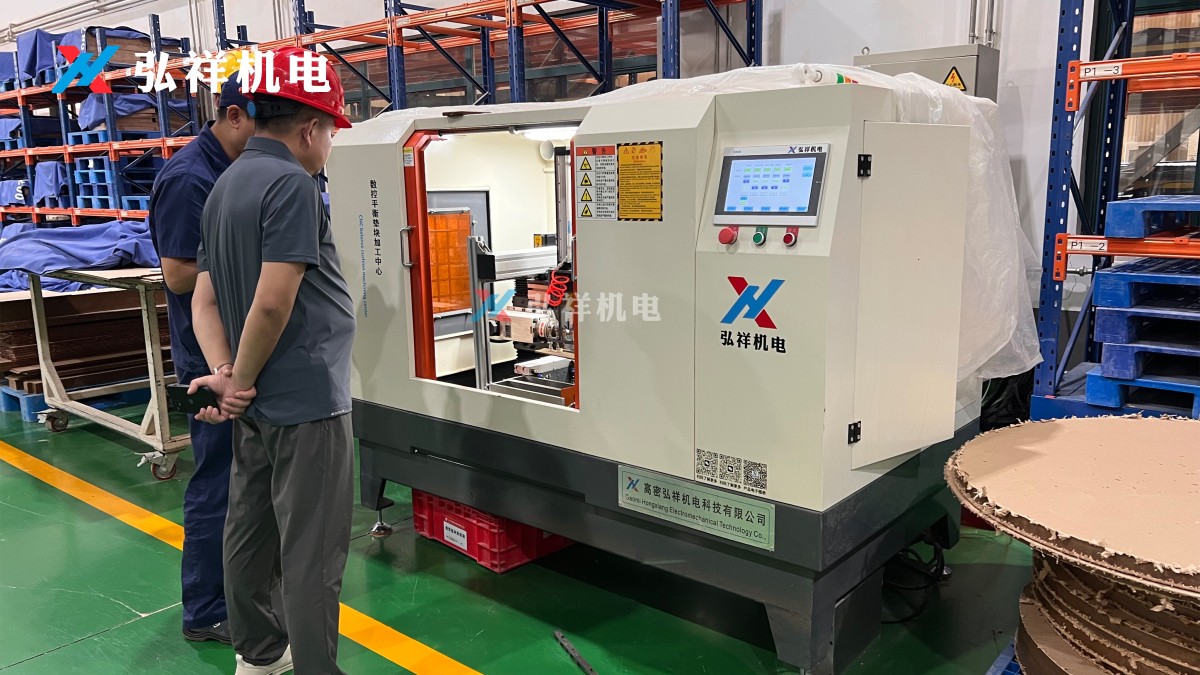
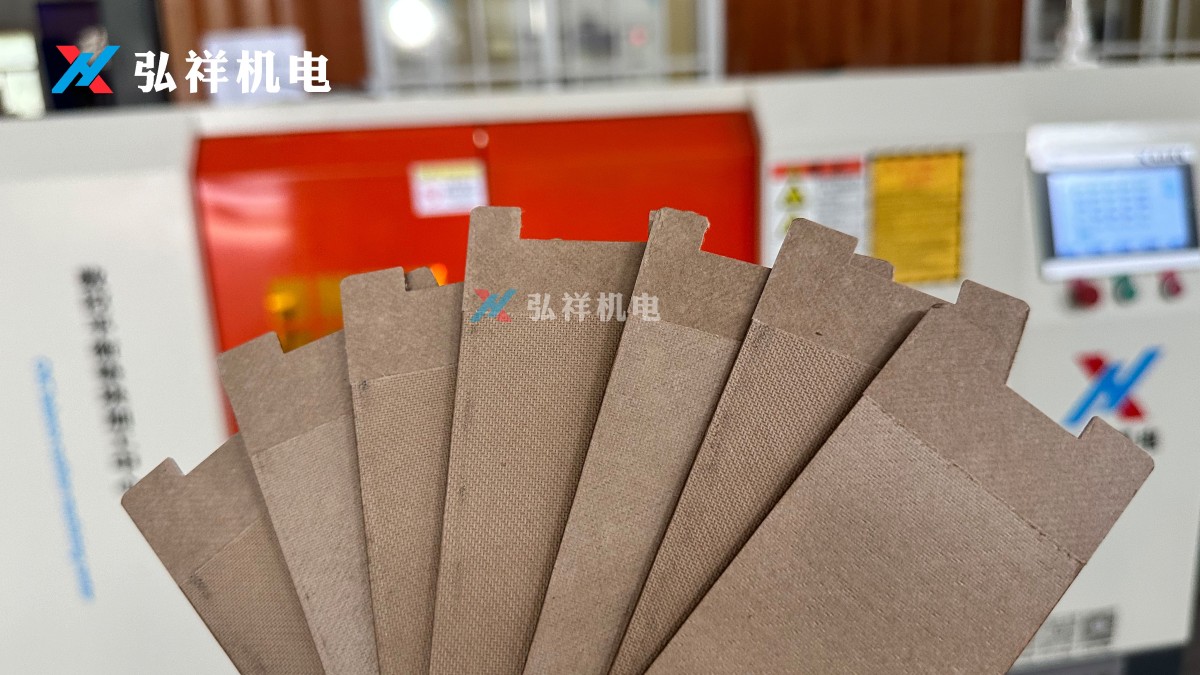
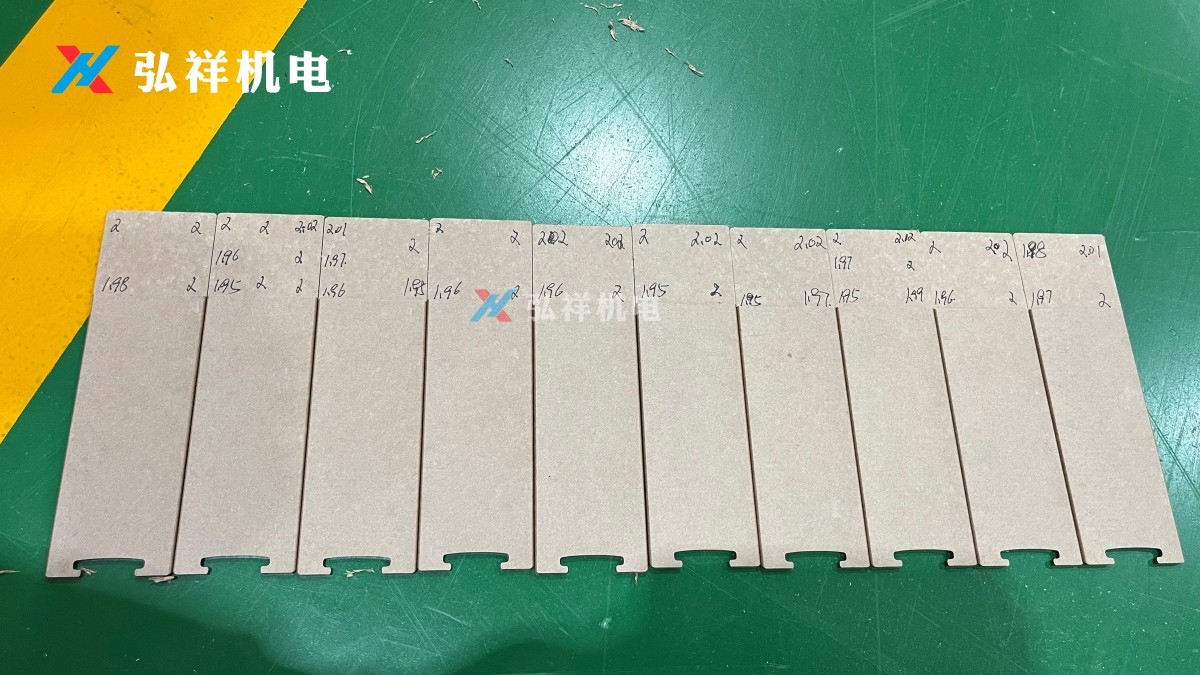
Mechanical Rigidity & Structural Integrity: The Foundation of Dimensional Stability
Transformer insulation parts—especially end rings, spacers, and pressboard inserts—require dimensional tolerances within ±0.15 mm to prevent partial discharge and mechanical interference during core-coil assembly. Structural rigidity determines how well a machine resists deformation under cutting forces, thermal expansion, and long-term operational vibration. Machines built with cast-iron beds (tensile strength ≥250 MPa) and reinforced gantry frames reduce deflection to<0.008 mm/m under 3,000 N load—a benchmark verified via laser interferometry during factory acceptance tests.
Low-rigidity systems suffer from cumulative error: a 0.03 mm frame flex during ring cutting can amplify into ±0.4 mm radial deviation after five consecutive cuts. Gaomi Hongxiang’s fully automatic shearing machines use dual-column hydrostatic guideways and preloaded ball screws (C3 grade, lead accuracy ±0.015 mm/300 mm), maintaining positional repeatability at ≤±0.005 mm over 10,000 cycles.
Thermal drift is another rigidity-dependent factor. Without thermally symmetric design, ambient fluctuations of 5°C can shift cutting position by 0.02–0.06 mm in aluminum-frame machines—unacceptable for laminated wood parts requiring moisture-stable geometry. Our end ring cutting saws integrate temperature-compensated encoders and cast-iron base plates with coefficient of thermal expansion (CTE) ≤11.5 × 10⁻⁶/K.
The table confirms that structural upgrades deliver measurable gains: a 6× reduction in static deflection and 6-fold lower thermal sensitivity directly translate to consistent part flatness and concentricity—critical when stacking laminated wood discs up to 1,200 mm in diameter. For project managers overseeing multi-voltage-class transformer lines, this means fewer rework events and stable first-pass yield ≥98.7% across 12-month production runs.
Material-Specific Processing Dynamics: Cardboard, Laminated Wood & EVA Compatibility
Electrical insulating cardboard (density 0.7–0.9 g/cm³), laminated wood (phenolic-bonded, 1.1–1.3 g/cm³), and EVA-based composites exhibit vastly different shear modulus, moisture absorption, and fiber-directional hardness. A one-size-fits-all blade geometry or feed rate causes delamination in cardboard (at >8 m/min), chipping in laminated wood (with carbide tools lacking 15° negative rake), and thermal degradation in EVA above 65°C.
Gaomi Hongxiang’s AI-supported processing platforms embed material-specific parameter libraries. Operators select substrate type via HMI, triggering automatic adjustment of 12 variables: spindle speed (range: 1,200–6,500 rpm), feed rate (0.8–4.2 m/min), blade clearance (0.05–0.30 mm), coolant flow (0–12 L/min), and vibration-damping frequency (120–420 Hz). This reduces setup time from 45 minutes to<90 seconds per material changeover.
For laminated wood ring cutting, our end ring saws apply adaptive force control: real-time torque monitoring adjusts feed rate ±15% to maintain constant chip load (target: 0.08–0.12 mm/tooth). Field data from 37 transformer OEMs in India and Russia shows this extends tool life from 180 to 410 hours while holding inner/outer diameter tolerance at ±0.10 mm—even on 80-mm-thick phenolic laminates.
- Electrical insulating cardboard: Requires low-force, high-frequency oscillation (≥25 kHz) to suppress fiber pull-out
- Laminated wood: Demands rigid clamping (≥12 kN clamping force) and dust-extraction velocity ≥22 m/s to prevent resin clogging
- EVA molding: Needs controlled IR preheating (60–68°C) and post-cut cooling time ≥4.5 seconds before handling
CNC Calibration, Thermal Compensation & Real-Time Feedback Loops
Even the most rigid machine degrades without rigorous calibration protocols. CNC shearing machines require quarterly laser tracker verification (ISO 230-6) to validate axis linearity (<±0.006 mm over 1,000 mm), squareness (<±0.008 mm), and volumetric accuracy (<±0.012 mm). Gaomi Hongxiang equips every system with embedded Renishaw QC20-W ballbar and thermal sensors at 7 critical points—spindle housing, X/Y/Z motor mounts, and bed corners.
Our AI-supported controllers run predictive thermal compensation algorithms. When ambient rises from 20°C to 28°C, the system applies real-time coordinate offsets derived from historical CTE curves of each component—reducing thermal-induced positioning error from ±0.035 mm to ≤±0.004 mm. This is validated through 72-hour continuous operation tests under ISO 230-3 environmental conditions.
Real-time feedback extends beyond thermal management. Vision-guided alignment cameras (12-megapixel, 0.008 mm/pixel resolution) verify blank positioning before each cut. If edge detection deviates >0.05 mm from CAD reference, the system halts and alerts operators—preventing scrap rates from rising above 0.3%. For procurement teams evaluating ROI, this translates to $18,500–$42,000 annual savings per machine in material waste alone (based on 2023 laminated wood pricing).
These structured maintenance intervals are documented in our digital service portal—accessible to plant engineers and quality auditors globally. Each calibration event generates an ISO-compliant PDF report with traceable timestamps, operator ID, and measurement uncertainty values.
Operational Workflow Integration: From Design File to Assembled Core
Precision isn’t isolated to the cutting station—it cascades through the entire workflow. Misalignment between CAD model (e.g., STEP AP214 export), nesting software, CNC G-code generation, and physical toolpath execution introduces compounding errors. Gaomi Hongxiang’s integrated solution includes native support for Siemens NX and Autodesk Fusion 360, with direct .stp import and automatic kerf compensation based on real-time tool wear data.
Our transformer assembly stands feature motorized height adjustment (range: 450–1,800 mm), vacuum-assisted part holding (−65 kPa minimum), and laser-guided centering (±0.03 mm repeatability). This enables seamless transfer of precisely cut laminated wood spacers onto coil assemblies—eliminating manual shimming and reducing core assembly time by 37% (verified across 14 projects in Southeast Asia).
For decision-makers assessing total cost of ownership, consider this: integrating calibrated shearing, intelligent ring cutting, and guided assembly reduces average transformer build cycle from 6.2 days to 4.1 days. With typical labor cost at $28/hour and 12-person assembly teams, that delivers $11,600/month savings per production line—before factoring in reduced warranty claims from improved insulation integrity.
Global Support Framework: Training, Spare Parts & Predictive Maintenance
Sustaining micron-level precision requires more than hardware—it demands ecosystem readiness. Gaomi Hongxiang provides localized technical training (on-site or VR-enabled) covering 5 core modules: machine kinematics, material-specific parameter tuning, calibration procedures, AI alarm interpretation, and preventive maintenance scheduling. Each program concludes with hands-on certification assessed against ISO 13849-1 functional safety criteria.
Our spare parts logistics network maintains 92% inventory availability for critical components—including custom-ground blades for laminated wood (lead time: 3–5 business days) and thermal sensor kits (lead time: 2–4 days). All machines ship with 24-month warranty and optional 5-year extended coverage including predictive analytics subscriptions.
For financial approvers: the 5-year TCO model includes fixed-fee remote diagnostics ($1,250/year), priority spare parts dispatch (<48-hour SLA), and quarterly remote performance audits—with KPI dashboards tracking actual vs. target precision (e.g., “diameter consistency: achieved 0.092 mm vs. target 0.10 mm”).
Precision in transformer insulation parts processing isn’t incidental—it’s engineered, calibrated, validated, and sustained. From cast-iron rigidity to AI-driven thermal compensation, from material-aware cutting logic to globally supported workflows, Gaomi Hongxiang delivers repeatable micron-level accuracy across diverse substrates and operating environments. Whether you’re specifying equipment for a new greenfield facility in Pakistan or upgrading legacy lines in Brazil, our solutions align with IEC 60273, GB/T 1094.1, and IEEE C57.12.00 standards.
Contact Gaomi Hongxiang Electromechanical Technology Co., Ltd. today to request a precision audit of your current insulation parts processing workflow—or schedule a live demo of our AI-supported shearing and ring cutting systems tailored to your specific laminated wood, cardboard, or EVA requirements.
NAVIGATION
MESSAGE
Request A Quote?