0000-00
Burrs on a CNC Double-End Chamfering Machine can reduce edge quality, increase rework, and affect the performance of Transformer insulation components made from electrical cardboard and Electrical laminated wood. For buyers, operators, and technical evaluators seeking a reliable Transformer insulation parts processing equipment manufacturer in China, understanding the causes of burrs is essential to improving efficiency, product consistency, and the long-term value of a Fully automatic double-end chamfering machine.
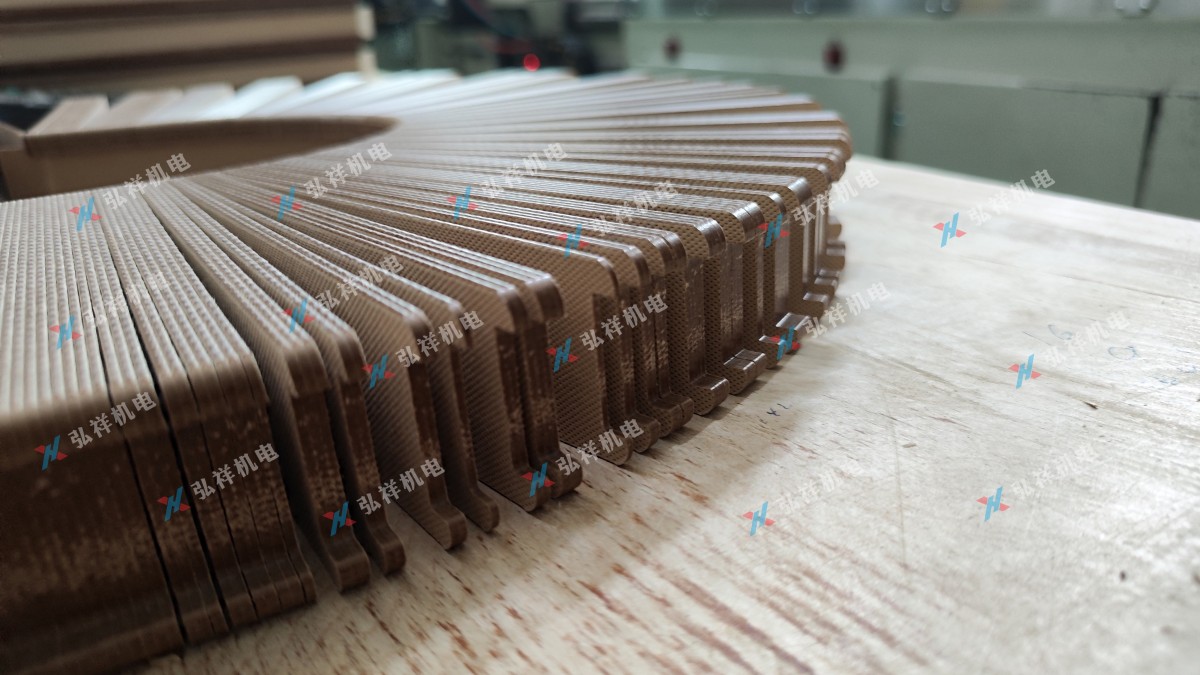
In transformer insulation part production, burr control is not a minor finishing issue. A raised fiber edge, chipped corner, or rough chamfer can influence dimensional stability, assembly fit, oil channel consistency, and downstream impregnation performance. For operators, burrs often mean more manual deburring. For purchasing and project teams, they may signal hidden machine design problems, unstable process capability, or avoidable maintenance cost.
This article explains the main causes of burrs on a CNC double-end chamfering machine, how different materials behave during cutting, what process variables should be checked first, and how buyers can evaluate machine configuration before making an investment. The discussion is especially relevant for manufacturers processing electrical insulating cardboard, laminated wood, EVA-related parts, and precision insulation components for power transformer applications.
Why Burrs Form During Double-End Chamfering
A burr is typically created when the cutting edge fails to shear material cleanly at the exit point of the tool path. On a CNC double-end chamfering machine, this can happen on one side or both ends at the same time, especially when feed rate, spindle speed, clamping force, and cutter geometry are not matched to the workpiece. In insulation materials, burrs may appear as fiber pull-out, layered edge lifting, or compressed and torn corners.
The risk increases when the machine is processing soft but layered materials such as electrical cardboard, or dense but directional materials such as electrical laminated wood. These materials do not behave like standard aluminum or mild steel. Their internal structure, moisture balance, density variation, and grain orientation can make a previously stable parameter set unsuitable within a batch tolerance of only 0.2 mm to 0.5 mm on edge thickness or compression response.
In practical production, burrs usually come from five broad sources: tool condition, machine rigidity, workholding, process parameters, and material consistency. If a factory addresses only the cutter and ignores the fixture, or reduces feed speed without checking spindle vibration, the burr issue often returns within 1 to 3 production shifts. That is why root-cause analysis should be systematic rather than based on trial and error alone.
Another factor specific to double-end processing is synchronization. When two ends are chamfered in one cycle, even a small mismatch in left-right spindle alignment, tool wear progression, or servo response can generate uneven edges. A deviation of less than 0.1 mm in positioning may not look serious on the screen, but on thin insulation parts it can create visible burr asymmetry and increase the reject rate.
Typical burr patterns seen on insulation parts
- Fine fiber burrs along the chamfer edge, common on electrical insulating cardboard when the tool is dull or feed is too high.
- Layer breakout at the exit edge, often linked to poor support or incorrect cutting direction on laminated wood.
- Compressed rough edge instead of a clean chamfer, usually caused by low sharpness, tool rubbing, or unstable clamping.
- Intermittent burr sections every few parts, which may indicate spindle runout, fixture shift, or uneven material density.
Common cause categories and shop-floor signals
The table below summarizes the most common burr-related causes and the observable symptoms operators and maintenance personnel can use for a quick first diagnosis.
For most factories, the highest-value approach is to start with the cause that changes over time. If burrs suddenly appear after stable production, the first suspects are tool wear, fixture looseness, and dust accumulation. If burrs exist from the first trial piece, then machine setup, tooling selection, and workpiece support should be reviewed before changing production speed.
Material, Tooling, and Parameter Mismatch
Not all burrs originate from machine defects. In many chamfering lines, the machine structure is acceptable, but the tooling and cutting data are borrowed from another product family. Electrical cardboard, laminated wood, and composite insulation sheets require different cutting behavior. A parameter set suitable for a 6 mm dense laminated board may create severe fiber tearing on a 2 mm to 3 mm compressed cardboard strip.
Tool geometry matters more than many users expect. If the cutting edge angle is too blunt, the tool compresses the material before cutting it. If the rake is too aggressive, the edge may grab and lift fibers instead of slicing them. On insulation materials, sharpness retention and edge polish are often more important than simply increasing spindle speed from 6,000 rpm to 12,000 rpm.
Feed rate must also be matched to material density and edge support. Excessive feed can cause breakout, but feed that is too low can create rubbing, heat buildup, and rough fuzzy burrs. In real production, the best result is usually found by balancing 3 variables together: spindle speed, feed rate, and cutting depth. Adjusting only one parameter often shifts the defect rather than eliminating it.
Moisture and storage conditions are another hidden variable. Electrical cardboard stored in a humid environment for 48 to 72 hours may react differently from dry stock, even when nominal thickness is the same. Laminated wood with grain variation can also show different exit-edge quality depending on feed direction. That is why advanced users keep separate recipes for at least 3 to 5 material categories rather than one universal chamfering program.
Practical parameter checkpoints
- Verify whether spindle speed is within the stable cutting band recommended for the tool diameter and material type.
- Compare burr condition at feed changes of 10% to 15% rather than making large adjustments that hide the root cause.
- Check cutting depth and chamfer size consistency on both ends of the workpiece within a tolerance window such as ±0.1 mm to ±0.2 mm.
- Inspect whether vacuum or air cleaning removes chips fast enough to avoid recutting debris at the edge.
Recommended matching logic for common insulation materials
The following table is not a fixed machine specification. It is a practical comparison framework that helps process engineers and purchasing teams discuss the right cutter style and process attention points with the equipment supplier.
The key lesson is that burr reduction starts with process matching. A reliable CNC double-end chamfering machine needs the right mechanical platform, but it also depends on a supplier that understands the actual materials used in transformer insulation part manufacturing. This is especially important when production includes several product types in the same workshop.
Machine Structure, Clamping, and Maintenance Factors
Even with good tooling, burrs can remain if the machine structure is not stable enough for precision chamfering. On a double-end system, both stations must maintain alignment under load. If the spindle housing, guide rail support, or fixture base lacks rigidity, micro-vibration can appear during the cutting cycle. Operators may hear a slight chatter sound long before dimensional errors become obvious.
Clamping quality is equally important. A workpiece that shifts by 0.05 mm to 0.15 mm at the end of the cut can create a visible burr even if the programmed chamfer is correct. Thin insulation boards and elongated strips are especially sensitive because the material may flex under local pressure. A fixture that clamps too hard can crush the edge. A fixture that clamps too lightly allows vibration and tearing.
Maintenance is often the difference between a stable chamfering process and a recurring rework problem. Dust from cardboard and laminated wood accumulates around linear guides, sensors, pneumatic components, and support surfaces. If it is not cleaned every shift or every 8 to 12 operating hours, the machine may lose repeatability. Small issues such as worn pads, loose fasteners, or dirty reference surfaces frequently show up first as burr complaints.
For after-sales teams and plant managers, burr reduction should therefore be treated as a preventive maintenance indicator. If edge quality changes after a defined production count, such as every 500, 1,000, or 2,000 pieces, that pattern should be logged. Stable records help distinguish between normal tool wear and a machine condition problem.
Maintenance points that directly affect burr control
- Spindle runout inspection at scheduled intervals, especially after tool changes or accidental impacts.
- Fixture contact surface cleaning to prevent chip stacking under the workpiece.
- Pneumatic or hydraulic pressure stability checks to keep left-right clamping consistent.
- Guide rail lubrication and backlash monitoring to preserve repeatability in multi-shift production.
Inspection checklist for operators and maintenance teams
The table below can be used as a practical daily or weekly checklist for a fully automatic double-end chamfering machine used in insulation part processing.
Factories that standardize these checks usually reduce unnecessary manual deburring and improve first-pass yield. For decision-makers, this also means a better total cost picture, because burr problems consume labor time, increase inspection workload, and slow delivery reliability more than the machine purchase price alone might suggest.
How Buyers and Technical Evaluators Should Assess a Machine
When a company is sourcing a CNC double-end chamfering machine, the most common mistake is to compare only price, motor power, or automation level. Burr performance depends on the whole application package. For procurement teams, machine buyers, quality managers, and finance approvers, it is more useful to evaluate whether the supplier can match the machine to the actual transformer insulation components being produced.
A proper evaluation should include at least 4 dimensions: material adaptability, fixture design logic, process validation capability, and service support. If the supplier can explain how the machine handles electrical cardboard and laminated wood separately, how clamping prevents exit-edge tear-out, and how tool-life management is organized, that is a much stronger indicator than a generic promise of smooth cutting.
For project managers and technical evaluators, sample testing is essential. Ideally, the buyer should provide 3 to 5 representative workpieces with different thicknesses, lengths, or edge requirements. The trial should record cycle time, burr condition, edge consistency, and tool change frequency. A machine that runs cleanly for 20 test pieces but becomes unstable after 200 pieces may not be the right long-term choice.
For global buyers seeking a transformer insulation parts processing equipment manufacturer in China, it is also valuable to review the supplier’s integration ability. A company such as Gaomi Hongxiang Electromechanical Technology Co., Ltd., which works across transformer assembly and manufacturing services, insulation cardboard processing, laminated wood parts, insulating components, EVA molding, and special equipment support, may offer better process understanding than a supplier focused only on standard metalworking machines.
Procurement evaluation criteria
- Ask what material categories the machine has already been configured for and whether different process recipes can be stored.
- Confirm tolerance expectations for chamfer angle, edge consistency, and left-right synchronization.
- Review recommended maintenance intervals, critical wear parts, and expected response time for service support.
- Check whether operator training covers burr diagnosis, not only programming and startup.
Questions worth asking before order confirmation
A practical supplier should be able to answer specific questions such as: What fixture changes are needed for 2 mm and 8 mm parts? How is chip evacuation handled for fiber materials? What is the suggested tool inspection interval? How long does recipe changeover take when switching between product types? Answers to these points are often more valuable than a broad brochure description.
Buyers should also consider lifecycle cost. If a lower-cost machine requires one operator to perform manual deburring on 15% to 20% of output, its annual real cost may exceed that of a better-configured automatic system. That is why burr prevention should be included in ROI evaluation from the beginning.
Best Practices to Reduce Burrs in Daily Production
A reliable burr-reduction strategy combines process setup, operator discipline, and service support. In many factories, the fastest improvement comes from standardizing setup before changing hardware. The first step is to separate burr issues into repeatable categories: startup burrs, batch-end burrs, one-side burrs, and random burrs. Each category usually points to a different source.
Second, establish a reference piece and inspection interval. For example, inspect the first 3 parts of each shift, then sample every 50 to 100 parts depending on material sensitivity. Record edge condition with simple visual grading or roughness notes. This creates a baseline that helps operators spot deterioration before a large batch needs rework.
Third, combine training with machine-side controls. Operators should know how sound, dust load, and clamp marks relate to burr formation. Maintenance personnel should know when a small fixture pad replacement prevents a major quality loss. Quality teams should align rejection criteria so that micro-fiber fuzz is not confused with structural edge breakout if the product standard treats them differently.
Finally, work with an equipment supplier that can support installation, training, adjustment, and after-sales service. For export-oriented manufacturers serving Southeast Asia, South America, India, Pakistan, Russia, and other regions, support capability matters because machine uptime and process consistency influence both delivery schedules and customer confidence.
A simple 5-step burr reduction workflow
- Confirm material condition, thickness range, and storage environment before production starts.
- Check tool sharpness, installation accuracy, and spindle condition at startup.
- Validate feed, speed, and chamfer depth using 3 to 5 sample parts before mass production.
- Monitor burr trend by batch, not only by final inspection, to catch drift early.
- Review maintenance logs and process records whenever burrs recur in the same pattern.
FAQ for users and decision-makers
How often should tools be checked on a fully automatic double-end chamfering machine?
A practical interval depends on material abrasiveness, chamfer size, and production volume. Many workshops inspect the edge every shift, while higher-volume lines may check every 300 to 800 parts. If burrs appear gradually, shorten the inspection cycle until a predictable tool-life pattern is established.
Can burrs be solved by lowering feed speed only?
Not always. Lower feed may reduce breakout in some cases, but it can also cause rubbing and fuzzy edges on cardboard-like materials. The correct approach is to balance feed, spindle speed, tool geometry, and clamping support together.
Which industries benefit most from low-burr chamfering quality?
The strongest benefits are seen in transformer insulation part production, electrical insulating board processing, laminated wood component manufacturing, and other precision part applications where assembly fit, dielectric performance, and consistent edge quality influence downstream results.
Burrs on a CNC double-end chamfering machine are usually caused by a combination of material behavior, tooling condition, parameter mismatch, fixture support, and machine maintenance status. For insulation component manufacturers, controlling burrs means better edge quality, lower rework, more stable output, and improved long-term equipment value.
If your business is evaluating transformer insulation parts processing equipment, or if you need a fully automatic double-end chamfering machine matched to electrical insulating cardboard, laminated wood, and related insulating parts, a solution-oriented supplier makes a clear difference. Gaomi Hongxiang Electromechanical Technology Co., Ltd. combines R&D, design, production, installation, training, and after-sales service to support practical manufacturing needs across domestic and international markets.
To reduce burrs, improve chamfer consistency, and choose equipment with stronger long-term process stability, contact us today to discuss your material type, part dimensions, and production target. You can also request a customized solution, technical consultation, or more detailed machine configuration guidance for your application.
NAVIGATION
MESSAGE
Request A Quote?