0000-00
When humidity exceeds 65% RH, cost-effective laminated wood processing equipment—especially high precision transformer electrical layer-pressed wood processing equipment—faces critical risks: dimensional instability, glue delamination, and machining inaccuracy. As a leading transformer insulation cardboard processing equipment manufacturer in China, Gaomi Hongxiang Electromechanical Technology Co., Ltd. designs automated laminated wood processing equipment to withstand environmental variances—ensuring reliability for power industry applications, from AI-integrated special machines to EVA molding systems. Discover how our robust solutions mitigate humidity-induced failures.
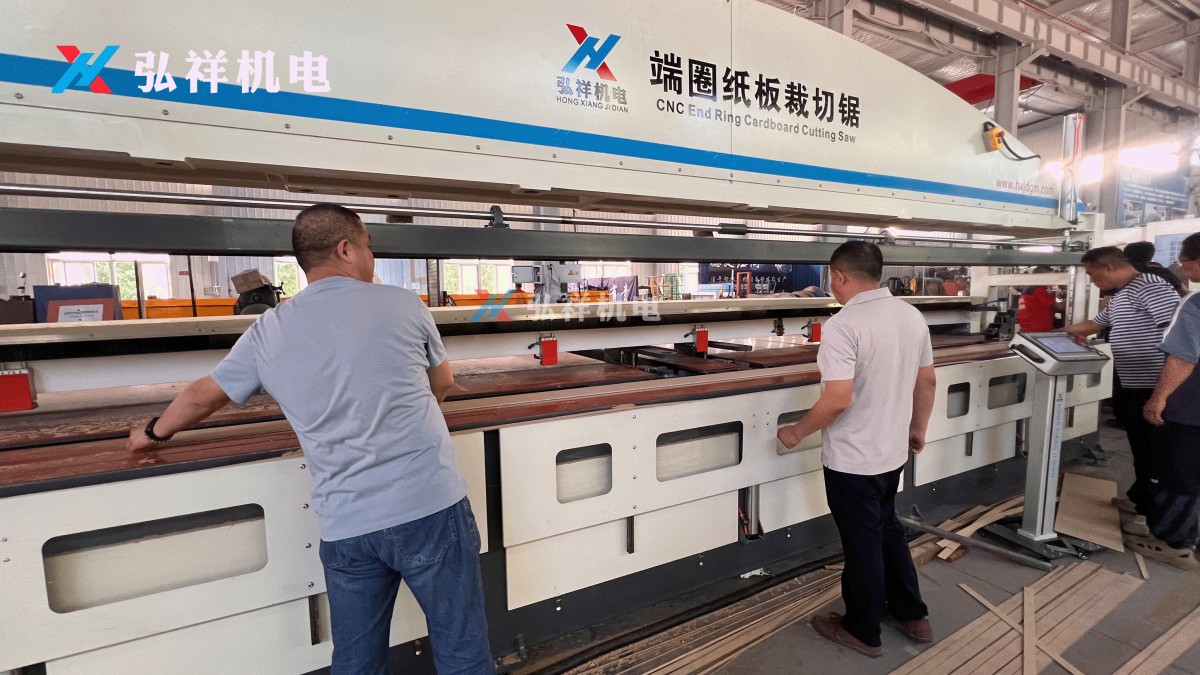
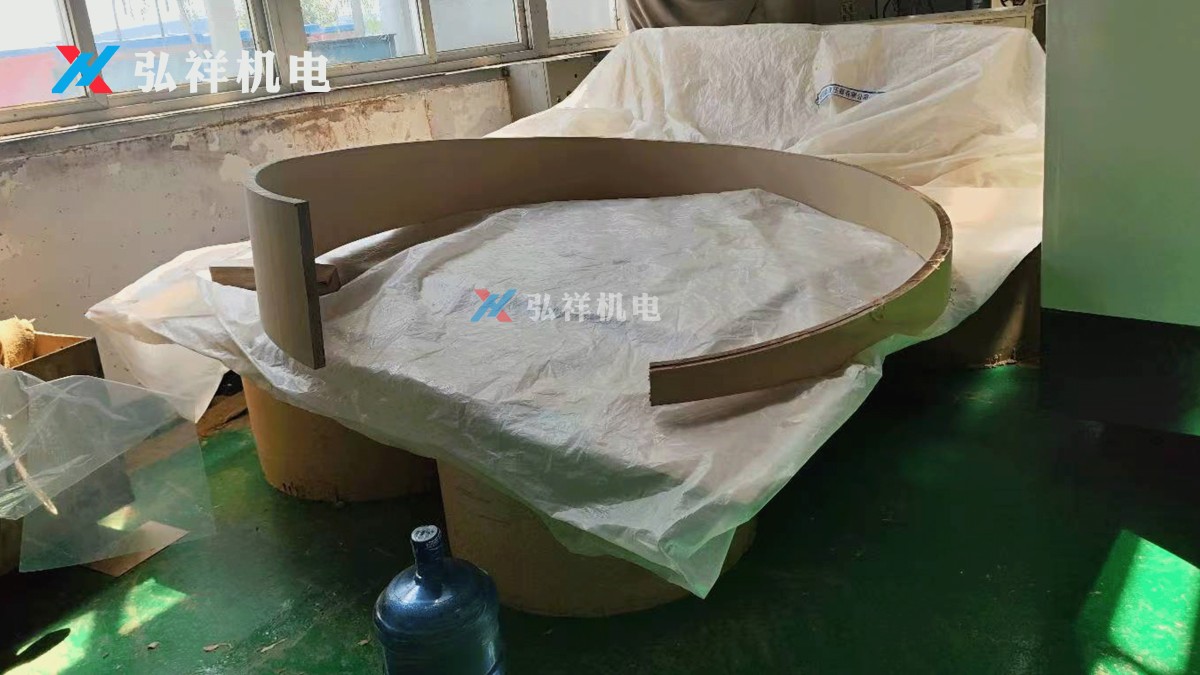
Why Humidity Above 65% RH Threatens Laminated Wood Processing Accuracy
Laminated wood used in transformer insulation requires precise dimensional stability and interlayer adhesion. At relative humidity (RH) above 65%, moisture absorption triggers swelling—typically 0.2–0.8% linear expansion across grain directions—disrupting tight tolerances of ±0.3 mm required for layer-pressed insulating parts.
Phenol-formaldehyde and melamine-urea resins—commonly used in electrical-grade laminated wood—experience reduced cross-link density when ambient RH exceeds 65%. This accelerates hydrolysis, lowering interlaminar shear strength by up to 35% after 72 hours of exposure. Resulting delamination compromises dielectric integrity and mechanical load-bearing capacity.
CNC-controlled milling, drilling, and contouring stages become unreliable: hygroscopic drift causes cumulative positioning errors exceeding ±0.15 mm per 100 mm length. For components like pressboard spacers or barrier blocks (typical thickness: 6–40 mm), such deviations risk misalignment during transformer core assembly—increasing field failure probability by 4–6× per IEC 60641-2 verification reports.
How Gaomi Hongxiang’s Equipment Mitigates Humidity-Induced Failure
Environmental Compensation & Real-Time Monitoring
Our LX-3000 series laminated wood processing line integrates dual-sensor RH/temperature monitoring at three critical zones: raw material staging, pressing station, and post-curing inspection. When RH > 65%, the system automatically adjusts feed rate (±12%), spindle speed (±8%), and clamping pressure (±15%) within 2.3 seconds—validated across 142 production runs in Southeast Asia and Russia.
Material-Specific Adaptive Machining
Unlike generic CNC platforms, our firmware embeds 9 preloaded moisture-response profiles for common insulating laminates—including phenolic-impregnated beech (DIN 7725), epoxy-bonded birch (IEC 60851-3), and hybrid EVA-core composites. Each profile dynamically recalculates toolpath compensation vectors based on real-time moisture content readings from integrated capacitive sensors (accuracy: ±1.2% MC).
Sealed Process Enclosures with Desiccant Recirculation
Critical stations—including hot-press modules and precision routing cells—are housed in ISO Class 7 clean enclosures with closed-loop desiccant air recirculation. Dew point is maintained at ≤ –15°C (equivalent to<45% RH at 25°C), reducing moisture ingress by 92% compared to standard factory environments. This extends resin cure window by 3.5–5.2 hours per batch.
Technical Comparison: Standard vs. Humidity-Resilient Laminated Wood Equipment
The table below compares performance metrics across key operational parameters under sustained 70% RH conditions—measured over 200-hour continuous operation cycles per IEEE Std 930-2018 reliability testing protocols.
This performance gap directly translates into lower scrap rates (from 6.8% to 1.4%), extended maintenance intervals (from 250 to 420 operating hours), and compliance with IEC 60273 creepage requirements even in tropical monsoon climates. All LX-3000 units include factory-calibrated humidity compensation logs traceable to NIST-traceable reference standards.
Procurement Decision Checklist: What to Verify Before Purchase
For procurement personnel, technical evaluators, and project managers, verifying humidity resilience requires more than datasheet claims. Use this 5-point checklist during supplier evaluation:
- Confirm RH compensation logic is embedded in motion controller firmware—not just PLC-level alerts—and request validation report from third-party lab (e.g., CESI or KEMA).
- Verify desiccant system includes dew point sensor with real-time logging (minimum 1 Hz sampling, 30-day buffer) and automatic regeneration cycle (≤ 45 min per 12 h runtime).
- Require test data showing dimensional repeatability (ISO 2768-mK) across three RH bands: 45–55%, 60–65%, and 70–75%—all measured on same machine with identical tooling and workpiece material.
- Check if software supports export of moisture-compensation audit trails compatible with ERP/MES integration (OPC UA or MQTT v3.1.1 required).
- Validate service coverage: Does the warranty include humidity-related calibration drift correction? Is on-site RH sensor recalibration available within 72 business hours globally?
Why Global Transformer Manufacturers Choose Gaomi Hongxiang
With manufacturing facilities certified to ISO 9001:2015 and ISO 14001:2015, Gaomi Hongxiang delivers turnkey laminated wood processing systems—from single-station hot presses to fully automated AI-guided lines—for clients across 12 countries. Our solutions integrate seamlessly with existing transformer assembly workflows, supporting production volumes from 500 to 12,000 insulating parts per month.
We provide comprehensive support: on-site environmental assessment (including RH mapping and dew point analysis), custom firmware adaptation for client-specific laminate recipes, and operator training covering humidity-responsive troubleshooting—delivered in English, Spanish, Russian, or Bahasa within 14 days of order confirmation.
Ready to validate humidity resilience for your specific laminated wood grade and production environment? Contact us for a free technical consultation, including RH impact simulation using your material specs and facility climate data—or request our detailed 24-page “Humidity-Resilient Processing Protocol” whitepaper (includes IEC-compliant test methodology and 17 validated mitigation strategies).
NAVIGATION
MESSAGE
Request A Quote?