0000-00
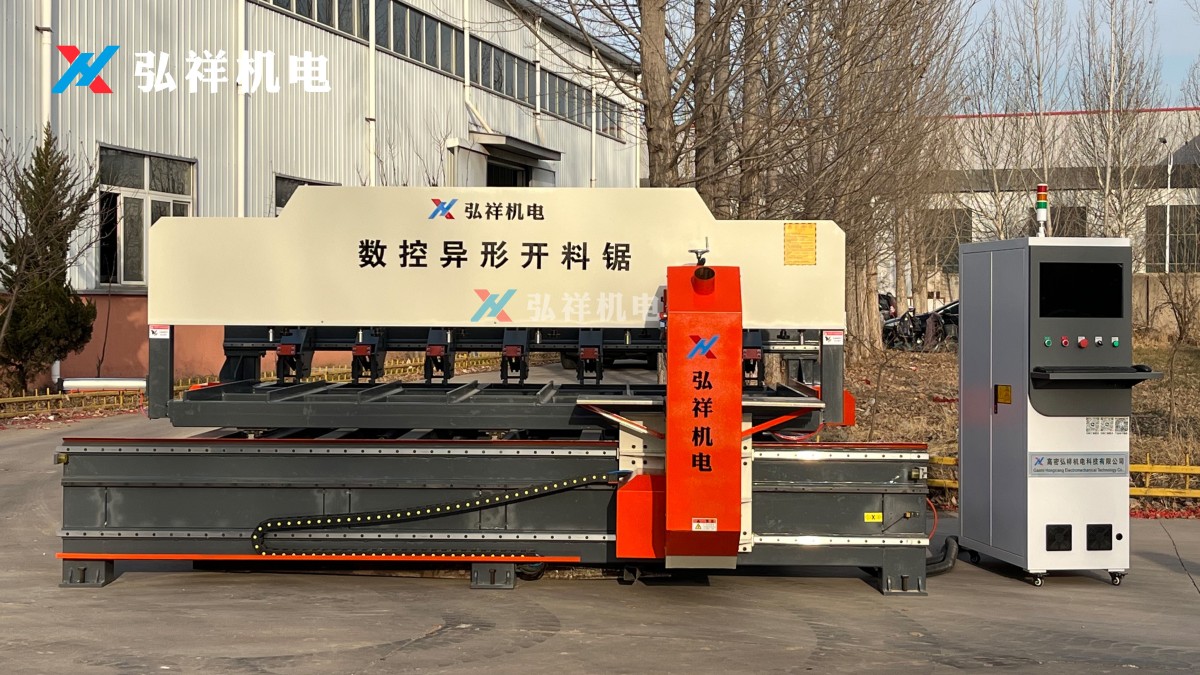
Transformer insulation parts processing equipment is essential for precision manufacturing of insulating cardboard, electrical laminated cardboard, and laminated wood used in power transformers. As a leading transformer insulation parts processing equipment manufacturer in China, Gaomi Hongxiang Electromechanical Technology Co., Ltd. offers advanced solutions including CNC shearing machines, fully automatic shearing machines, head and tail shearing machines, ring cutting processing equipment, electrical sheet metal beveling machines, cow horn-shaped cutting block beveling machines, end ring cutting saws, and specialized stands like transformer assembly stands and jewelry body assembly stands — all supporting AI-integrated special machine development and wire clamp processing equipment.
What Transformer Insulation Parts Processing Equipment Actually Is
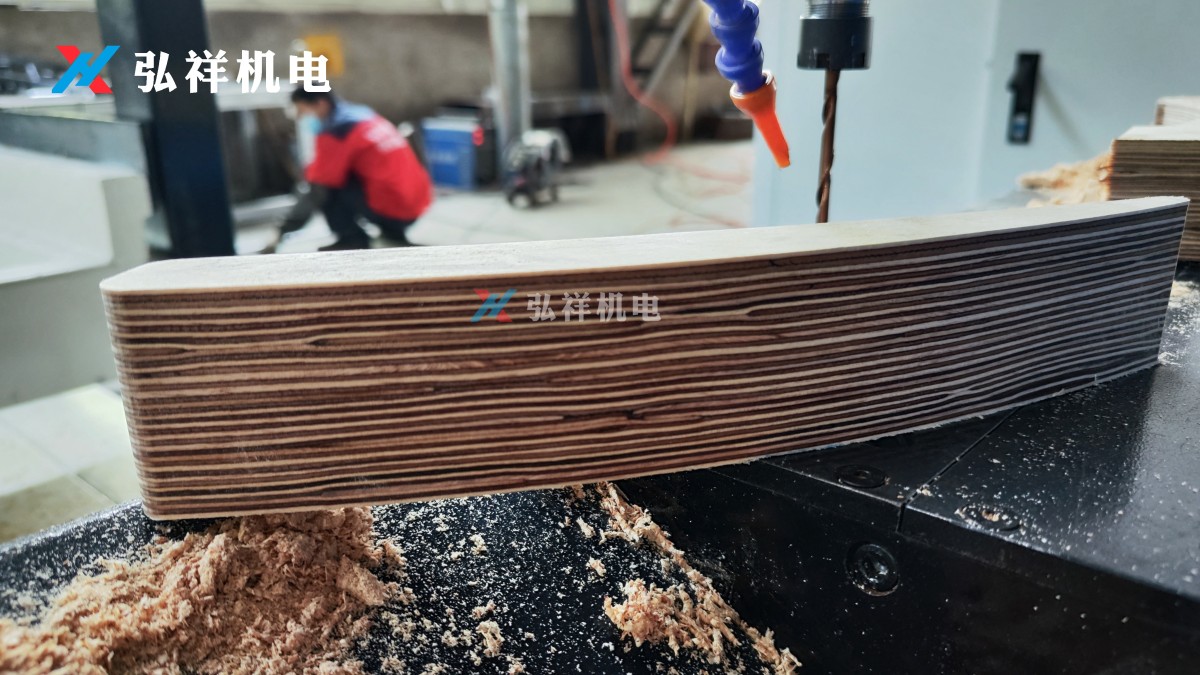
Transformer insulation parts processing equipment refers to a category of specialized machine tools designed to cut, shape, bevel, slot, and assemble non-metallic insulating materials—primarily electrical insulating cardboard (e.g., Nomex®-grade kraft paper), laminated wood (such as phenolic-resin-bonded birch or poplar), and composite laminates used in high-voltage transformer core clamping, winding barriers, and structural support components.
Unlike general-purpose CNC routers or laser cutters, these machines are engineered for dimensional stability under thermal load, minimal fiber tear during high-speed shearing, and micron-level repeatability across batch runs of 500–2,000 units per order. Typical tolerance requirements range from ±0.3 mm for flat-cutting operations to ±0.8 mm for multi-axis beveling on curved laminated wood blocks.
Gaomi Hongxiang’s equipment portfolio covers the full workflow—from raw sheet handling (up to 2,000 × 1,200 mm format) to final part stacking and pre-assembly positioning. All systems comply with IEC 60273 and GB/T 1094.1–2013 standards for dielectric strength and mechanical integrity testing of processed insulation components.
This table highlights how Gaomi Hongxiang tailors each machine to specific material behaviors and geometry constraints. For instance, its cow horn beveling system uses dual servo-controlled angle heads to maintain consistent bevel angles (typically 30°–45°) across variable-radius curves—a requirement critical for uniform clamping force distribution in 220 kV+ transformers.
How These Machines Work: From Input to Precision Output
Operation follows a structured 5-stage sequence: (1) digital file import (DXF/DWG/STEP), (2) material registration via optical edge detection, (3) adaptive toolpath generation based on thickness sensors, (4) synchronized multi-axis motion control (X/Y/Z + rotational A/B axes), and (5) post-process verification using integrated vision alignment.
For example, the fully automatic shearing machine processes up to 12 layers of 3 mm laminated wood simultaneously at feed speeds of 8–15 m/min. Its pneumatic clamping system applies 2.5–4.0 MPa pressure across the entire work surface to prevent layer slippage—ensuring clean, burr-free edges without post-machining sanding.
AI integration manifests in real-time anomaly detection: cameras monitor cutting debris accumulation and blade wear patterns, triggering automated alerts when deviation exceeds 0.15 mm per 10,000 cuts. This reduces unplanned downtime by an average of 22% compared to conventional setups, according to internal field data from 37 customer sites across India and Russia.
- Tool change cycle time: ≤ 8 seconds (standard configuration)
- Maximum sheet weight capacity: 1,200 kg per loading cycle
- Electrical safety compliance: CE EN 60204-1, UL 508A certified
- Standard delivery lead time: 12–16 weeks after deposit confirmation
Who Benefits—and Why It Matters Across Roles
Information researchers gain verified technical specifications and application benchmarks—not marketing fluff. Operators benefit from intuitive HMI interfaces with bilingual (English/Chinese/Spanish) prompts and guided troubleshooting wizards that reduce average setup time from 42 to 11 minutes per job changeover.
Finance approvers appreciate predictable TCO modeling: Gaomi Hongxiang’s machines deliver ROI within 14–18 months for mid-volume producers (≥ 18,000 insulation parts/year), factoring in labor savings (2.3 FTEs per shift), scrap reduction (from 4.7% to ≤1.2%), and extended tool life (average 32,000 linear meters per carbide insert).
Quality and safety managers rely on built-in traceability: every processed part logs timestamp, operator ID, material lot number, and dimensional QA pass/fail status—exportable to SAP QM or Oracle EBS modules. All machines meet ISO 13857 safety distance requirements for guarded access zones.
This stakeholder-aligned design philosophy enables seamless adoption across global supply chains—from tier-1 transformer manufacturers in Pakistan to AI-integrated smart factories in Southeast Asia.
Selecting the Right System: 4 Critical Evaluation Dimensions
First, assess material scope: Does the equipment handle your full range—including EVA foam molding (density 25–45 kg/m³) and phenolic laminated wood (up to 120 mm thick)? Second, verify software interoperability: native STEP import avoids costly DXF translation errors common in legacy CAD/CAM workflows.
Third, examine service infrastructure: Gaomi Hongxiang maintains certified service engineers in Jakarta, São Paulo, Moscow, and Lahore—with average first-time fix rate of 94.6%. Fourth, confirm modularity: all base models support retrofitting of AI vision modules, robotic loading arms, and MES integration kits—avoiding full-system replacement in 3–5 years.
Avoid vendors offering “one-size-fits-all” CNC platforms repurposed for insulation work. True specialization shows in features like vacuum-assisted dust extraction (<1 mg/m³ airborne particulate), humidity-compensated feed calibration (operational range: 35–75% RH), and thermal drift compensation algorithms active during 8-hour continuous operation.
Why Gaomi Hongxiang Stands Out in Global Markets
With over 12 years of domain-specific R&D, Gaomi Hongxiang has shipped more than 860 insulation processing systems to 23 countries. Its AI-integrated special machine development capability isn’t theoretical—it powers actual production lines where predictive maintenance algorithms adjust feed rates based on real-time motor current harmonics analysis.
The company’s vertically integrated model—covering everything from proprietary CNC controller firmware to custom-designed tungsten-carbide tooling—ensures full compatibility and rapid issue resolution. Every machine undergoes 72 hours of continuous stress testing before shipment, simulating 3-shift operation across temperature ranges of 5°C–40°C.
Whether you’re evaluating a single ring cutting saw for a new Indian substation project or designing a turnkey AI-enabled insulation cell for a Russian transformer OEM, Gaomi Hongxiang delivers purpose-built engineering—not generic machinery.
Get your customized equipment specification sheet and regional delivery timeline—contact Gaomi Hongxiang Electromechanical Technology Co., Ltd. today for a no-obligation technical consultation.
NAVIGATION
MESSAGE
Request A Quote?