0000-00
When CNC Equipment Is the Better Choice for Transformer Insulation Parts Processing
For technical evaluations, the real question is rarely whether CNC is “advanced.” It is whether CNC transformer insulation parts processing equipment solves the specific manufacturing risks that conventional methods cannot control well enough. In transformer insulation part production, that usually comes down to dimensional repeatability, edge quality, material stability during machining, and the ability to run the same program over long batches without operator-driven variation.
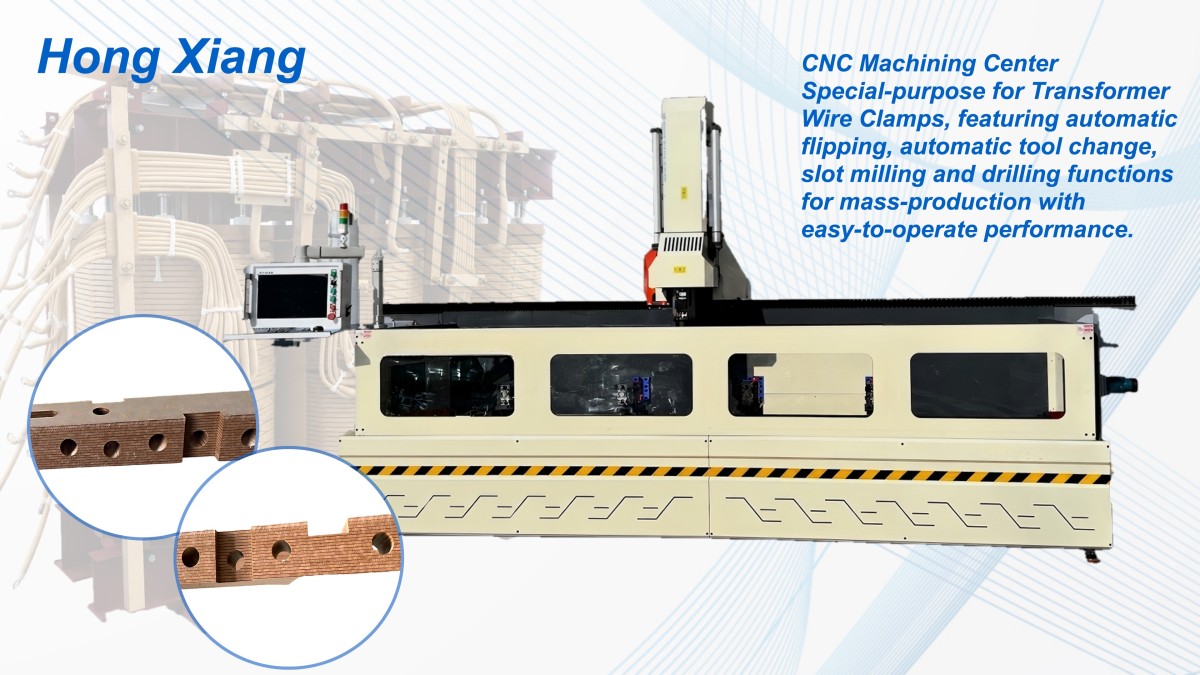
That matters because insulation components are not decorative parts. Electrical insulating cardboard, laminated wood, formed insulation pieces, and related assemblies sit inside systems where fit, spacing, compression behavior, and surface condition can all affect downstream assembly and, in some cases, electrical performance. A process that is merely “good enough” on a drawing may become expensive once rework, manual fitting, or scrap starts showing up on the shop floor.
In this context, CNC equipment becomes the better choice when consistency is more valuable than low entry cost, when part geometry is variable enough to make manual methods inefficient, or when output has to scale without depending on a small number of highly experienced operators. That is the practical decision frame.
Where conventional processing starts to struggle
Traditional insulation parts processing can still be suitable for simple shapes, low volumes, or repair work. Straight cuts, basic slotting, and non-critical pieces may not justify a CNC investment. But technical evaluators usually start reconsidering the process when one or more problems appear repeatedly: dimensions drift between shifts, edge burrs or fiber tearing increase fitting time, setups take too long for mixed-model production, or identical parts behave differently in assembly.
Transformer insulation materials introduce their own complications. Insulating cardboard can be sensitive to handling and support conditions during cutting. Laminated wood has directional properties and can respond differently depending on tool path and clamping. EVA molding-related parts and composite insulation structures may add another layer of complexity where profiles, pockets, or shaped surfaces are involved. On these materials, process stability is often more important than raw machine power.
If operators are compensating by trimming manually, adjusting fixtures on instinct, or sorting parts after machining, the current method may be reaching its practical limit.
When CNC clearly becomes the better option
The strongest case for CNC transformer insulation parts processing equipment is not speed alone. It is controlled repeatability across parts, batches, and operators. Once drawings include tighter tolerances, repeated internal contours, multi-step features, or mating surfaces that must align reliably in assembly, CNC starts to justify itself quickly.
There are several situations where this shift is especially clear.
One is high mix production. Transformer manufacturers and their suppliers often process different insulation parts in relatively small to medium batches rather than running a single geometry for months. In that environment, programmable changeover matters. A CNC platform reduces dependence on dedicated templates and repeated manual layout work, which is often where hidden errors begin.
Another is tolerance-sensitive assembly. If the part must locate accurately against clamping structures, winding-related assemblies, or layered insulation stacks, dimensional spread can cause more than cosmetic issues. Parts may need rework, shimming, or replacement. CNC cannot remove every source of variation, but it usually gives a better base level of positional and profile control.
The third is labor exposure. Shops that rely heavily on manual skill for marking, trimming, and repeated setup are more vulnerable to training gaps and output fluctuations. CNC shifts more of the process from operator judgment to defined machining logic. That does not eliminate the need for skilled people, but it changes where skill is applied: programming, fixture design, tool selection, and process verification rather than repeated manual correction.
What technical evaluators should examine beyond the machine brochure
A common mistake in equipment selection is comparing axis count, spindle power, or travel size before confirming the actual process window. For transformer insulation parts, the better assessment starts with the material family and the part behavior during machining.
Ask how the machine handles sheet flatness, layered material support, dust extraction, and fixture repeatability. These factors often matter more than headline specifications. A machine that cuts accurately in theory can still produce unstable results if the workpiece lifts, vibrates, or shifts under changing tool load. For softer or fibrous insulating materials, hold-down design and cutting strategy are part of the machine capability, not separate details.
Tool management also deserves more attention than it usually gets. Different insulation materials do not respond the same way to the same cutter geometry. Evaluators should look at whether the supplier can discuss tool wear patterns, edge finish expectations, and practical replacement intervals based on application type. If that conversation stays generic, it is a warning sign.
Programming workflow matters too. If engineering changes are frequent, the value of CNC depends partly on how quickly drawings become validated machining programs. Shops processing multiple transformer insulation part types need more than motion control; they need a usable process chain from design revision to stable production.
The materials change the selection logic
Insulating cardboard and insulating laminated wood may both fall under transformer insulation parts, but they do not ask the same thing from the equipment. Cardboard-related processing often emphasizes clean cutting, controlled support, and prevention of deformation during handling. Laminated wood processing can place more demand on rigidity, tool path stability, and control of breakout or edge damage. Mixed production environments need machines and process packages that can move between these requirements without constant trial-and-error adjustment.
This is one reason integrated suppliers tend to see the problem more realistically than standalone machine traders. Companies involved in both equipment and actual transformer-related manufacturing usually understand that the machine is only one variable. Gaomi Hongxiang Electromechanical Technology Co., Ltd., for example, works across power transformer assembly and manufacturing services, electrical insulating cardboard, insulating laminated wood, insulation parts, and EVA molding processing, while also covering design, production, installation, training, and after-sales support. That kind of operating range does not automatically make any given machine the right fit, but it does suggest familiarity with the gap between demo performance and production reality.
For evaluators, that gap is critical. A machine can look capable when cutting sample boards under ideal conditions. The harder test is whether it remains predictable when material lots vary, operators change, and production moves from one insulation component family to another.
What “better choice” really means in cost terms
CNC is often judged against manual or semi-manual processing using purchase price alone. That is too narrow for a decision tied to insulation part quality. The more useful comparison includes setup time, scrap exposure, inspection burden, tool consumption, floor skill dependency, and assembly-side losses caused by inconsistent parts.
If the current method already meets tolerance, throughput, and quality requirements with low rework, CNC may not be the best immediate investment. But if the plant is spending time on correction rather than production, the economics change. Repeated fitting, part sorting, undocumented operator adjustments, and unstable lead times are all signs that the process cost is being paid outside the machine center.
That said, technical teams should resist oversimplified ROI claims. The payback depends on batch structure, product mix, part complexity, labor conditions, and the level of process discipline already in place. In many projects, the strongest reason to choose CNC is not headline labor savings but the ability to reduce process uncertainty.
Questions worth asking before final approval
Before making a selection, it helps to pressure-test the proposal with a few practical questions:
- Which insulation materials will run on the same platform, and what changes are required between them?
- What part features are most likely to challenge repeatability: narrow slots, edge finish, thickness variation, nested geometry, or layered structures?
- How is workholding validated for thin, flexible, or fiber-sensitive materials?
- What training is needed for programming, operation, and routine maintenance?
- Can the supplier support installation and after-sales service in the target region, especially if the project is outside the domestic market?
- What acceptance criteria will be used for sample parts, and are those criteria tied to real assembly needs rather than only drawing dimensions?
Those questions are more revealing than broad claims about automation. They help identify whether the proposed solution is built around transformer insulation processing realities or simply adapted from a general-purpose machine tool platform.
A grounded way to decide
CNC equipment is the better choice when the process needs to be repeatable, not merely possible. In transformer insulation parts processing, that usually means the parts are varied enough, precise enough, or production-critical enough that manual compensation is no longer an acceptable control method. If a plant is still relying on operator experience to absorb material variation and maintain fit, CNC may be less of an upgrade than a necessary step toward stable manufacturing.
The best evaluations do not stop at machine parameters. They look at materials, fixtures, programming flow, service capability, and how the parts behave in final assembly. For companies serving multiple export markets, as Gaomi Hongxiang does across Southeast Asia, South America, India, Pakistan, Russia, and other regions, that broader view becomes even more relevant because support expectations, production structures, and project constraints are rarely identical from one market to another.
If the decision is close, request sample verification based on your actual insulation materials and representative part drawings, then review not just dimensional results but setup repeatability, surface condition, and operator dependence. That usually tells you faster than any brochure whether CNC transformer insulation parts processing equipment is the right move for the next stage of production.
NAVIGATION
MESSAGE
Request A Quote?