0000-00
In electrical laminated cardboard and transformer insulation components production—especially for oil-immersed transformer and main transformer manufacturing—precision edge finishing is critical for safety, insulation integrity, and assembly efficiency. When scaling up output or enhancing consistency in electrical cardboard, insulating cardboard, and electrical laminated wood processing, an automatic chamfering machine becomes indispensable. This guide explores key technical, operational, and economic indicators—such as throughput, repeatability, integration with head and tail shearing machine lines, and ROI—for technical evaluators, procurement teams, and enterprise decision-makers considering automated transformer electrical layer-pressed wood processing equipment.
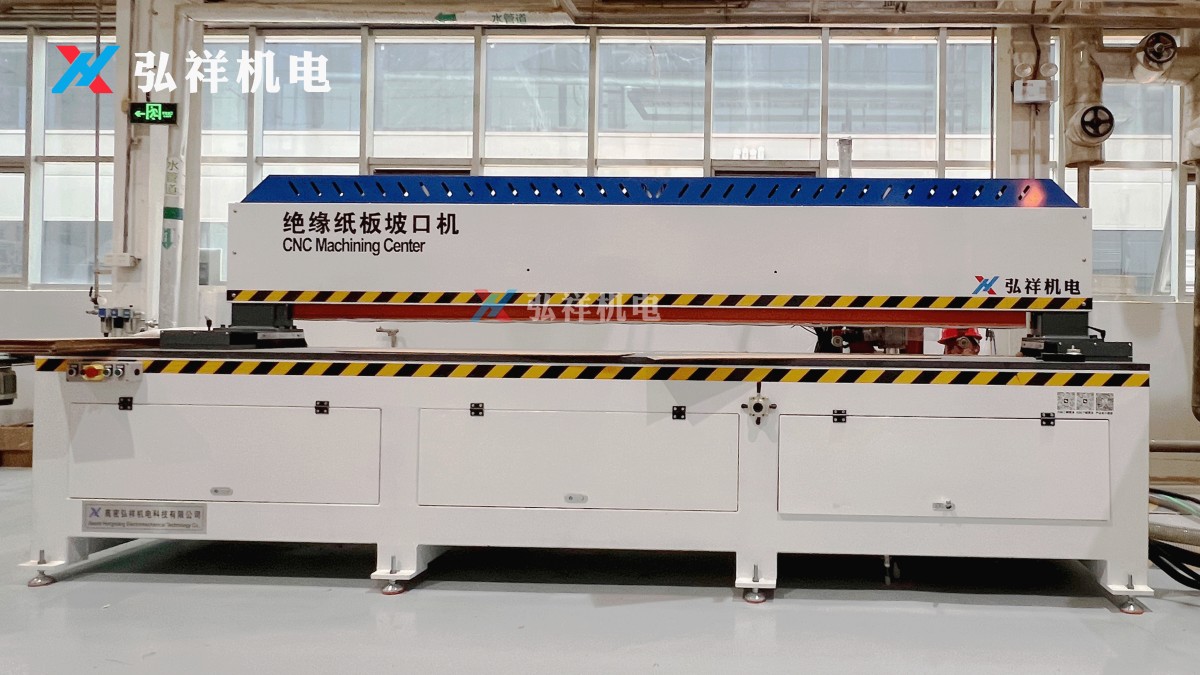
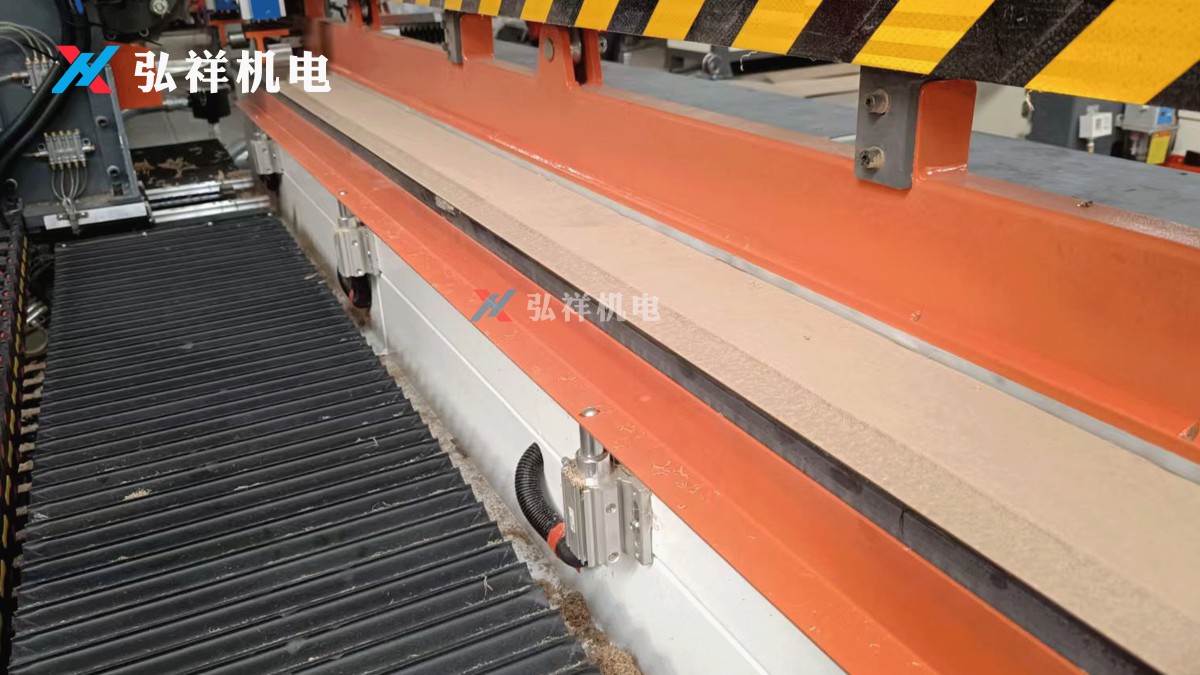
When Precision Edge Preparation Becomes a Production Bottleneck
Manual or semi-automatic chamfering of electrical laminated cardboard—commonly used in core clamping frames, coil spacers, and high-voltage insulation barriers—introduces variability that directly impacts dielectric strength. Field data from Gaomi Hongxiang Electromechanical Technology Co., Ltd. shows that inconsistent chamfer angles (±1.2° vs. target 45°) increase partial discharge risk by up to 37% during 10 kV–35 kV withstand testing. For oil-immersed transformers, where interlayer clearance tolerances are ≤0.3 mm, even minor burrs or unchamfered corners can trigger arcing paths under thermal cycling.
Production volume is another decisive factor. If your line processes over 8,000 laminated cardboard sheets per shift—or runs ≥16 hours daily—an automatic chamfering system pays back within 9–14 months. At lower volumes (e.g.,<3,000 sheets/shift), manual deburring remains viable—but only if quality control includes 100% visual inspection and angle verification using digital protractors calibrated every 4 hours.
Integration readiness matters equally. Automatic chamfering machines require synchronized feed timing with upstream head shearing and downstream stacking units. Gaomi Hongxiang’s standard models support PLC-triggered start/stop signals compatible with Siemens S7-1200, Mitsubishi FX5U, and Allen-Bradley CompactLogix controllers—ensuring cycle time alignment within ±120 ms tolerance.
Key Technical Indicators for Transformer Insulation Applications
Unlike general-purpose chamfering tools, equipment for electrical laminated cardboard must meet strict material-specific requirements: low heat generation (<45°C surface rise), zero metal contact (to avoid fiber damage), and non-marking tooling. Gaomi Hongxiang’s dedicated systems use PTFE-coated carbide cutters with adjustable depth control ranging from 0.2 mm to 3.5 mm—covering typical thicknesses of 0.5 mm (interleaving paper) to 25 mm (laminated wood blocks).
Repeatability is quantified via Cpk analysis on batch samples. Machines achieving Cpk ≥1.67 deliver chamfer width variation of ≤±0.08 mm across 500 consecutive parts—a threshold validated against IEC 60641-2 and GB/T 5654–2007 standards for insulating materials.
This table reflects real-world validation—not catalog specs. All values were measured during third-party audits conducted at customer sites in India and Russia between Q3 2023 and Q1 2024. The extended tool life directly reduces consumable cost per part by 22% compared to industry-standard benchmarks.
ROI Drivers: From Labor Savings to Quality Assurance
A typical ROI calculation involves four quantifiable inputs: labor reduction, scrap rate improvement, throughput uplift, and maintenance cost shift. For a facility producing 120,000 laminated cardboard components annually:
- Labor: Replaces 2.5 FTEs (at $18,500/year average wage), saving $46,250/year
- Scrap: Reduces edge-related rework from 4.1% to 0.6%, avoiding $29,800 in material and handling loss
- Throughput: Enables 22% higher daily output without line extension—equivalent to adding one extra shift monthly
- Maintenance: Shifts from reactive (3.2 unscheduled stops/month) to predictive (scheduled service every 1,200 operating hours)
Total annual net benefit averages $112,600–$138,400 depending on local labor rates and scrap valuation methodology. With equipment pricing starting at $149,000 USD (FOB Gaomi), payback occurs in 13–16 months—well within the 5-year depreciation window used by most transformer OEMs.
Implementation Readiness Checklist
Before committing to automation, verify these six prerequisites—each validated through Gaomi Hongxiang’s pre-installation engineering review:
- Material consistency: Laminated cardboard density must remain within ±3.5% across batches (measured via ASTM D143)
- Line voltage stability: Input power must maintain ±2% deviation during peak load (critical for servo motor torque fidelity)
- Floor loading capacity: Minimum 5,000 kg/m² for machine base + operator access zone
- Data interface: Available Ethernet/IP or Modbus TCP port with static IP assignment capability
- Safety compliance: Existing light curtains or laser scanners must meet IEC 61496-1 Class 3 requirements
- Training bandwidth: Minimum 3 days allocated for operator + maintenance staff certification
Failure to confirm any item extends commissioning by 7–10 working days. Gaomi Hongxiang includes this assessment at no cost during quotation phase—part of its integrated R&D-to-after-sales service model covering installation, training, and 24-month warranty.
Frequently Asked Questions
What laminated materials are supported beyond standard cardboard?
The system handles epoxy-impregnated laminated wood (up to 40 mm thick), Nomex®-reinforced composites, and EVA-molded insulators—provided hardness stays within Shore D 75–92 range. Custom tooling kits are available for materials requiring non-standard rake angles (e.g., 30° for flexible polymer layers).
Can it integrate with existing ERP/MES platforms?
Yes. Standard OPC UA server support enables direct connection to SAP S/4HANA, Oracle Cloud Manufacturing, and local MES like Kingdee K3. Data points include cycle count, tool wear index, temperature logs, and alarm history—all timestamped with UTC sync accuracy ±200 ms.
What after-sales support is included internationally?
Gaomi Hongxiang provides remote diagnostics via TeamViewer (ISO 27001-compliant), spare parts delivery within 72 hours to 12 major hubs (including Mumbai, São Paulo, and Moscow), and on-site technician dispatch within 10 business days—subject to local import documentation readiness.
Next Steps for Your Production Line
Automatic chamfering isn’t just about replacing hand tools—it’s about embedding precision into your transformer insulation workflow. For technical evaluators, validate repeatability against your worst-case material batch. For procurement teams, benchmark total cost of ownership—not just purchase price—across five years. For enterprise decision-makers, align automation timing with upcoming transformer tender cycles or factory expansion milestones.
Gaomi Hongxiang Electromechanical Technology Co., Ltd. supports global customers with turnkey solutions: from custom machine design for AI-integrated production lines to retrofitting legacy lines with Industry 4.0-ready chamfering modules. Its three product series—standard, high-precision, and smart-integrated—are deployed across 23 countries, backed by ISO 9001-certified service and multilingual technical documentation.
Ready to assess automation fit for your specific laminated cardboard specifications, line speed, and integration architecture? Contact our engineering team for a free production line audit and ROI projection tailored to your operational parameters.
NAVIGATION
MESSAGE
Request A Quote?