0000-00
For transformer manufacturers seeking higher consistency and lower labor dependence, automated transformer electrical layer-pressed wood processing equipment is changing production standards. As a Transformer electrical layer-pressed wood processing equipment manufacturer in China, Gaomi Hongxiang delivers high precision transformer electrical layer-pressed wood processing equipment for electrical insulation applications, helping power industry users reduce manual errors, improve quality control, and achieve more cost-effective transformer electrical layer-pressed wood processing equipment solutions.
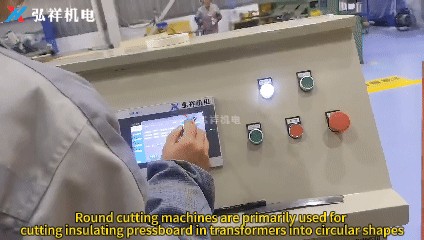
In transformer insulation production, even a small dimensional deviation in laminated wood parts can affect fit-up, assembly rhythm, dielectric clearance, and downstream inspection results. That is why buyers, operators, quality teams, and project managers increasingly focus on equipment stability rather than only initial machine price. Automated layer-pressed wood equipment addresses repeatability, process control, and labor consistency in a way manual workflows often cannot sustain over long production cycles.
For companies evaluating machine tools and processing lines for insulating laminated wood, the key question is practical: how exactly does automation reduce manual errors, and what does that mean for quality, throughput, operating cost, and procurement value? The answer lies in controlled feeding, fixed-position machining, programmable parameters, standardized output, and service support that make daily production less dependent on individual experience.
Why Manual Errors Persist in Layer-Pressed Wood Processing
Transformer electrical layer-pressed wood processing involves more than simple cutting. Typical operations include sizing, slotting, drilling, edge shaping, positioning, and matched-part preparation for insulation assemblies. In a manual or semi-manual setup, a single part may pass through 4 to 7 handling steps before final verification. Each transfer increases the chance of alignment drift, edge damage, dimensional inconsistency, or mixed-batch confusion.
Manual errors usually come from three sources. First, operator judgment varies from shift to shift, especially when tolerances are tight, such as ±0.3 mm to ±0.8 mm depending on part geometry. Second, repetitive work leads to fatigue, especially in long production windows of 8 to 12 hours. Third, process settings may not be recorded in a standardized way, so two operators can produce slightly different results on the same drawing.
These errors are rarely dramatic at first. More often, they appear as cumulative waste: increased rework, higher scrap, delayed assembly, and more inspection time. A line that loses 2 to 5 minutes per batch on rechecking dimensions may not seem inefficient on paper, but across 30 to 50 batches per week, the cost becomes significant for both production planning and financial review.
For procurement teams, this means the real comparison is not manual versus automated machine purchase price alone. It is manual variability versus controlled output. In industries linked to transformer manufacturing, where insulation reliability matters, reducing avoidable process deviation has direct value for quality assurance and customer delivery confidence.
Common manual-error points on the shop floor
- Incorrect part placement during feeding, causing offset drilling or misaligned edge machining.
- Inconsistent pressure or positioning during repeated processing of laminated wood sheets.
- Operator-dependent parameter adjustment without recorded reference values.
- Batch identification mistakes when multiple insulation part types are processed in one shift.
- Measurement variation caused by different inspection habits, tools, or calibration frequency.
Typical impact on production performance
When defect causes are traced back, companies often find that the issue is not the material itself but unstable human execution. This is particularly common when product mix changes frequently, order volumes vary, or skilled operators are difficult to retain. In such environments, automated layer-pressed wood equipment becomes a process control tool, not just a machine replacement.
How Automated Equipment Reduces Errors at the Source
Automated transformer electrical layer-pressed wood processing equipment reduces manual errors by standardizing the most sensitive stages of production. Instead of relying on repeated hand alignment, the machine uses preset programs, positioning devices, controlled motion paths, and repeatable clamping logic. This converts operator skill from direct manual execution into supervised process management, which is easier to train, audit, and reproduce.
In practical terms, automation improves consistency in at least 5 areas: feeding accuracy, dimensional repeatability, pressure stability, sequence control, and traceable parameter setting. For example, when a process is stored as a recipe, the same part can be reproduced across different shifts with the same feed path and machining logic. This reduces dependency on memory-based adjustments and lowers variation between new and experienced staff.
Another important advantage is inspection efficiency. If output stability improves, quality control teams can shift from checking every piece to using batch-based verification under internal rules, especially for stable repetitive products. This does not eliminate inspection, but it can reduce unnecessary re-measurement and free QC resources for critical dimensions, incoming materials, and process exception handling.
Automation also supports safer operation. Repetitive manual contact with cutting, pressing, or moving sections introduces safety risks over time. By reducing direct intervention in the active machining zone, companies can improve process discipline and better align production with safety management requirements.
Manual versus automated processing comparison
The following table shows a practical comparison used by technical evaluators and buyers when reviewing machine tool upgrades for insulation laminated wood processing.
The key takeaway is that automation does not only increase speed. Its stronger value is reducing variation at the source. For transformer part manufacturers, lower variation means fewer downstream interruptions, better fit consistency, and more confidence during final assembly and shipment planning.
Core mechanisms behind error reduction
- Programmed parameters replace memory-based manual settings.
- Positioning devices reduce offset caused by repeated manual loading.
- Controlled sequencing limits skipped or reversed process steps.
- Stable pressure and motion improve edge and dimensional uniformity.
- Recorded production settings support traceability and training.
Operational Benefits for Quality, Cost, and Delivery
For enterprise decision-makers, reducing manual errors matters because it improves three linked performance indicators: product quality, operating cost, and delivery reliability. These benefits are especially relevant for transformer manufacturers that handle mixed orders, medium-batch production, or projects with strict insulation component consistency requirements.
From a quality perspective, more stable processing lowers the risk of mismatch in assembly. When laminated wood parts hold more consistent dimensions, operators spend less time correcting fit, and quality teams face fewer non-conformance discussions. In many workshops, even a 1% to 3% drop in rework can make a visible difference over a quarter, particularly where part variety is high and labor cost is rising.
From a cost perspective, automation can reduce hidden expenses that are often excluded from initial quotations. These include repeated inspection, scrap disposal, urgent re-machining, line stoppage due to missing matched parts, and training pressure when skilled workers leave. Financial approvers increasingly look at total operating impact over 12 to 36 months rather than comparing equipment prices in isolation.
Delivery performance also improves because automated equipment creates a more predictable cycle. If setup routines are standardized and recipes are reusable, switching between batches becomes faster and less risky. That helps project managers plan output windows, reserve labor more accurately, and avoid late-stage production compression before shipment.
Where value appears across different stakeholders
The same machine investment can serve different priorities across departments. The table below summarizes the decision value for typical B2B roles involved in machine tool procurement and process review.
This cross-functional value is important for manufacturers evaluating suppliers like Gaomi Hongxiang. A machine is easier to approve internally when it solves not only one workshop bottleneck but also improves quality control, cost visibility, and production scheduling at the same time.
Typical measurable improvements companies monitor
- Reduction in repeated manual positioning steps from 5 to 2 or 3.
- Shorter training time for new operators, often from several weeks to a more structured 3 to 7 day familiarization period depending on process complexity.
- More stable batch output over continuous production runs of 100 to 500 parts.
- Lower frequency of dimensional drift caused by fatigue or inconsistent manual pressure.
How to Evaluate and Select the Right Automated Equipment
Not every automated layer-pressed wood processing machine delivers the same error-reduction result. Buyers should evaluate the equipment according to actual product types, target tolerances, production rhythm, and service readiness. A machine that is technically capable but difficult to maintain or poorly matched to part dimensions may not deliver the expected return.
Start with the workpiece. Review laminated wood thickness range, part dimensions, hole patterns, required slotting depth, edge finish expectations, and batch variability. For example, if a factory processes both standard parts and small custom runs, recipe storage and quick parameter switching become more important than pure output speed. If large sheets must be handled repeatedly, feeding and positioning stability should be a priority.
Next, examine process control features. Technical assessment teams should ask how the machine stores parameters, how positioning is achieved, how tooling changes are managed, and what protection exists against input mistakes. Maintenance personnel should review wear parts, lubrication points, fault indication logic, and spare part response time. These practical details often determine whether the equipment remains stable after 6, 12, and 24 months of use.
Supplier capability matters as much as machine configuration. A supplier with integrated R&D, manufacturing, installation, training, and after-sales support is often better positioned to help customers move from purchase to stable operation. For export-oriented or multi-region users, communication speed, documentation quality, and remote support responsiveness also affect project risk.
Practical selection checklist
- Confirm the material range, part size range, and the required process types for transformer insulation components.
- Define acceptable dimensional tolerance and repeatability targets before requesting a quotation.
- Review fixture logic, feed control, and recipe management rather than comparing only motor power or footprint.
- Ask about installation time, operator training steps, and recommended preventive maintenance intervals.
- Check after-sales support scope for commissioning, troubleshooting, and replacement parts.
Selection factors by procurement priority
The table below helps buyers balance technical fit, operating reliability, and commercial decision factors.
A disciplined evaluation process reduces procurement risk. It also helps align technical teams, finance reviewers, and management around the same decision framework instead of debating isolated machine features.
Implementation, Maintenance, and Long-Term Reliability
Successful automation is not finished when the equipment arrives. The error-reduction benefit depends on how the machine is installed, trained, documented, and maintained. In many factories, the first 30 to 60 days after commissioning determine whether the line reaches stable output or falls back into manual correction habits.
A good implementation plan usually includes at least 4 stages: pre-installation review, on-site setup, operator training, and acceptance verification. During this period, companies should define part families, standard recipes, inspection checkpoints, and escalation rules for abnormal output. Without these steps, even automated equipment can be underused or misapplied.
Preventive maintenance is equally important. Daily cleaning, routine inspection of moving parts, fixture checks, lubrication according to the supplier schedule, and periodic calibration all help preserve consistency. Many reliability issues begin as small deviations such as loose clamping, tool wear, or inconsistent feeding pressure. Catching them early is far less costly than handling batch defects later.
For companies serving multiple regions, service support capability also affects uptime. Gaomi Hongxiang’s business model, covering R&D, design, production, sales, installation, training, and after-sales service, is relevant here because users often need more than machine delivery. They need support that helps the equipment remain productive over changing product requirements and staffing conditions.
Common implementation mistakes to avoid
- Using old manual work instructions without adapting them to automated process logic.
- Skipping recipe verification for the first 3 to 5 production batches after commissioning.
- Ignoring preventive maintenance until accuracy visibly drops.
- Allowing unauthorized parameter changes without a documented approval path.
- Evaluating machine performance too early without stable material supply and trained operators.
FAQ for buyers, engineers, and operators
How long does implementation usually take?
For many industrial projects, installation and basic commissioning may take several days, while full stable production readiness often requires 1 to 3 weeks depending on process complexity, part variety, operator experience, and site preparation. The key point is not only machine startup but recipe validation and operator discipline.
Is automated equipment only suitable for high-volume factories?
No. It is also valuable for medium-volume and mixed-batch production when consistency matters. If a factory processes multiple insulation part types, frequent manual setup changes can create more errors than volume alone. In these cases, programmable changeover and standardized process control may provide strong value even without mass production.
What should maintenance teams check most often?
Focus on clamping integrity, tooling condition, feed path cleanliness, lubrication points, sensor response, and the repeatability of first-piece output. A simple daily check plus a weekly inspection routine can prevent many accuracy-related problems before they affect larger batches.
What documents should buyers request before approval?
Request a technical scope confirmation, process compatibility details, training content, installation responsibilities, recommended maintenance schedule, and after-sales support terms. These documents help procurement, engineering, and finance teams evaluate total project risk rather than purchase price alone.
Automated layer-pressed wood equipment reduces manual errors because it brings repeatable control to the points where human variability is most costly: positioning, parameter setting, sequence execution, and repetitive handling. For transformer manufacturers, that translates into more stable insulation component quality, lower rework pressure, stronger delivery confidence, and better long-term production discipline.
For organizations comparing machine tool solutions for transformer electrical insulation processing, the best choice is the one that matches material characteristics, process requirements, staffing reality, and service expectations. Gaomi Hongxiang supports global customers with integrated manufacturing, design, installation, training, and after-sales capabilities, making it easier to move from equipment selection to practical production improvement.
If you are planning to reduce manual errors in laminated wood processing, improve quality consistency, or evaluate a more cost-effective transformer insulation equipment solution, contact us now to discuss your application, request technical details, or get a customized equipment proposal.
NAVIGATION
MESSAGE
Request A Quote?