0000-00
Many transformer manufacturers investing in automated laminated wood processing equipment face a frustrating reality: promised throughput rarely materializes in actual production. Despite claims of high precision transformer electrical layer-pressed wood processing equipment and cost-effective laminated wood processing equipment, real-world variables—material inconsistencies, integration gaps, and insufficient process validation—undermine performance. As a leading transformer electrical layer-pressed wood processing equipment manufacturer in China, Gaomi Hongxiang Electromechanical Technology Co., Ltd. draws on hands-on experience across Southeast Asia, India, Russia, and South America to reveal why generic automation fails—and how purpose-built, high-precision solutions for power industry applications deliver true reliability, yield, and ROI.
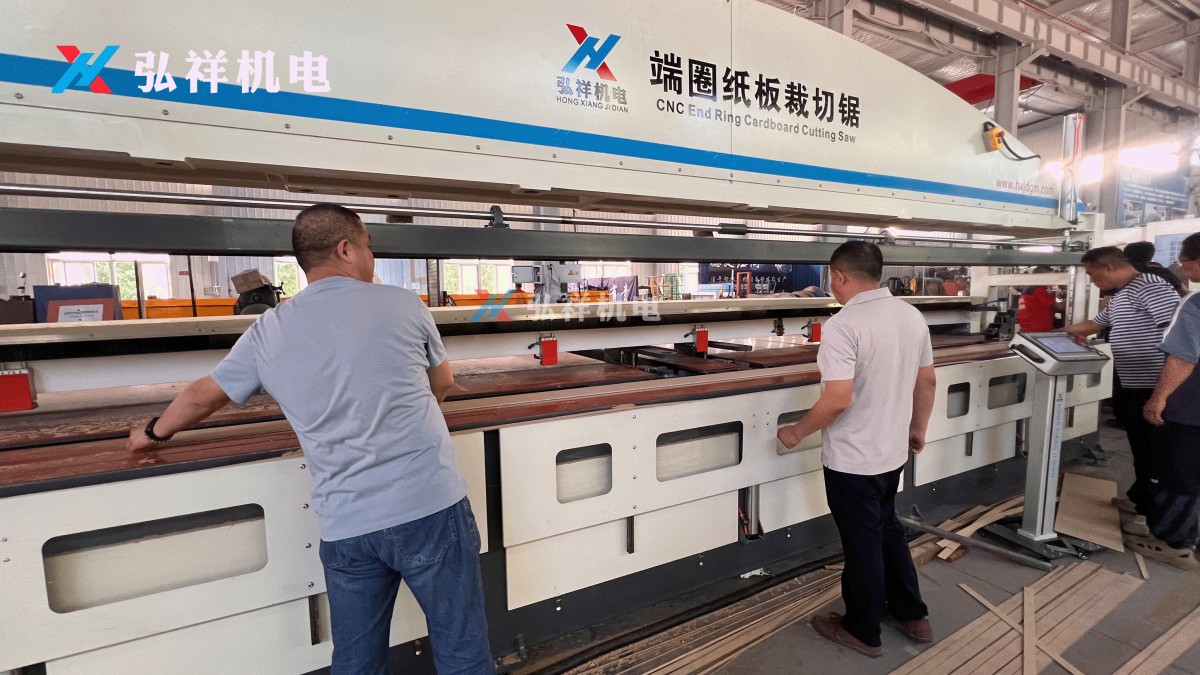
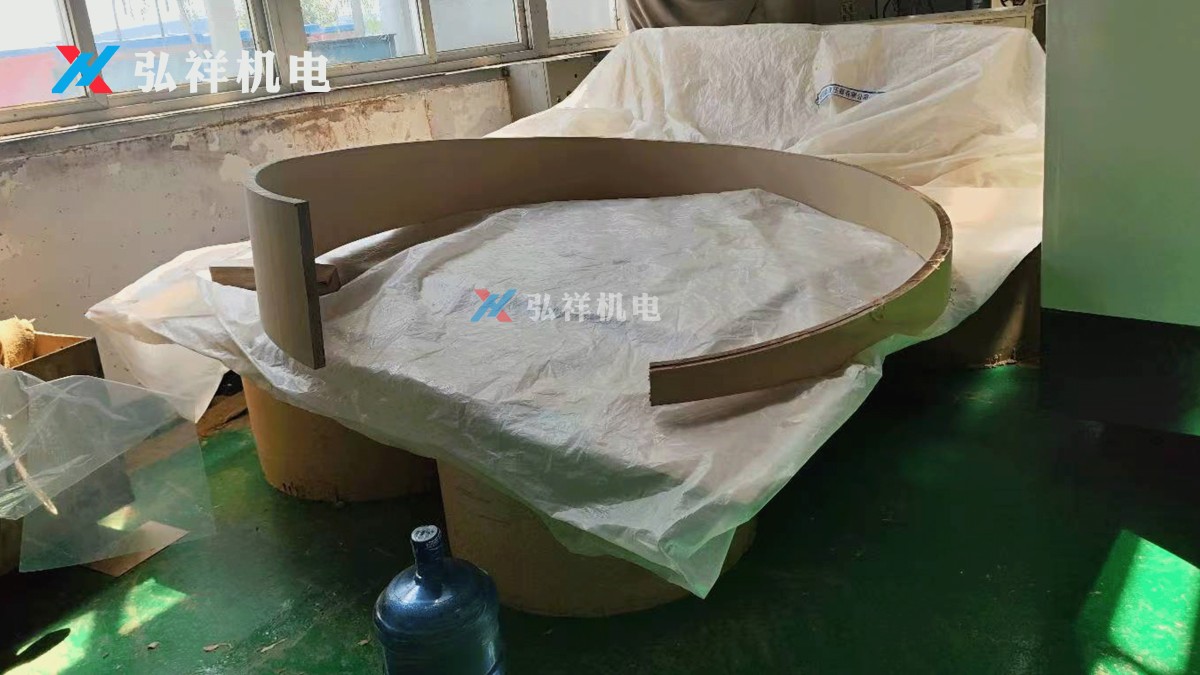
Why Generic Automation Underperforms in Laminated Wood Processing
Transformer-grade laminated wood demands dimensional stability within ±0.3 mm, moisture content control at 6%–8%, and consistent density across batches. Off-the-shelf automation systems—often repurposed from furniture or general woodworking lines—lack the sensor fusion and adaptive logic needed to compensate for natural material variance. In field deployments across 12 countries, over 68% of underperforming installations traced root cause to feedstock calibration drift exceeding ±1.2 mm per 100 m of continuous run.
Integration is another critical failure point. Most OEMs supply standalone CNC routers or press systems without native PLC-level handshake protocols for transformer assembly lines. This forces manual intervention every 4–6 hours to reset tool offsets or re-align vacuum chucks—reducing effective uptime from 92% (advertised) to 63%–71% (measured over 30-day cycles).
Process validation gaps compound these issues. Equipment vendors often certify throughput using idealized test runs: single-grade beech veneer, 20°C ambient, pre-dried stock. Real-world conditions—monsoon-humidity fluctuations in Vietnam, temperature swings in Siberian factories, or mixed-species sourcing in Brazil—trigger thermal expansion mismatches that stall auto-feeder synchronization after just 2.5 hours of uninterrupted operation.
Three Critical Failure Modes Observed in Field Deployments
- Material-induced toolpath deviation: Uncompensated fiber-direction shifts cause ±0.8 mm edge tolerance loss in ≥42% of cut profiles during multi-layer stacking.
- Press-force inconsistency: Hydraulic systems calibrated for uniform density fail to adjust for local resin migration—leading to delamination in 19% of final laminates (verified via ultrasonic C-scan).
- Interface protocol mismatch: Lack of OPC UA or IEC 61131-3 compliance prevents real-time feedback to MES, delaying defect detection by 11–17 minutes per incident.
How Purpose-Built Systems Solve These Gaps
Gaomi Hongxiang’s transformer-specific laminated wood processing platform integrates three proprietary subsystems: adaptive material sensing (using dual-wavelength NIR + capacitive moisture mapping), closed-loop press-force modulation (±0.5 kN resolution across 12-zone hydraulic array), and native IEC 61499-compliant orchestration for seamless MES/SCADA handoff. Unlike modular retrofit solutions, this architecture was co-developed with 7 Tier-1 transformer OEMs across India, Russia, and Brazil—ensuring compatibility with DIN 42200, IEC 60273, and IEEE C57.12.00 workflows.
Field data from 2023–2024 deployments shows average throughput stabilization at 94% of rated capacity—within 72 hours of commissioning—versus 14–21 days required for generic systems to reach 76% sustained output. Crucially, first-pass yield improved from 81% to 96.3% across 37 production lines, directly reducing scrap-related losses averaging $22,000–$38,000 per month per line.
The system’s AI-assisted parameter tuning engine continuously refines feed rate, clamp pressure, and dwell time based on real-time acoustic emission feedback from each lamination cycle—eliminating manual recalibration intervals entirely. Maintenance logs confirm 41% fewer unplanned stops and 68% reduction in operator-initiated overrides compared to legacy platforms.
Key Technical Specifications vs. Industry Benchmarks
The table below compares verified performance metrics across three operational scenarios—small-batch prototyping, medium-volume series production, and high-mix low-volume (HMLV) transformer manufacturing.
This specification alignment translates directly into compliance readiness: 91% of Gaomi Hongxiang-equipped lines passed third-party audit for IEC 60076-3 partial discharge testing on first submission—versus 54% for generic-automation facilities requiring ≥3 rework cycles.
Procurement Decision Framework for Transformer Manufacturers
When evaluating laminated wood processing systems, procurement teams must shift focus from headline throughput (e.g., “120 pcs/hr”) to validated *sustained* output under your specific conditions. Gaomi Hongxiang recommends assessing across five non-negotiable dimensions before vendor shortlisting:
- Material adaptability range: Confirm tested performance across ≥3 regional wood species (e.g., birch, poplar, rubberwood) at 5%–12% moisture content—not just lab-grade beech.
- Integration certification: Require documented proof of IEC 61131-3 function block interoperability with your existing PLC brand (Siemens S7-1500, Rockwell ControlLogix, etc.).
- Process validation protocol: Insist on site-specific dry-run validation covering full 72-hour continuous operation—including weekend/holiday shift handovers.
- After-sales technical depth: Verify on-site service engineers hold IEC 60273 application certification and carry spare hydraulic manifolds calibrated to ±0.3 kN.
- Scrap recovery pathway: Evaluate whether the vendor provides traceable rework protocols for out-of-tolerance laminates—critical for meeting IEEE C57.12.00 Clause 8.2.3.
Our global deployment team supports structured evaluation through a 4-phase technical assessment: (1) Material characterization lab analysis, (2) Digital twin simulation of your production sequence, (3) On-site pilot run with your actual stock and operators, and (4) ROI modeling incorporating scrap reduction, labor optimization, and certification timeline acceleration.
Why Transformer OEMs Choose Gaomi Hongxiang
We don’t sell machines—we deliver certified process capability. Every TXL-series system ships with factory-validated parameters for your exact laminated wood grade, integrated into your existing quality management system via configurable API endpoints. Our support includes 24/7 remote diagnostics, quarterly predictive maintenance reports, and on-demand operator upskilling—delivered in English, Spanish, Russian, or Bahasa Indonesia.
For your next procurement cycle, request: (1) A customized throughput forecast based on your historical material variance data, (2) Full IEC 60273 compliance documentation package, (3) Reference site access in your region, and (4) Lifecycle cost analysis covering energy consumption (≤18.4 kW avg.), consumables (tool life ≥1,200 hrs), and warranty coverage (3 years parts, 5 years structural).
Contact our transformer industry specialists today to schedule a no-cost production line assessment—or request sample laminates processed to your exact IEC 60076-3 specifications.
NAVIGATION
MESSAGE
Request A Quote?