0000-00
In power industry projects, even small deviations in material quality or machining accuracy can lead to costly delays, compliance risks, and long-term performance issues. That is why Transformer electrical layer-pressed wood processing equipment for power industry has become essential for project managers who need tighter process control, reliable insulation component production, and consistent delivery standards across demanding transformer manufacturing workflows.
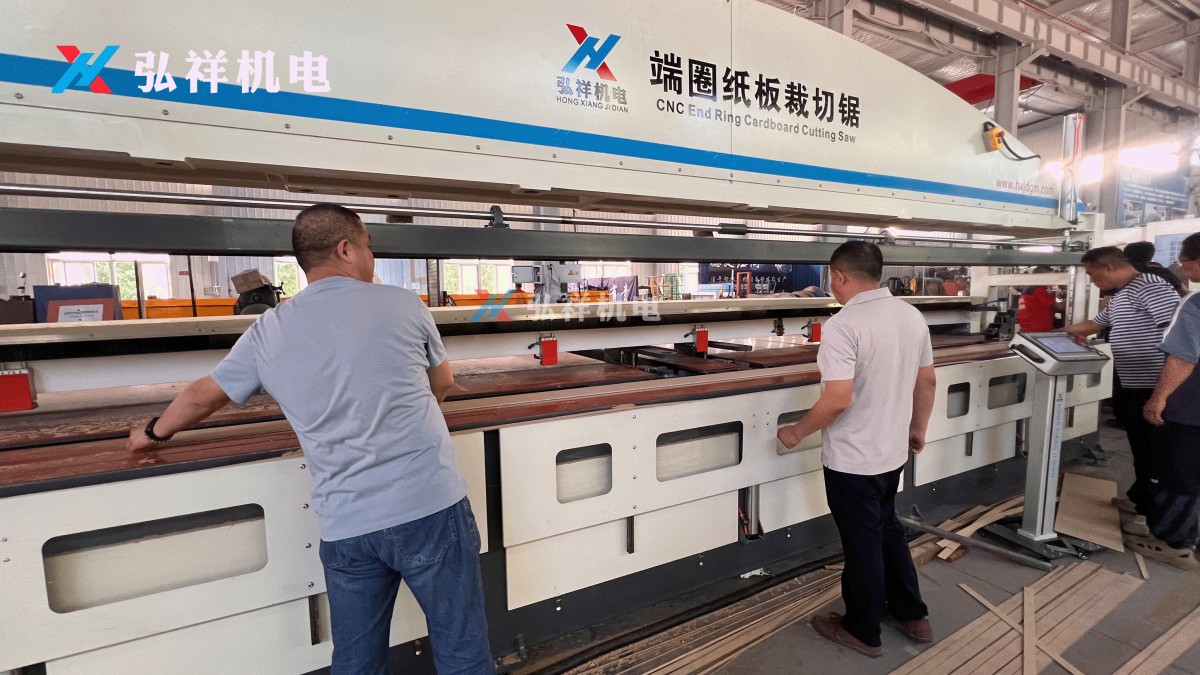
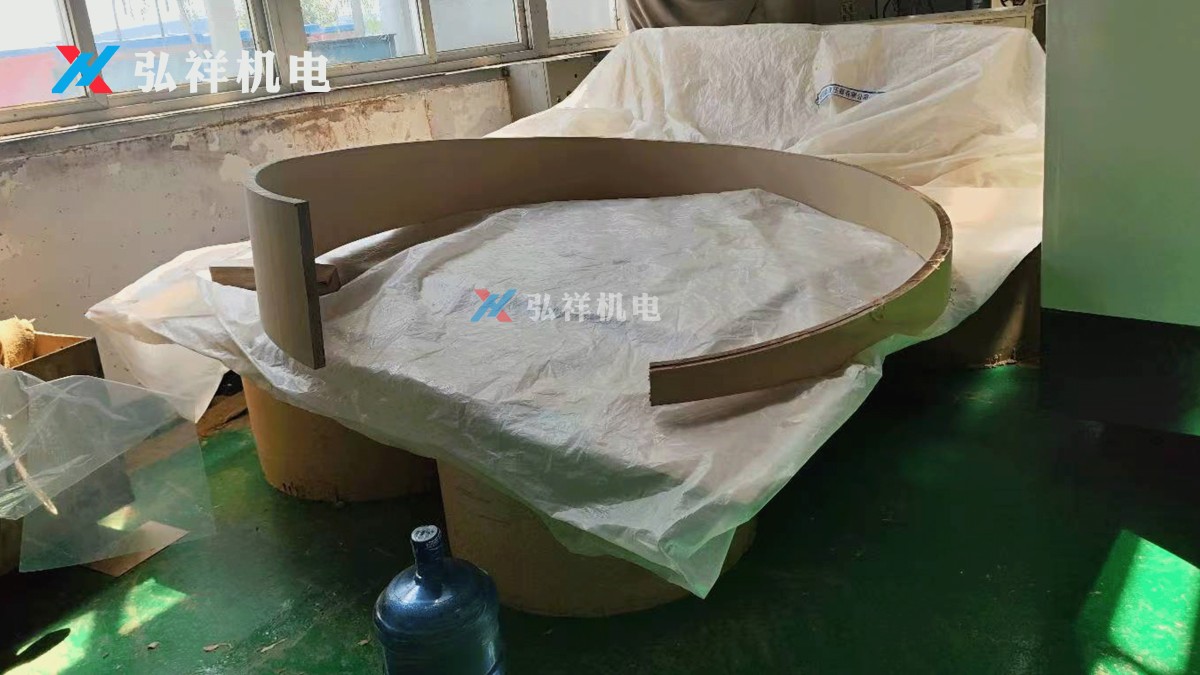
For project leaders, the central question is not whether wood processing matters, but how tightly it must be controlled to protect project timelines, transformer performance, and total lifecycle cost. The short answer is clear: tighter control is no longer optional. In transformer production, insulating laminated wood and related components sit directly inside critical electrical systems. If machining consistency, moisture stability, dimensional tolerance, or traceability are weak, the downstream impact can be much larger than the part itself.
This is why many manufacturers and EPC-linked procurement teams are re-evaluating the role of specialized processing systems rather than treating insulating wood fabrication as a general workshop task. The right equipment setup improves repeatability, reduces rework, supports compliance, and helps project managers maintain confidence from design release to final assembly.
What is the real search intent behind tighter control in wood processing?
When project managers search for topics like Transformer electrical layer-pressed wood processing equipment for power industry, they are usually not looking for a basic definition of laminated wood. Their intent is practical and decision-oriented. They want to understand whether stricter control in insulating material processing will reduce risk in transformer projects, how equipment affects product consistency, and what criteria should guide investment or supplier selection.
They are also trying to connect workshop-level precision with project-level outcomes. In other words, they want to know how wood processing influences delivery reliability, assembly quality, electrical insulation performance, testing success rates, and the ability to meet customer or regulatory expectations in domestic and export markets.
That means the most useful article is not one that explains material theory in abstract terms. It is one that links processing control directly to project execution, cost containment, quality assurance, and operational predictability.
Why small machining deviations create big project risks in transformer manufacturing
In many industries, a slightly oversized or undersized wood component may be corrected with minor fitting work. In transformer manufacturing, that assumption is dangerous. Electrical layer-pressed wood components often function as structural and insulating elements inside highly engineered assemblies. Their dimensions, flatness, density behavior, and surface condition can affect how parts fit, how insulation gaps are maintained, and how the final product behaves under thermal and electrical stress.
For project managers, this matters because the cost of deviation does not stay inside the machining department. A small inconsistency can trigger assembly delays, design verification concerns, added inspections, scrap, or repeated processing. In export-oriented production, the consequences can become even more serious if customer acceptance depends on documented consistency and traceability.
Tighter control is especially important where project schedules are compressed. When every milestone depends on synchronized manufacturing steps, poor control in insulating part production creates hidden instability. It may not appear critical at the purchase order stage, but it can become a bottleneck when transformer core and coil assembly reach the point where precision-fit insulation parts are required.
Why general woodworking methods are not enough for power industry applications
A common mistake in procurement planning is to assume that insulating laminated wood can be processed with ordinary woodworking equipment if the operator is experienced enough. This approach may work for simple low-risk parts, but it often fails under the consistency demands of the power industry. Transformer applications require stable dimensions, controlled cutting quality, repeatable slotting and drilling, and process settings that account for the behavior of insulation-grade materials rather than decorative or structural wood products.
General-purpose machines can introduce variation through inadequate fixture design, unstable feed control, poor dust handling, or lack of precision in repeat operations. These problems may not be obvious in a single sample part, but they become visible across batch production where project managers need confidence that every part in a delivery lot performs to the same standard.
Specialized Transformer electrical layer-pressed wood processing equipment for power industry is designed to reduce this variability. It supports more precise handling of insulation board, laminated wood, and custom insulating parts while improving batch repeatability, equipment reliability, and operator consistency.
Which issues concern project managers most when evaluating processing control?
Project managers and engineering leaders tend to focus on five issues above all else: schedule reliability, quality consistency, compliance risk, total cost of ownership, and supplier responsiveness. These concerns shape how they evaluate processing equipment, in-house capability, or manufacturing partners.
Schedule reliability matters because transformer projects often involve long-lead materials and tightly linked production milestones. If insulating wood components are delayed due to unstable machining or repeated corrections, the effect can ripple through assembly and testing.
Quality consistency matters because one excellent sample does not guarantee production-level success. Managers need assurance that the process can reproduce the same result across batches, shifts, and operators.
Compliance risk matters because insulation components may be tied to documented specifications, customer audits, and export expectations. If machining records, inspection standards, or material handling discipline are weak, project exposure rises.
Total cost of ownership matters because low upfront processing cost can be misleading. Scrap, rework, labor-intensive fitting, customer claims, and delayed delivery often create a much higher true cost.
Supplier responsiveness matters because custom transformer projects rarely stay static. Engineering adjustments, urgent replacement parts, and special configurations require a manufacturing system that can adapt quickly without losing control.
How tighter process control improves project outcomes beyond the workshop
The strongest business case for tighter control is that it improves outcomes far beyond part fabrication. Better processing discipline leads to more stable assembly, fewer dimensional conflicts, stronger inspection confidence, and cleaner handoff between production stages. That translates directly into smoother project execution.
For example, when insulating laminated wood parts are machined with repeatable precision, assembly teams spend less time on manual corrections. This reduces hidden labor cost and protects schedule certainty. It also lowers the chance that improvised fitting changes will affect insulation geometry or create undocumented deviations.
Better control also improves communication across departments. When dimensions, tolerances, process parameters, and inspection standards are consistently applied, engineering, production, procurement, and quality teams work from a shared reality. That reduces disputes over whether a problem originates in design, machining, material condition, or assembly.
From a management perspective, tighter control is therefore not simply a manufacturing upgrade. It is a coordination tool. It helps convert technical precision into business reliability.
What capabilities should specialized equipment provide?
Not all machinery marketed for insulation component production offers the same value. Project managers should look beyond basic machine specifications and evaluate capabilities that directly affect process control. The most relevant functions usually include dimensional accuracy, stable repeatability, adaptable fixturing, reliable cutting performance, controlled drilling and slotting, consistent surface finish, and compatibility with insulation-grade laminated materials.
Another critical capability is support for batch traceability and process standardization. Equipment should fit into a manufacturing workflow where operators can execute repeatable steps rather than depending on individual craftsmanship alone. The more a process relies on experience without control logic, the more vulnerable the project becomes to variation.
Machine robustness also matters. In demanding production environments, unstable equipment performance can undermine even a well-designed process. Frequent recalibration, inconsistent tool behavior, or weak maintenance support can erase the benefits of nominal precision.
For organizations serving multiple regions and project standards, it is also important to assess whether the equipment supplier understands export-oriented quality expectations, custom part requirements, and integration with broader transformer manufacturing needs.
How to judge whether an equipment supplier can support project-level control
Choosing equipment is only part of the decision. In practice, many project risks depend on the competence of the supplier behind the machine. A qualified partner should understand not only mechanical processing, but also the manufacturing logic of transformer insulation components and the operational realities of project delivery.
Project managers should ask practical questions. Can the supplier support processing for electrical insulating cardboard, insulating laminated wood, and custom insulating parts? Can they help define suitable machine configurations for part complexity and production volume? Do they offer installation, training, and after-sales support that reduces startup risk? Can they respond to special machine requirements when the customer’s production model evolves?
It is also useful to evaluate whether the supplier has an integrated capability model. Companies that combine R&D, design, production, sales, installation, training, and after-sales service are often better positioned to solve process issues quickly because they control more of the knowledge chain. This matters when the project requires customization rather than standard catalog equipment.
Gaomi Hongxiang Electromechanical Technology Co., Ltd., for example, serves global customers with assembly and manufacturing services for power transformers while also processing electrical insulating cardboard, insulating laminated wood, and insulating parts. This combination is meaningful because it connects equipment capability with actual application understanding. For project managers, that kind of integration can reduce the gap between machine specification and real production performance.
Where does the return on tighter control actually come from?
Many managers support quality improvement in principle but still need a clear investment logic. The return on tighter control usually comes from a combination of visible and hidden gains. Visible gains include lower scrap rates, fewer rejected parts, reduced rework, and better on-time delivery performance. Hidden gains often create even more value: fewer assembly interruptions, less dependence on manual correction, lower coordination cost, stronger audit readiness, and reduced risk of downstream failure.
There is also a strategic return. As transformer projects become more customized and customer expectations rise, manufacturers need production systems that can maintain consistency without slowing responsiveness. Specialized Transformer electrical layer-pressed wood processing equipment for power industry helps create that balance. It allows manufacturers to scale quality more reliably across different projects instead of solving the same problems repeatedly in the workshop.
For export-oriented businesses, the return includes market credibility. Buyers in Southeast Asia, South America, India, Pakistan, Russia, and other regions increasingly expect dependable quality systems, not just competitive pricing. Tighter processing control supports that positioning.
How can project managers assess whether current control is too loose?
In many factories, weak control is tolerated because teams have learned to work around it. That makes it harder to recognize the true cost. A useful assessment starts by looking for recurring symptoms rather than isolated defects.
Common warning signs include frequent dimensional corrections during assembly, high variation between operators or shifts, repeated first-piece approval issues, unclear process ownership, excessive manual fitting, unstable lead times for custom insulation parts, and quality problems that are discovered late instead of prevented early.
Managers should also examine whether the process depends too heavily on individual skill. Skilled operators are valuable, but if consistent output disappears when one person is absent, the process is not truly under control. Equipment and workflow should convert expertise into standard capability.
Another signal is poor traceability. If teams cannot quickly confirm which material lot, process setup, tooling state, or inspection result is linked to a given batch, problem resolution becomes slow and expensive. In project environments, that uncertainty directly raises delivery risk.
What implementation approach works best for power industry projects?
The most effective approach is usually phased rather than disruptive. Project managers do not need to overhaul every process at once. A better path is to identify high-impact insulation components, map the points where variation creates downstream cost, and prioritize equipment or workflow upgrades that address those bottlenecks first.
Start with parts that affect assembly fit, electrical spacing, or repeated custom production. Define measurable targets such as dimensional repeatability, reduced rework rate, shorter setup time, or improved lot consistency. Then align equipment selection, operator training, fixture design, and inspection practice around those targets.
It is equally important to involve both technical and business stakeholders. Engineering may define tolerances, but production teams understand workflow constraints, and project leaders understand delivery risk. Tighter control works best when these perspectives are combined into a practical implementation plan.
Training and after-sales support should not be treated as secondary. Even high-quality equipment delivers limited value if the startup phase is poorly managed. The strongest results come from suppliers who can support installation, process familiarization, operator training, and ongoing optimization.
Why this matters even more as transformer projects become more demanding
Power industry projects are moving toward higher expectations in performance, reliability, documentation, and schedule discipline. At the same time, customers increasingly request tailored configurations rather than one-size-fits-all production. This combination increases pressure on every upstream process, including insulating wood component machining.
As a result, loose processing control that once seemed manageable now creates disproportionate project risk. The tolerance for inconsistency is shrinking. Manufacturers that rely on general methods, informal know-how, or reactive correction will find it harder to meet delivery and quality expectations at scale.
By contrast, companies that invest in more specialized processing capability are better positioned to deliver stable quality across custom transformer workflows. They can respond faster, document better, and manage variation before it becomes a project problem.
Conclusion: tighter control is a project protection strategy, not just a production upgrade
For project managers in the power industry, the case for tighter control in wood processing is ultimately a case for protecting outcomes. Transformer insulation components may look like a small part of the total system, but they carry large consequences when quality or precision is inconsistent.
That is why Transformer electrical layer-pressed wood processing equipment for power industry deserves attention at the project planning level, not only inside the workshop. The right equipment and supplier support can reduce rework, improve consistency, strengthen compliance confidence, and help keep demanding transformer manufacturing projects on schedule.
The key takeaway is simple: tighter control in insulating wood processing is not about adding complexity for its own sake. It is about reducing uncertainty where uncertainty is most expensive. For organizations managing transformer projects in competitive and quality-sensitive markets, that makes specialized processing capability a practical and increasingly necessary investment.
NAVIGATION
MESSAGE
Request A Quote?