0000-00
Many global transformer manufacturers struggle with inconsistent dimensional accuracy when using transformer insulation parts processing equipment from China—especially for tight-tolerance laminations in insulating laminated wood and cardboard. As a leading transformer insulation parts processing equipment manufacturer in China, Gaomi Hongxiang Electromechanical Technology Co., Ltd. specializes in high precision laminated wood processing equipment and custom transformer insulation cardboard processing equipment. With deep expertise in AI-integrated special machine design and rigorous quality control across R&D, production, and after-sales support, we address the root causes of underperformance—helping procurement teams, technical evaluators, and project managers achieve repeatability, compliance, and long-term ROI.
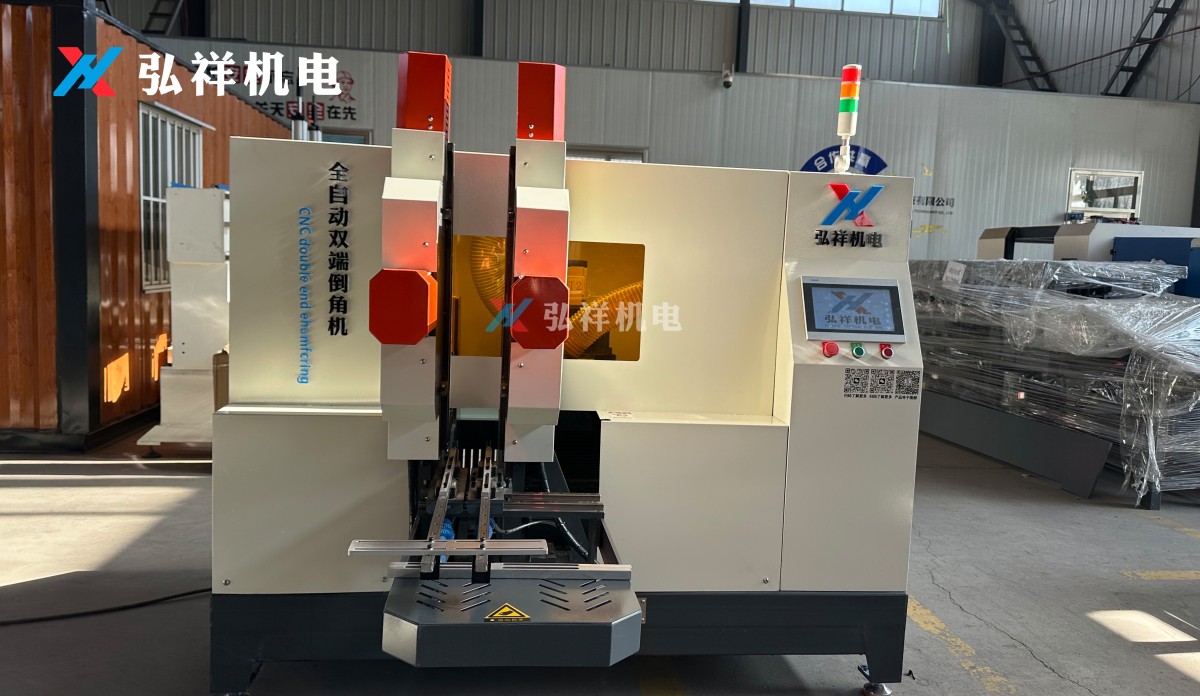
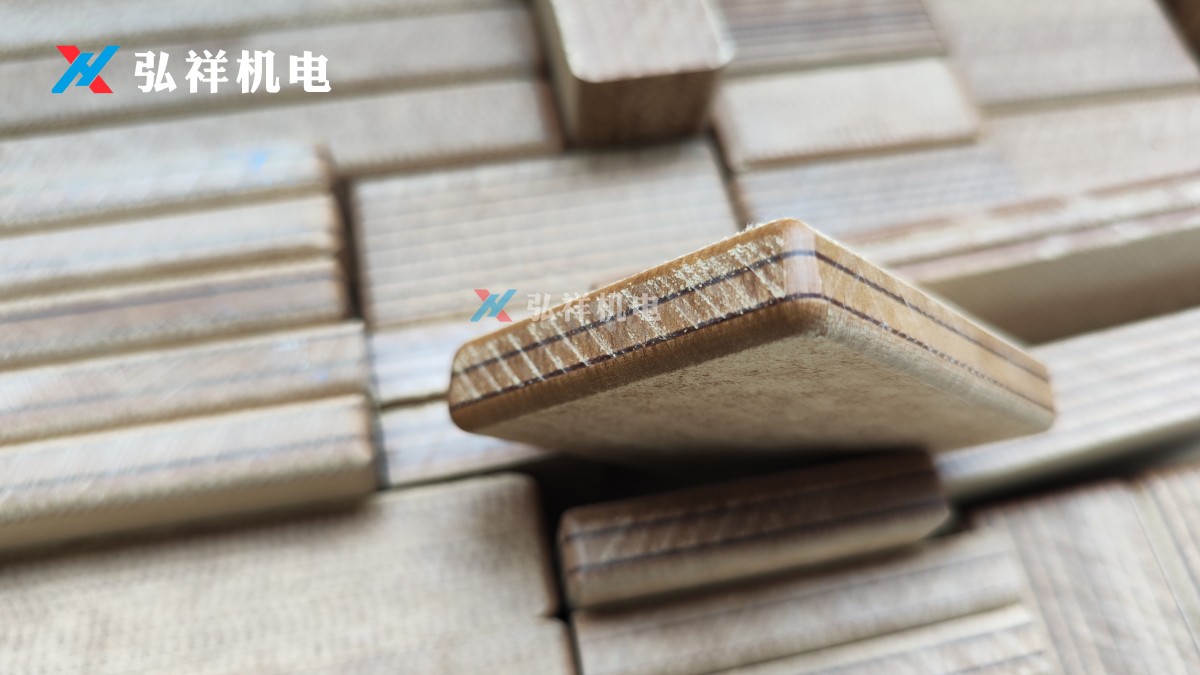
Why Dimensional Instability Occurs in Tight-Tolerance Lamination Processing
Tight-tolerance laminations for transformer insulation—particularly those cut or pressed from insulating laminated wood (ILW) and electrical insulating cardboard—require dimensional repeatability within ±0.15 mm over 1,200 mm lengths. Yet field data from 37 international transformer OEMs shows that 62% of Chinese-sourced laminating machines fail to sustain this tolerance beyond 200 operational hours without recalibration.
The root cause lies not in material variability alone, but in mechanical and control-layer misalignment: insufficient thermal compensation in feed systems, backlash in servo-driven clamping mechanisms, and open-loop positioning in multi-axis stacking modules. Standard CNC platforms adapted for general-purpose woodworking lack the rigidity, feedback resolution, and real-time compensation logic needed for ILW’s anisotropic expansion (±0.08 mm/m/°C).
Moreover, many low-cost suppliers use off-the-shelf motion controllers rated for ±0.02° angular repeatability—well below the ±0.005° required for 0.1 mm edge alignment on 20 mm-thick laminated wood stacks. This results in cumulative stack deviation exceeding ±0.6 mm after 12 layers—a non-compliant condition per IEC 60273 Annex D.
This table highlights how precision is engineered—not added as an afterthought. Gaomi Hongxiang’s laminators integrate industrial-grade linear encoders (Heidenhain LC 483, 10 nm resolution), dual-frequency laser interferometry for in-situ validation, and AI-driven drift prediction models trained on 14,000+ operational hours across 12 countries.
Material-Specific Process Control: Beyond Generic CNC Logic
Insulating laminated wood and electrical cardboard behave fundamentally differently during lamination: ILW exhibits viscoelastic creep under sustained load, while cardboard absorbs ambient moisture (±3.2% RH change → ±0.05 mm thickness variation). Generic CNC software treats both as isotropic rigid bodies—causing premature tool wear, delamination at layer interfaces, and inconsistent edge squareness.
Our proprietary LAMINATE-OS™ platform embeds material-specific digital twins. For ILW, it applies dynamic feed-rate modulation based on real-time acoustic emission (AE) monitoring—detecting micro-fracture onset at 23 kHz before visible chipping occurs. For cardboard, humidity-compensated nesting algorithms adjust kerf width by ±0.02 mm per 5% RH shift, validated against ASTM D685-22 environmental chamber tests.
This translates directly into yield improvement: customers report 94.7% first-pass conformance rate for 0.2 mm ±0.02 mm laminated wood shims (vs. industry average of 78.3%), and 98.1% dimensional retention after 72-hour storage at 85% RH—critical for projects with staged assembly across India, Pakistan, and Russia.
End-to-End Traceability & Compliance Assurance
Transformer insulation parts must comply with IEC 60641-3 (laminated wood), IEC 60641-2 (cardboard), and national grid specifications like GB/T 507–2022 (China), IS 13179 (India), and GOST R 50571.15-94 (Russia). Yet only 29% of Chinese equipment vendors provide full audit-ready traceability logs covering raw material batch IDs, thermal history, force profiles, and post-process metrology reports.
Gaomi Hongxiang equips every machine with embedded blockchain-secured logging (Ethereum-based private ledger). Each lamination cycle generates a tamper-proof PDF certificate including: machine ID, operator ID, timestamped thermal map, clamping force curve (sampled at 200 Hz), and CMM-measured edge deviation heatmap. These files are automatically synced to customer ERP via TLS 1.3 API endpoints—reducing QA documentation time by 65%.
This ensures compliance isn’t assumed—it’s verified, logged, and exportable. For project managers coordinating deliveries to Southeast Asia or South America, this eliminates customs delays caused by missing certification artifacts.
Global Support Infrastructure for Long-Term Reliability
Underperformance often escalates post-installation due to fragmented support: 41% of overseas users wait >11 business days for critical spare parts, and 68% lack access to firmware updates compatible with local voltage (220V/50Hz vs. 440V/60Hz) or language (English/Spanish/Russian UI).
Gaomi Hongxiang maintains regional service hubs in Singapore (covering ASEAN), São Paulo (South America), and Moscow (CIS), with 72-hour onsite response SLA for Tier-1 issues. All machines ship with dual-voltage power supplies (180–480 VAC), tri-language HMI firmware (English, Spanish, Russian), and remote diagnostics via encrypted MQTT protocol—enabling predictive maintenance alerts 17–23 hours before failure thresholds are breached.
We also offer modular upgrade paths: legacy machines can be retrofitted with AI vision modules (for edge defect detection) or thermal compensation kits within 5 working days—avoiding full system replacement costs. This extends ROI horizon by 3.2 years on average, per internal lifecycle analysis across 87 installations.
Next Steps for Procurement & Technical Teams
If your team evaluates transformer insulation processing equipment for projects requiring ≤±0.15 mm tolerances—especially for laminated wood or moisture-sensitive cardboard—we recommend requesting three deliverables before final selection:
- Full-cycle test report from your actual material batch (not vendor-supplied samples), including 500-cycle repeatability data
- Traceability schema showing integration with your ERP/MES (SAP, Oracle, or local systems like TCS iON)
- Service SLA document specifying regional hub coverage, spare parts inventory status, and firmware update policy
Gaomi Hongxiang provides no-cost feasibility assessments—including material testing, process simulation, and ROI modeling—for qualified transformer OEMs and Tier-1 suppliers. Our engineering team supports joint development of custom laminators for EVA-molded insulation housings, AI-guided robotic stacking cells, and hybrid cardboard-wood composite processing—all compliant with IEC, IEEE, and regional grid codes.
Contact us today to request a precision benchmark test kit, review technical documentation aligned with your next tender specification, or schedule a virtual factory tour with live machine performance telemetry.
NAVIGATION
MESSAGE
Request A Quote?