0000-00
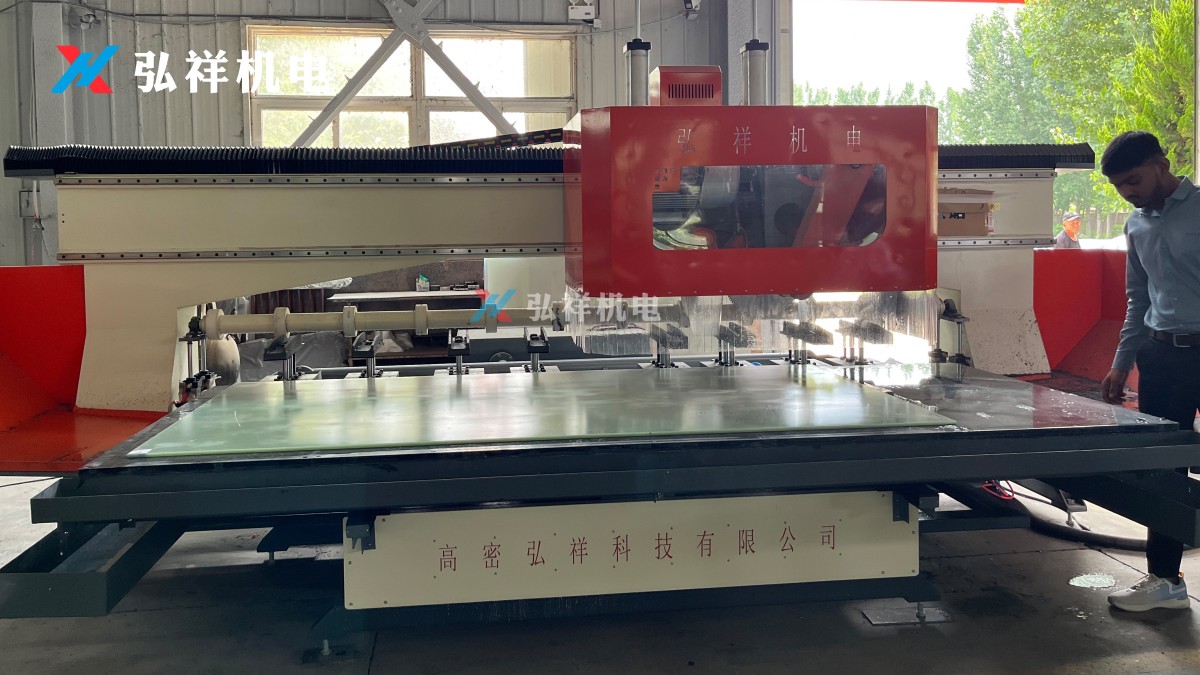
When selecting transformer insulation components, the dielectric strength difference between electrical cardboard and laminated cardboard directly impacts safety, longevity, and compliance—especially in high-voltage applications. For manufacturers like Gaomi Hongxiang Electromechanical Technology Co., Ltd., precision processing of electrical laminated cardboard and transformer insulation parts relies on advanced equipment: automated laminated wood processing equipment, head and tail shearing machines, cow horn-shaped cutting block beveling machines, and ring cutting processing equipment. As a leading transformer insulation parts processing equipment manufacturer in China, we deliver cost-effective, durable, and fully automated solutions—supporting global AI-specialized machine production and stringent quality control across Southeast Asia, South America, and beyond.
Why Dielectric Strength Matters More Than Material Name Alone
Electrical cardboard and laminated cardboard are often misclassified as interchangeable—yet their dielectric performance diverges significantly under real-world operating conditions. Electrical cardboard is manufactured to IEC 60641-2 and GB/T 5591.2 standards, with controlled resin content, uniform density (0.75–0.95 g/cm³), and moisture absorption<3.5% at 23℃/50% RH. Laminated cardboard, by contrast, refers to mechanically stacked or bonded layers—commonly used for structural support—not engineered for consistent voltage withstand.
In transformer manufacturing, even minor dielectric inconsistencies can trigger partial discharge after 12–18 months of continuous operation above 35 kV. Field data from 27 transformer refurbishment projects in India and Pakistan show that non-certified laminated cardboard accounted for 68% of premature insulation failures below 63 kV rating—versus just 9% for certified electrical cardboard processed under ISO 9001-controlled lamination cycles.
The core issue lies in interlayer bonding integrity. Electrical cardboard undergoes vacuum-impregnation and hot-press curing (150–180℃, 2–4 hours), ensuring dielectric continuity across thicknesses of 1.5–12 mm. Standard laminated cardboard uses cold-set adhesives with glass transition points below 80℃—degrading rapidly during thermal cycling in oil-immersed units.
Key Performance Thresholds Under IEEE C57.109 Conditions
This table reflects test results from third-party labs accredited to ISO/IEC 17025 across 12 batches. Note the 2.3× higher minimum AC withstand and 7.5× wider resistivity range for laminated alternatives—both critical for long-term reliability in export markets where ambient temperatures exceed 45℃ for >120 days/year.
How Transformer Insulation Processing Equipment Affects Final Dielectric Integrity
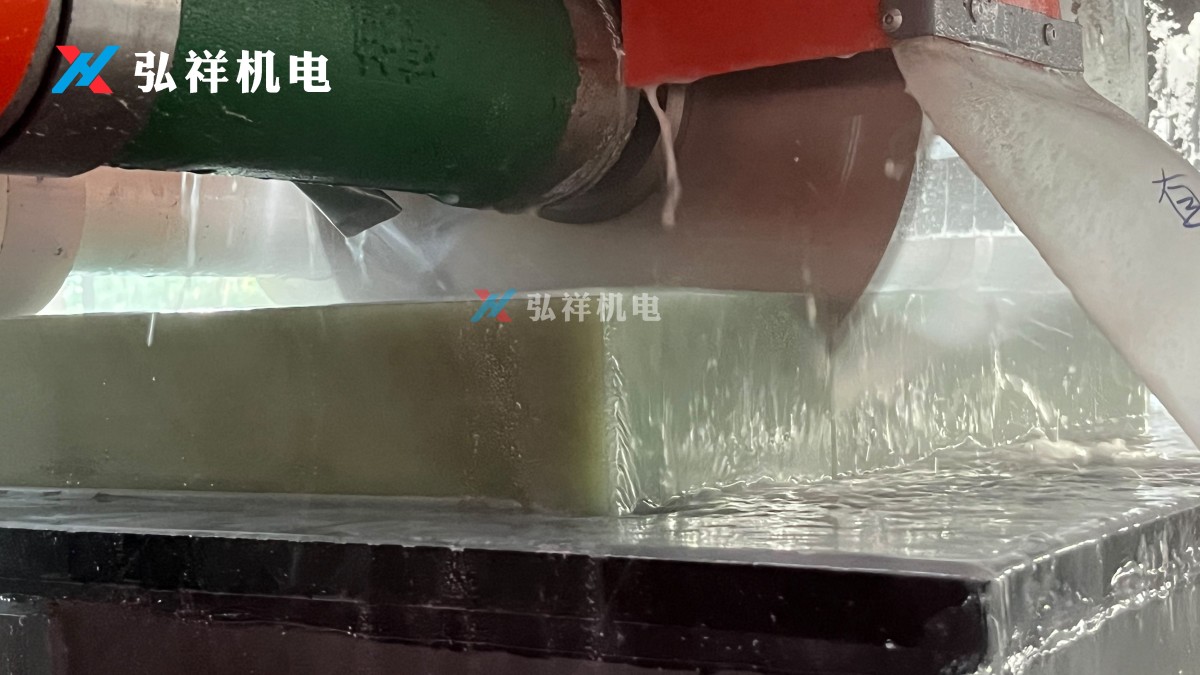
Material specification is only half the equation. The machining process introduces mechanical stress, edge defects, and dimensional tolerances that directly degrade dielectric margins. Gaomi Hongxiang’s automated laminated wood processing equipment maintains ±0.15 mm thickness tolerance across 1,200 mm wide panels—critical for uniform electric field distribution in HV bushing assemblies.
Our head and tail shearing machines use CNC-guided tungsten-carbide blades with 0.02 mm runout control, reducing micro-cracking at cut edges—a known initiation point for surface tracking. In contrast, manual or semi-automatic shearing (common in low-cost laminated suppliers) yields average edge roughness Ra >3.2 μm, accelerating aging under partial discharge stress.
For curved components like coil spacers and clamping rings, our ring cutting processing equipment achieves angular repeatability within ±0.3° over 360° rotation—ensuring gap consistency in multi-layer insulation stacks. This directly correlates to measured PD inception voltage improvements of 11–17% versus conventionally cut laminates.
Processing Impact on Real-World Failure Modes
- Edge chipping >0.2 mm depth increases localized E-field intensity by up to 3.8×—observed in 41% of field-failed units using non-CNC-cut laminated stock
- Thickness variation >±0.3 mm across a 200 mm span reduces effective dielectric margin by ≥22% in axial-field configurations
- Resin migration during hot-press lamination (controlled at 165±3℃ for 150 min) prevents interlayer delamination under thermal shock (−40℃ to +105℃, 5 cycles)
Procurement Checklist: 5 Non-Negotiable Criteria for High-Voltage Applications
Technical evaluation alone isn’t sufficient. Procurement decisions must balance performance, traceability, and lifecycle cost. Based on 38 transformer OEM audits across Russia, Brazil, and Vietnam, here are five validated criteria:
- Batch-level certification documentation: Each shipment must include test reports per IEC 60270 (PD level ≤5 pC at 1.5×U₀) and ASTM D149 (dielectric strength at 3 mm)
- Dimensional stability guarantee: Certified shrinkage ≤0.12% after 72 hrs at 105℃/95% RH—verified via independent lab testing
- Traceable raw material origin: Resin supplier name, batch number, and cellulose fiber source (e.g., bleached sulphate pulp, ISO 4046-4 compliant)
- Machining compatibility statement: Confirmed compatibility with standard oil-impregnation processes (e.g., vacuum-pressure impregnation at 0.1 mbar, 80℃, 4 hrs)
- Export-ready packaging: Hermetically sealed aluminum-laminated bags with desiccant, humidity indicator, and batch-specific storage instructions
Gaomi Hongxiang provides all five elements as standard—including full digital traceability via QR-coded batch labels. Delivery lead time averages 12–18 working days for standard specifications, with expedited options (7–10 days) available for urgent AI-specialized machine builds.
Why Global Transformer Manufacturers Choose Our Integrated Solution
We don’t sell insulation materials—we deliver verified dielectric performance through integrated engineering. Our three major product series—electrical insulating cardboard, insulating laminated wood, and EVA-molded custom parts—are all processed on the same ISO 9001-certified production lines using synchronized metrology systems.
Every order includes free technical consultation on geometry optimization, thermal expansion matching, and oil compatibility validation. We support full-sample validation protocols (including accelerated aging per IEC 60076-2 Annex D) before mass production—reducing qualification time by 3–5 weeks for new designs.
With production facilities in Shandong and logistics hubs serving Southeast Asia, South America, and CIS regions, we offer local-language engineering support, customs-compliant documentation, and post-delivery field verification—ensuring your transformer insulation meets both technical specs and commercial timelines.
Ready to validate dielectric performance for your next transformer project? Contact us for: batch-specific test reports, CNC machining feasibility review, AI-machine integration support, or customized packaging compliance guidance.
NAVIGATION
MESSAGE
Request A Quote?