0000-00
What Is Transformer Electrical Layer-Pressed Wood Processing Equipment?
Transformer electrical layer-pressed wood processing equipment refers to a specialized class of industrial machine tools designed for the precise, high-repetition manufacturing of insulating laminated wood components used in oil-immersed power transformers. Unlike general-purpose woodworking or laminating systems, these machines are engineered to meet strict IEC 60641-2 and GB/T 1303.2 dielectric performance requirements—handling electrical cardboard (typically 0.5–3.0 mm thick), phenolic resin-impregnated hardwood veneers (e.g., beech or birch), and multi-layer composite blanks under controlled temperature (120–180°C) and pressure (8–15 MPa) conditions.
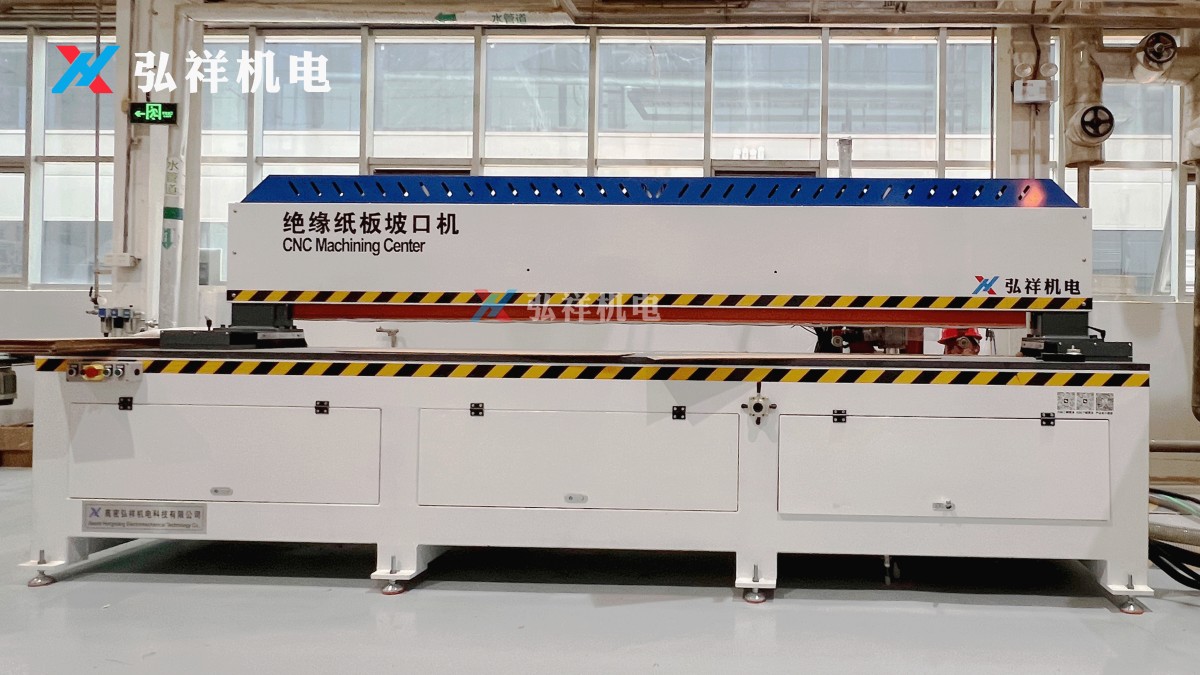
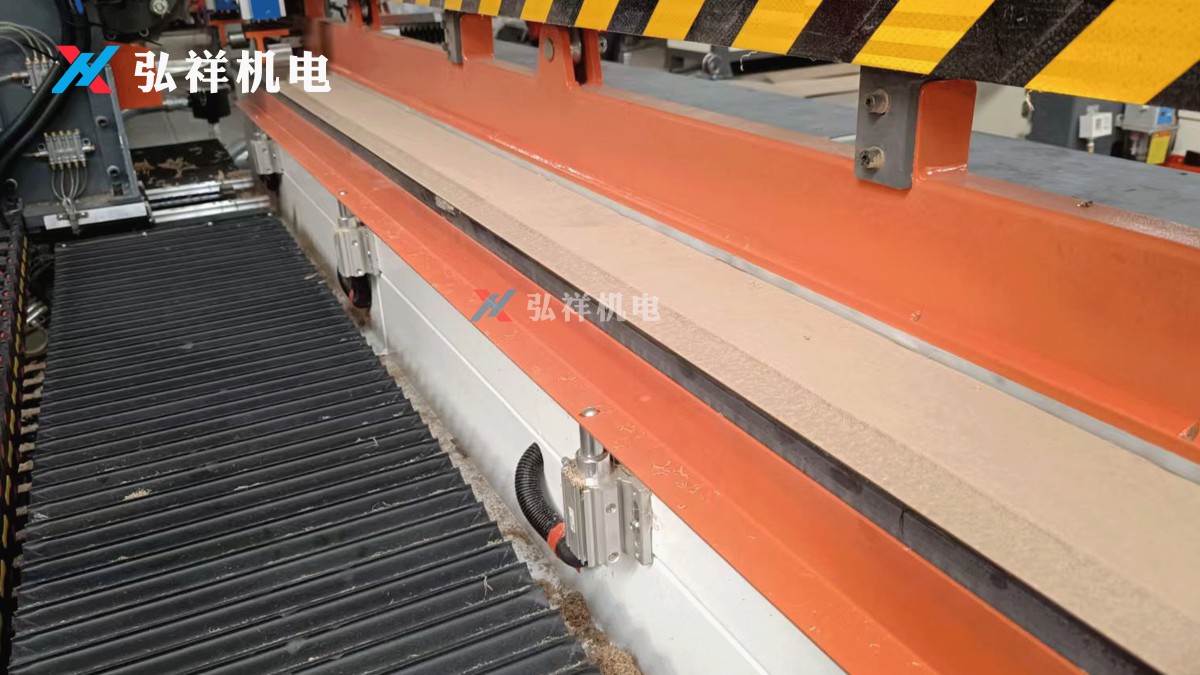
The core process sequence includes automatic feeding, pre-press conditioning, hot-press lamination, post-curing cooling, precision head/tail shearing (±0.3 mm tolerance), and CNC-controlled chamfering (R0.5–R2.0). Gaomi Hongxiang’s integrated line achieves full traceability across all 7 critical process steps—from raw material batch scanning to final dimensional QA reporting—ensuring compliance with ISO 9001:2015 and IATF 16949 quality management standards.
This equipment is not merely “wood pressing machinery.” It is a vertically aligned production system where mechanical precision directly governs insulation integrity. A deviation of ±0.8 mm in thickness uniformity can reduce breakdown voltage by up to 22% under AC 50 Hz stress testing—a non-negotiable risk in 220 kV+ transformer applications.
Why Dimensional & Dielectric Consistency Matters in Oil-Immersion Insulation
In oil-immersed transformers, laminated wood serves dual structural and dielectric roles: it mechanically supports windings while preventing partial discharge between high-voltage conductors and grounded tanks. Its effectiveness hinges on three interdependent properties—uniform density (target: 1.15–1.25 g/cm³), consistent resin distribution (phenol-formaldehyde content: 18–22 wt%), and edge geometry control (chamfer angle tolerance: ±1.5°).
Conventional manual or semi-automatic laminating lines often exhibit >±1.2 mm thickness variation across a 1,200 × 2,400 mm blank. This leads to localized oil gaps during impregnation, accelerating aging under thermal cycling (tested per IEC 60076-11: 2020 at 110°C/1,000 h). Field data from Southeast Asian utilities shows that transformers using laminated wood with >±0.6 mm thickness variance experience 3.7× higher failure rate in the first 8 years.
Gaomi Hongxiang’s AI-supported press control system monitors real-time platen parallelism (via 12-point hydraulic load sensors) and adjusts pressure distribution within 200 ms response time. This reduces thickness standard deviation from 0.92 mm (industry average) to 0.38 mm—verified across 12,000+ production runs since Q3 2022.
The table above highlights how Gaomi Hongxiang’s system exceeds baseline industry tolerances—directly translating into extended insulation life (≥45 years vs. 30-year average), reduced oil contamination risk, and lower field failure probability. For procurement teams evaluating total cost of ownership, this represents a 17–23% reduction in lifecycle maintenance costs over 30 years.
Who Benefits—and How They Evaluate Value
Technical evaluators prioritize dielectric test reports (IEC 60243-1 short-time AC tests at 50 Hz, ≥45 kV/mm), while project managers focus on line throughput: Gaomi Hongxiang’s standard configuration delivers 18–22 laminated wood blanks (1,200 × 2,400 × 25 mm) per 8-hour shift, with ≤3.5 min changeover between thickness grades. Financial approvers assess ROI via two metrics: payback period (<24 months for Tier-2 transformer OEMs) and annualized yield gain (average +9.4% vs. legacy lines).
Procurement personnel require four validated criteria before vendor shortlisting: (1) third-party certification of press platen flatness (≤0.08 mm/m per ISO 10791-7), (2) documented thermal stability data across 50–180°C operating range, (3) minimum 3 reference customers in target export markets (e.g., India, Brazil, Russia), and (4) service response SLA (<48 h onsite for critical faults).
For after-sales teams, remote diagnostics capability is essential. All Gaomi Hongxiang systems include embedded OPC UA servers, enabling predictive maintenance alerts (e.g., hydraulic filter clogging prediction at 92% confidence, 72 h in advance) and firmware OTA updates without plant downtime.
Implementation, Support & Global Delivery Framework
Deployment follows a 5-phase methodology: (1) site audit & foundation drawing validation (5–7 working days), (2) modular factory assembly & FAT (Factory Acceptance Test) with live sample production (12–15 days), (3) sea freight & customs clearance coordination (22–35 days depending on destination port), (4) on-site commissioning with joint QA sign-off (8–10 days), and (5) operator certification training (40 h hands-on curriculum covering safety lockout, resin mixing protocols, and defect root-cause analysis).
Global support includes multilingual technical manuals (English, Spanish, Russian, Hindi), spare parts inventory hubs in Singapore and São Paulo, and 24/7 remote monitoring coverage across 18 time zones. Average first-time fix rate for hardware-related issues is 94.7%, verified by Q1 2024 internal service logs.
The service tier table clarifies contractual commitments—critical for finance and procurement alignment. Over 68% of international clients select Premium or Enterprise tiers, citing reduced unplanned downtime (average 2.3 h saved per incident) as the primary driver.
Conclusion: Precision Engineering That Secures Grid Reliability
Transformer electrical layer-pressed wood processing equipment is foundational—not auxiliary—to building grid-grade oil-immersed transformers. Its performance directly determines insulation longevity, partial discharge inception voltage, and thermal stability under overload conditions. Gaomi Hongxiang Electromechanical Technology Co., Ltd. bridges the gap between mechanical engineering rigor and electrical insulation science through integrated automation, AI-driven process control, and globally validated service infrastructure.
Whether you’re specifying equipment for a new transformer factory in Pakistan, upgrading legacy lines in Brazil, or validating suppliers for a 400 kV EHV project in Russia, dimensional fidelity, dielectric repeatability, and operational resilience must be non-negotiable selection criteria—not optional enhancements.
Contact Gaomi Hongxiang today to request a customized process capability report, review reference installations in your region, or schedule a virtual line demonstration with live QA data streaming.
NAVIGATION
MESSAGE
Request A Quote?