0000-00
For large-scale power industry projects, the suitability of layer-pressed wood equipment comes down to one practical question: can it deliver stable insulation material quality at scale without creating bottlenecks, rework, or avoidable operating costs? For transformer manufacturers, EPC-related project teams, buyers, and technical evaluators, the answer depends less on a single machine feature and more on whether the equipment can maintain precision, consistency, throughput, and process reliability across long production cycles. In that context, high precision transformer electrical layer-pressed wood processing equipment is especially suitable for large projects because it supports repeatable output, better dimensional control, lower labor dependency, and more predictable project execution.
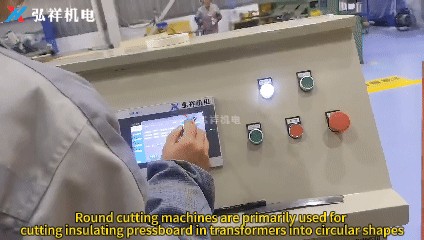
As a Transformer electrical layer-pressed wood processing equipment manufacturer in China, Gaomi Hongxiang provides automated and cost-effective solutions for electrical insulation applications. For companies handling insulating laminated wood, electrical insulating cardboard, and related insulation parts, the right equipment can directly affect production efficiency, product qualification rates, delivery confidence, and total project profitability.
Why large projects need more than basic wood processing capability
Large projects in transformer and power equipment manufacturing are not simply “bigger orders.” They usually involve tighter delivery schedules, more demanding quality consistency, multiple batches, formal inspection requirements, and higher costs for errors. In these conditions, general-purpose wood processing machines often fall short because they may work for small-volume jobs but struggle to maintain repeatability under heavy workloads.
Layer-pressed wood equipment designed for transformer electrical insulation applications is suitable for large projects when it can reliably process insulating laminated wood and related materials with high dimensional accuracy, smooth operation, and stable output. This matters because even small variations in thickness, flatness, drilling position, slotting quality, or surface finish can affect downstream assembly, insulation performance, and final product reliability.
For procurement teams and project leaders, the real value is not just machine ownership. It is production assurance. Suitable equipment helps reduce schedule risk, minimize quality disputes, and support continuous manufacturing during peak demand.
What makes layer-pressed wood equipment suitable for large projects in practice?
When technical teams evaluate suitability, they should focus on production realities rather than marketing language. The most important factors typically include:
- Processing precision: Consistent cutting, milling, drilling, and shaping accuracy for transformer insulation parts.
- Batch consistency: Stable results across long runs, multiple shifts, and repeated orders.
- Automation level: Reduced operator dependency and lower risk of human error.
- Production capacity: Ability to meet project timelines without becoming a bottleneck.
- Material adaptability: Compatibility with insulating laminated wood, insulating cardboard, and special insulation part requirements.
- Operational reliability: Stable machine performance, lower downtime, and easier maintenance planning.
- Safety and quality control support: Better process control for regulated industrial environments.
For large transformer-related projects, suitable equipment is not simply the fastest machine. It is the machine system that can keep output stable while balancing precision, capacity, maintenance, and labor efficiency.
Precision and consistency are the first reasons buyers choose specialized equipment
In transformer manufacturing, insulation components are not decorative parts. They are functional components that directly influence assembly accuracy and electrical insulation performance. That is why high precision transformer electrical layer-pressed wood processing equipment is valuable for large projects.
Specialized equipment improves consistency in several key areas:
- Uniform dimensions across batches
- Accurate hole positioning and slotting
- Better edge quality and surface finish
- Reduced deformation and processing deviation
- Higher repeatability for standardized parts
For quality managers and technical evaluators, this consistency helps reduce inspection failures and rework. For project managers, it makes assembly planning more reliable. For financial approvers, it lowers hidden costs caused by scrap, delay, and non-conforming output.
Automation matters because large projects cannot depend heavily on manual adjustment
One of the biggest reasons layer-pressed wood equipment becomes suitable for large projects is automation. In low-volume workshops, experienced operators can often compensate for machine limitations through repeated adjustment. In large projects, this approach becomes risky, slow, and expensive.
Automated equipment helps in the following ways:
- Shortens setup and changeover time
- Improves parameter repeatability
- Reduces reliance on individual operator skill levels
- Supports more stable multi-shift production
- Improves traceability and process standardization
This is especially important for businesses expanding capacity, serving export customers, or working under tighter contractual delivery commitments. A more automated process does not only improve output. It also improves management control.
High-volume production requires equipment that protects both speed and insulation quality
In large power industry projects, output speed alone is not enough. If increased speed causes unstable dimensions, surface damage, or material waste, the project can still lose money. Suitable layer-pressed wood processing equipment must therefore support both productivity and insulation material integrity.
For buyers comparing options, a useful question is: can the equipment sustain output quality over time, not just demonstrate a good sample during testing? Long-cycle performance is often a better indicator of suitability than peak-speed claims.
Equipment built for electrical insulation applications is generally more suitable because it is aligned with the needs of processing insulating laminated wood and related materials, rather than treating them as ordinary wood products. That distinction can have a major impact on finished part quality and production stability.
How suitable equipment helps reduce total operating cost, not just labor cost
Many buyers initially focus on purchase price. But for large projects, the more important measure is total operating cost over the full production period. Layer-pressed wood equipment is suitable for large projects when it improves the economics of production in several linked ways.
These include:
- Lower scrap rates: Better precision means fewer rejected parts.
- Less rework: Stable processing reduces correction time.
- Higher labor efficiency: Automation allows fewer operators to manage more output.
- Reduced downtime losses: Reliable equipment keeps schedules on track.
- Better material utilization: Optimized processing reduces waste.
- More predictable delivery: This lowers the cost of project disruption and customer penalties.
For financial decision-makers, this is often the strongest argument. A machine that costs more upfront may still be the better investment if it supports stable production for years and reduces expensive operational instability.
What procurement and technical teams should check before making a decision
If you are evaluating transformer electrical layer-pressed wood processing equipment for a large project, decision quality improves when procurement, engineering, production, and quality teams use the same checklist. Instead of asking only whether the machine can process the material, ask whether it can support the full project environment.
Key evaluation points include:
- What is the actual processing accuracy under normal production conditions?
- Can the machine maintain consistency across different batches and long operating hours?
- Is the automation level suitable for your staffing and output model?
- How easy is it to maintain, service, and train operators?
- Does the supplier understand transformer insulation material applications?
- Can the equipment be customized for specific part structures or project requirements?
- What after-sales service, installation, and training support are available?
- What export and international service experience does the manufacturer have?
These questions help buyers avoid a common mistake: selecting equipment that appears capable on paper but is not well matched to the production demands of real large-scale transformer projects.
Why supplier capability matters as much as machine capability
For large projects, equipment evaluation should include the manufacturer’s technical and service capabilities. A strong supplier does more than sell a machine. It helps ensure proper configuration, installation, training, process adaptation, and after-sales support.
Gaomi Hongxiang Electromechanical Technology Co., Ltd. integrates R&D and design, production, sales, installation, training, and after-sales service. This matters because large industrial buyers often need more than standard equipment. They may require customized processing solutions for electrical insulating cardboard, insulating laminated wood, insulation parts, or even special machines linked to new manufacturing needs.
For overseas buyers, supplier experience in export markets also matters. Consistent communication, technical support, and application understanding can reduce implementation risk and make long-term operation smoother.
Which project scenarios benefit most from specialized layer-pressed wood processing equipment?
Not every buyer needs the same equipment level, but specialized solutions are especially suitable in the following scenarios:
- Transformer manufacturers with medium-to-large batch production
- Power equipment suppliers requiring repeatable insulation part quality
- Factories expanding capacity and reducing manual dependence
- Export-oriented businesses needing stable process control
- Projects with strict quality documentation and inspection standards
- Operations where delivery delay would cause major commercial losses
In these cases, specialized equipment supports not only production but also commercial reliability. It helps businesses scale with less uncertainty.
Final takeaway: suitability for large projects is about reliability at scale
What makes layer-pressed wood equipment suitable for large projects is not a single feature, but its ability to deliver precise, consistent, and efficient processing under real production pressure. For transformer electrical insulation applications, the most suitable equipment combines high accuracy, automation, stable capacity, material-specific processing performance, and dependable supplier support.
For buyers, engineers, project managers, and business decision-makers, the best judgment standard is simple: choose equipment that lowers production risk while improving consistency, cost control, and delivery confidence. In large-scale power industry work, that is what turns equipment from a workshop tool into a strategic production asset.
NAVIGATION
MESSAGE
Request A Quote?