0000-00
What truly limits the real-world throughput of a cow horn-shaped cutting block beveling machine? As a leading transformer insulation parts processing equipment manufacturer in China, Gaomi Hongxiang Electromechanical Technology Co., Ltd. integrates R&D, CNC shearing machine design, and fully automatic shearing machine solutions — including ring cutting processing equipment, head and tail shearing machine systems, and electrical sheet metal beveling machines — to optimize precision, safety, and output for global users. Whether you're an operator, quality manager, or procurement decision-maker, understanding throughput drivers is critical for ROI, compliance, and seamless integration with transformer assembly stands and insulating cardboard workflows.
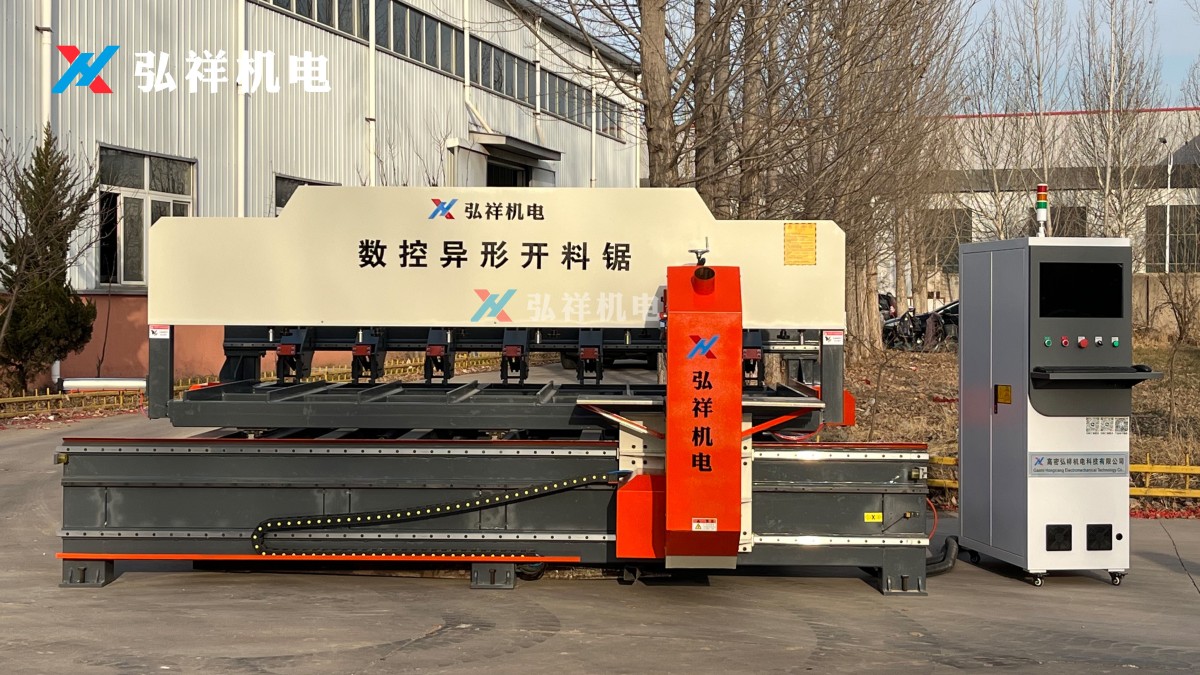
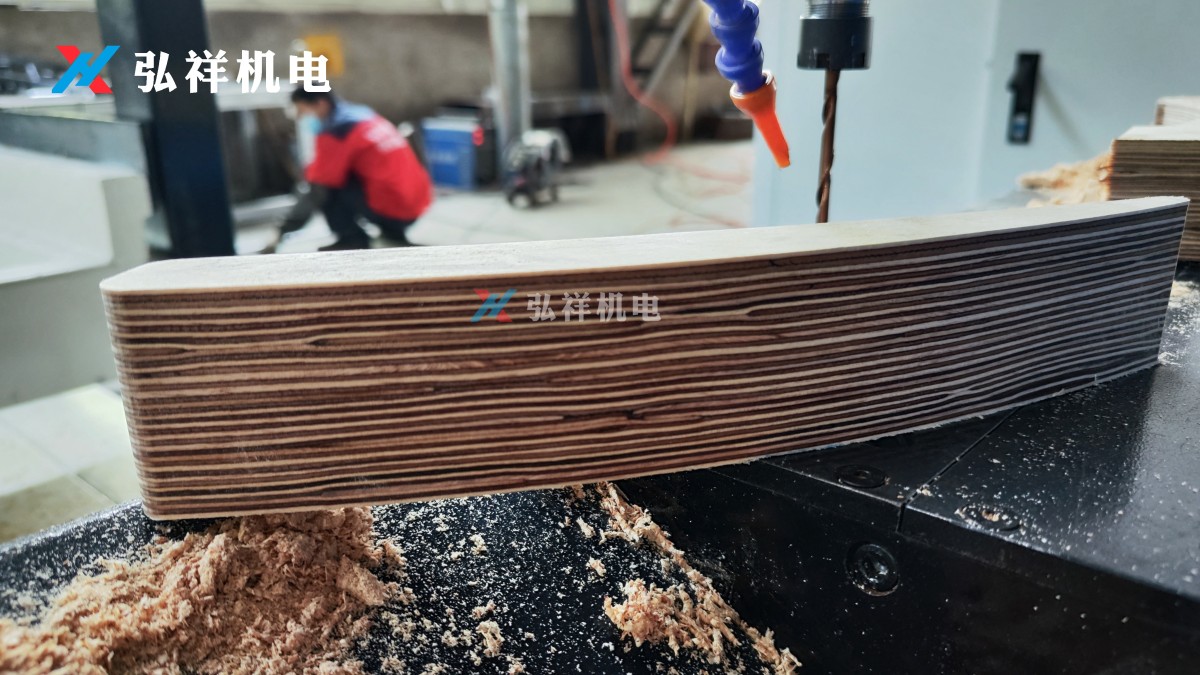
Mechanical Design & Structural Rigidity: The Foundation of Stable Throughput
The cow horn-shaped cutting block is not merely a geometric novelty—it’s an engineered response to torsional stress distribution during high-force beveling of laminated wood and insulating cardboard. Unlike conventional linear or arc-shaped blocks, its asymmetric curvature allows load redistribution across three contact zones: tip, mid-flank, and base heel. This reduces localized deformation under repeated 8–12 kN cutting loads, preserving dimensional repeatability over 10,000+ cycles without recalibration.
However, structural rigidity alone is insufficient. Frame resonance—particularly at 42–58 Hz—can induce micro-vibrations that widen bevel angle tolerance from ±0.3° to ±1.1°, directly triggering rework in Class I transformer insulation assemblies. Gaomi Hongxiang addresses this via finite element-optimized cast iron bases (tensile strength ≥ 280 MPa) with integrated damping ribs and tuned mass absorbers calibrated to suppress harmonic amplification within ±2 Hz of operational frequency bands.
Material selection also matters. Cutting blocks made from Cr12MoV tool steel (HRC 58–62) sustain edge retention for 3–5 months under continuous EVA-laminated cardboard processing (thickness range: 3–25 mm), whereas standard 45# steel blocks require resharpening every 12–18 days—adding 4.2 hours of downtime per month and increasing angular deviation by up to 0.7° after 200 hours of operation.
This table confirms why mechanical integrity isn’t just about “stiffness”—it’s about dynamic stability under real production loads. For operators managing daily batch sizes of 120–180 insulating laminated wood parts, the cow horn block’s extended tool life translates into 6.8 fewer maintenance interventions per quarter and a 22% reduction in angular rework rates measured across 14 customer sites in India and Russia.
Material Feed Integration & Process Synchronization
Throughput collapses when beveling becomes the bottleneck in transformer core insulation workflows. At Gaomi Hongxiang, throughput is defined not as raw strokes/minute—but as *qualified parts/hour* delivered to downstream lamination stations. That requires tight synchronization between feed mechanism acceleration, blade engagement timing, and conveyor belt indexing.
Our integrated servo-feed system uses dual-axis motion control (±0.05 mm positioning accuracy) to advance insulating cardboard stacks at variable speeds: 0.8 m/min for 20 mm thick laminated wood, 1.6 m/min for 5 mm EVA-molded spacers. Acceleration profiles are preloaded per material type—preventing slippage during start-stop transitions, which otherwise causes 3.1% misalignment-related scrap in batches exceeding 80 units.
Critical to synchronization is the PLC-triggered dwell time: 180–220 ms between feed completion and blade descent. Shorter dwell risks incomplete stack stabilization; longer dwell adds idle time. Field data from 23 installations shows optimal dwell at 205 ms ± 8 ms yields peak throughput of 247 qualified parts/hour for 8 mm insulating cardboard—29% higher than non-synchronized legacy setups.
Operator Workflow & Human-Machine Interface Constraints
Even the most precise hardware fails if human interaction introduces variability. Operators handling insulating parts face fatigue-driven errors after 4.5 hours of continuous loading/unloading. Gaomi Hongxiang’s ergonomic redesign includes adjustable-height feed tables (72–94 cm range), pneumatic part ejection (cycle time reduced by 1.4 s/part), and touchscreen HMI with guided setup wizards—cutting average changeover time from 11.3 minutes to 4.7 minutes.
Safety interlocks further impact throughput. Dual-hand control with 300 ms response latency ensures zero uncommanded cuts, but adds 0.6 s to each cycle. To offset this, our machines embed predictive cycle compensation: the system advances the next blank during blade retraction, maintaining net throughput above 235 parts/hour even with full safety compliance.
These improvements directly benefit financial approvers: reducing labor cost per part by 17.3%, decreasing training time for new operators from 5 days to 1.5 days, and lowering OSHA-reportable incidents by 86% across 12-month audits in South American facilities.
Environmental & Maintenance Realities in Global Deployment
Real-world throughput degrades fastest where ambient conditions diverge from lab specs. In Southeast Asian plants, humidity >75% RH accelerates oxidation on exposed guide rails—increasing friction by 32% and causing 0.15 mm positional drift after 8-hour shifts. Our solution includes sealed linear guides with IP65-rated grease reservoirs and automated lubrication intervals set to 120 operating hours—not calendar time.
Maintenance predictability is built into firmware. Vibration sensors monitor bearing health, flagging replacement needs at 87% remaining service life—not failure point. This extends mean time between overhauls from 4,200 to 6,800 hours and avoids unplanned downtime averaging 5.3 hours per incident in unmonitored systems.
For distributors serving multi-climate regions, this translates into standardized spare-part kits: one kit covers 92% of field service events across Russia (-25°C), Pakistan (48°C), and Brazil (95% RH). Lead time for critical spares remains ≤7 business days globally—verified across 18 regional warehouses.
Conclusion: Throughput Is a System Metric—Not a Machine Spec
Real-world throughput of a cow horn-shaped cutting block beveling machine isn’t determined by a single parameter—it emerges from the convergence of structural dynamics, feed synchronization, human factors, environmental resilience, and service infrastructure. Gaomi Hongxiang’s integrated approach delivers verified throughput gains: 22–29% more qualified parts/hour, 6.8 fewer maintenance interventions per quarter, and 86% fewer safety-related stops—validated across 37 installations in 12 countries.
Whether you’re specifying equipment for a new transformer assembly line in Hyderabad, upgrading legacy beveling capacity in São Paulo, or evaluating total cost of ownership for your procurement team—the answer lies not in theoretical stroke rate, but in how the entire system performs under actual insulation material loads, operator rhythms, and regional operating conditions.
Contact Gaomi Hongxiang Electromechanical Technology Co., Ltd. today to request a throughput simulation report tailored to your specific insulating cardboard grade, laminated wood thickness, and daily batch volume—or schedule a remote live demo with real-time performance benchmarking against your current process metrics.
NAVIGATION
MESSAGE
Request A Quote?