0000-00
What equipment does the power industry actually need to improve transformer production quality, efficiency, and insulation reliability? From Transformer electrical layer-pressed wood processing equipment and Transformer insulation cardboard processing equipment to CNC stepped saw solutions, manufacturers now seek automated, durable, and high precision systems for electrical insulation and oil-immersed transformer applications. For buyers and engineers, choosing the right machine directly impacts cost control, output consistency, and long-term competitiveness.
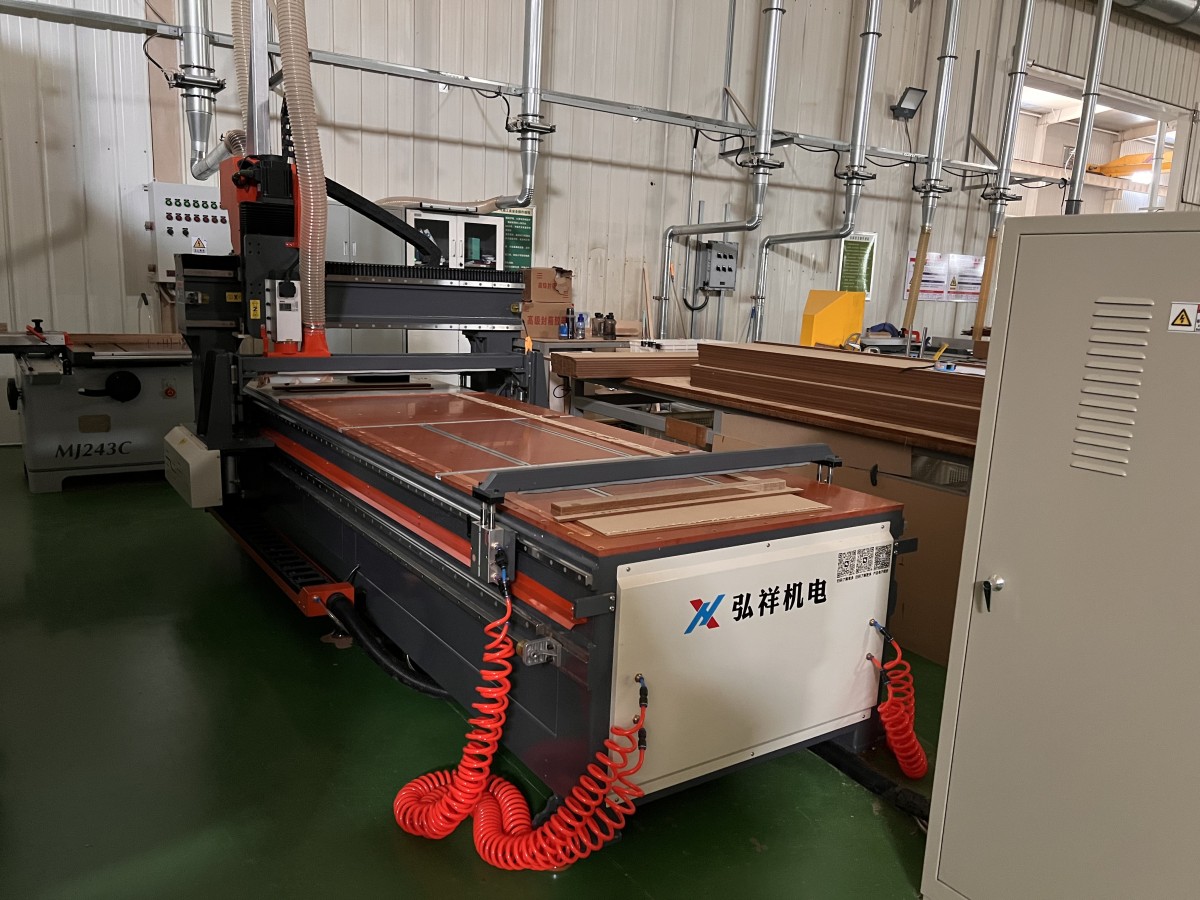
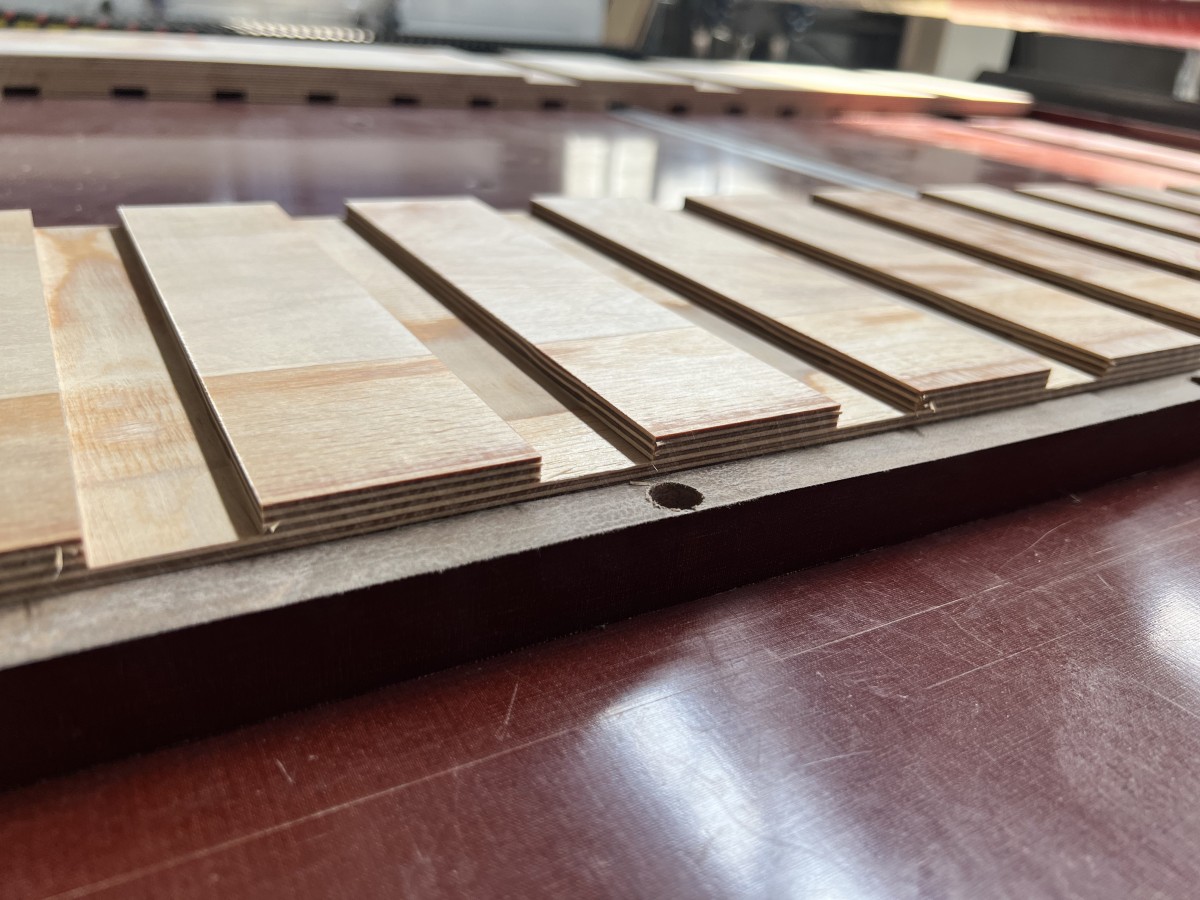
In transformer manufacturing, equipment selection is no longer a simple question of cutting, pressing, or shaping materials. It is closely tied to dimensional accuracy, insulation stability, labor efficiency, delivery reliability, and the ability to meet varied project requirements across domestic and export markets. For power equipment plants, insulation material processors, and project-based manufacturers, the wrong machine can increase scrap rates, slow batch changeovers, and create hidden quality risks that only appear during final assembly or field operation.
This is why the market increasingly values integrated machine tool solutions for insulating cardboard, laminated wood, insulating parts, EVA forming, and special-purpose transformer production equipment. Companies such as Gaomi Hongxiang Electromechanical Technology Co., Ltd. focus on this practical demand by combining R&D, design, production, installation, training, and after-sales support for global customers. For decision-makers, engineers, operators, procurement teams, and quality managers, the real issue is not buying more machines, but choosing the right equipment system for stable, scalable, and cost-conscious transformer production.
Core Equipment Categories the Power Industry Commonly Needs
The power industry needs machine tools and processing equipment that directly support transformer insulation manufacturing, structural part preparation, and assembly consistency. In practical workshops, the most demanded categories usually include transformer insulation cardboard processing equipment, electrical layer-pressed wood processing equipment, CNC stepped saw systems, precision cutting units, slotting and shaping machines, molding equipment, and supporting assembly tools. These are not optional accessories; they are process-critical assets that influence tolerance control, material utilization, and production rhythm.
For oil-immersed transformer applications, insulating cardboard and laminated wood are key materials. Their machining requires stable pressure control, low burr output, repeatable sizing, and clean edge finishing. Even a deviation of ±0.3 mm to ±0.5 mm can affect component fit during stacking or assembly, especially in medium- and large-size transformer production. This is why many buyers now prioritize equipment with CNC control, programmable feeding, and repeatable batch settings rather than relying only on manual operations.
Another major demand area is stepped core cutting support. CNC stepped saw solutions are especially relevant when manufacturers need repeatability across multiple angle cuts, faster switching between specifications, and reduced setup time. In workshops running 2 to 4 product variants per week, equipment flexibility becomes almost as important as output speed. A machine that saves 20 to 30 minutes per changeover can create meaningful gains over a month of continuous production.
Specialized molding and part-forming equipment also matters. EVA molding processing, insulation part shaping, and precision trimming often serve niche transformer structures or auxiliary electrical applications. When these steps depend on unstable tooling or inconsistent material handling, the result is often rework, delayed assembly, and extra labor input. Reliable machine tool design helps reduce these interruptions while improving part-to-part consistency.
Main equipment functions in transformer-related manufacturing
The following comparison shows how different equipment categories align with real production needs in transformer and insulation material workshops.
The key takeaway is that the power industry does not need a generic machine list. It needs process-matched equipment. The right combination depends on product mix, insulation material type, target tolerances, output plan, and the level of automation expected over the next 3 to 5 years.
What Buyers, Engineers, and Operators Should Evaluate First
Different stakeholders look at equipment from different angles. Operators care about ease of use, safety, and setup speed. Technical evaluators focus on machining precision, process range, and integration with production flow. Procurement teams compare total cost, delivery time, spare parts access, and after-sales response. Business managers and financial approvers want to know whether the equipment can reduce labor pressure, support future orders, and pay back investment within a reasonable period such as 12 to 24 months.
The first evaluation point is process suitability. A machine may look advanced but still be unsuitable if it cannot handle the actual thickness range, board dimensions, or batch rhythm used in transformer insulation production. For example, if a workshop runs mixed orders with frequent material switching, a machine with slow fixture adjustment and manual recalibration may become a bottleneck even if its rated cutting speed is high.
The second point is precision stability over time. Initial machine accuracy matters, but so does repeatability after 3 shifts, 30 days of use, or 1 year of operation. This is especially important for insulating laminated wood and cardboard parts, where dimensional drift can affect fit-up and insulation spacing. Buyers should ask about mechanical rigidity, tool wear compensation, feeding stability, and the maintenance cycle for key components.
The third point is service capability. In export-oriented or multi-region projects, the supplier should be able to support installation, training, troubleshooting, and spare parts planning. A response delay of even 48 to 72 hours can affect project schedules if the machine is involved in a critical transformer order. This is why integrated service capability often matters as much as the machine specification itself.
A practical 6-point evaluation checklist
- Check whether the equipment matches the actual material range, such as cardboard density, laminated wood thickness, and part geometry complexity.
- Confirm repeatability targets, such as acceptable deviation bands around ±0.3 mm, ±0.5 mm, or workshop-specific internal standards.
- Review cycle time and changeover time, especially if the factory handles small batches, mixed models, or urgent orders.
- Assess safety configuration, including guards, emergency stops, operator training logic, and maintenance accessibility.
- Verify after-sales readiness, such as installation support, remote troubleshooting, spare part lead times, and training documents.
- Estimate total ownership cost over 3 to 5 years instead of comparing purchase price only.
Common decision mistake
One common mistake is buying equipment based only on peak specification. A machine designed for maximum throughput may be underused in a plant that needs flexibility, stable finishing, and low adjustment complexity more than raw speed. In many transformer workshops, balanced performance delivers better returns than oversized capacity.
Recommended Equipment Configuration by Application Scenario
Not all power equipment manufacturers need the same machine setup. A workshop producing standard transformer insulation components in medium volumes often needs a different configuration from a facility handling customized export orders or frequent product changes. The best approach is to build equipment around process flow, not around catalog categories alone.
For small and mid-sized manufacturers, the priority is usually stable core processing functions with manageable investment. This often means starting with insulation cardboard processing equipment, laminated wood processing equipment, and one reliable precision cutting or stepped saw unit. In many cases, these 3 categories cover the majority of recurring part requirements and can support 60% to 80% of routine insulation preparation tasks.
For larger transformer plants or project-driven enterprises, automation level becomes more important. These users often need integrated feeding, programmable sizing, batch memory, and stronger support for multi-shift operation. If the factory runs 8 to 16 hours per day, machine durability and maintenance planning become critical selection factors, not optional upgrades.
For distributors, agents, and project contractors, standardization is often the deciding factor. They usually prefer equipment that can be trained quickly, deployed with predictable installation steps, and supported by the supplier across multiple countries or regions. This is particularly important where users may not have deep in-house process engineering capability.
Scenario-based configuration reference
The table below offers a practical reference for matching transformer production scenarios with suitable machine tool configurations.
This comparison shows that selecting equipment by application scenario can reduce mismatched investment. Instead of asking for the “most advanced” machine, buyers should ask which combination best fits their daily output, material range, labor skill level, and order variability.
Typical implementation sequence
- Map the current process and identify 2 to 3 bottlenecks such as cutting inconsistency, slow changeover, or manual shaping load.
- Match machine functions to the highest-frequency part categories rather than low-volume exceptions.
- Plan installation, training, and trial production within a 2 to 6 week ramp-up window.
- Set acceptance criteria for accuracy, cycle time, and operator handover before final commissioning.
Key Technical and Commercial Risks During Equipment Purchasing
In the machine tool sector for transformer production, purchasing risks usually fall into two groups: technical mismatch and commercial underestimation. Technical mismatch happens when the equipment cannot maintain required dimensional control, cannot process the full material range, or cannot adapt to actual production rhythm. Commercial underestimation happens when buyers overlook delivery coordination, installation needs, training load, spare parts planning, or maintenance downtime.
A major technical risk is overemphasizing nominal speed. In insulation cardboard or laminated wood processing, stable quality often matters more than top-line speed. If faster feed causes edge tearing, unstable grooves, or excessive tool wear, the hidden cost appears in scrap, sorting, and rework. In some workshops, a 10% reduction in cutting speed can produce a much larger gain in usable output.
Another risk is weak process communication before ordering. Buyers should clearly define part drawings, tolerance expectations, material characteristics, and expected production volumes. Without this step, the final machine may need repeated modification after delivery. That can extend implementation by 2 to 8 weeks, depending on complexity and whether tooling changes are required.
There is also a service continuity risk. A machine is only productive if operators can use it correctly and maintenance staff can keep it running. For this reason, suppliers that combine design, production, installation, training, and after-sales support offer a practical advantage, especially in overseas projects where users need faster issue handling and clearer communication.
Risk-control priorities before contract confirmation
- Request process confirmation based on actual workpieces, not general brochures alone.
- Define acceptance standards for dimensions, surface condition, cycle time, and training completion.
- Clarify the delivery scope, including tooling, electrical configuration, manuals, and spare parts list.
- Confirm installation conditions such as power supply, floor space, dust control, and operator allocation.
- Review after-sales response expectations, especially for critical periods during first 30 to 90 days of production.
Commercial value beyond the equipment itself
For many power industry buyers, the best supplier is not simply the one selling the machine, but the one that helps shorten the path from equipment arrival to stable output. This includes process-oriented consultation, operator training, installation support, and practical communication across technical and commercial teams. In export markets such as Southeast Asia, South America, India, Pakistan, and Russia, this kind of support can make project execution far more predictable.
How to Improve Long-Term Value Through Service, Maintenance, and Process Support
Long-term value in transformer manufacturing equipment depends on three things: uptime, repeatability, and support responsiveness. A machine that performs well during trial production but becomes difficult to maintain after 6 months creates avoidable cost pressure. This is why smart buyers examine not only the hardware, but also the supplier’s ability to support commissioning, training, maintenance routines, and spare parts continuity.
A practical maintenance system should include daily inspection, weekly cleaning and lubrication, periodic alignment checks, and planned replacement for wear parts. In many machine tool environments, basic inspections can be done once per shift, while deeper checks are scheduled every 1 to 4 weeks depending on usage intensity. This reduces unexpected shutdowns and helps preserve cutting quality for insulation materials that are sensitive to edge condition and dimensional drift.
Training is another overlooked factor. Operators, quality inspectors, and maintenance personnel should not receive the same training package. Operators need setup, safety, and routine adjustments. Quality staff need process checkpoints and dimensional verification methods. Maintenance teams need structured fault analysis and preventive service routines. Segmenting training by role often improves handover efficiency within the first 7 to 14 days after installation.
Gaomi Hongxiang Electromechanical Technology Co., Ltd. works in a model that many industrial buyers prefer: combining R&D and design with production, sales, installation, training, and after-sales service. For transformer manufacturers and insulation processing companies, this integrated approach helps reduce communication gaps between machine design intent and actual factory use. It is especially useful when the buyer needs customized process support rather than a one-size-fits-all machine delivery.
Suggested service structure for industrial buyers
A structured support framework makes equipment investment more predictable. The following table outlines a practical service model many B2B buyers use when evaluating machine tool suppliers.
This type of service chain is particularly valuable for enterprises expanding into new transformer product types or export markets. It supports better communication between operators, engineers, buyers, and management teams while reducing uncertainty throughout the equipment lifecycle.
Frequently asked questions from the market
How should a buyer choose between standard equipment and customized equipment?
If more than 70% of production consists of standard insulation parts with stable sizes, standard equipment is often the faster and lower-risk choice. If the plant handles frequent design variation, special structures, or complex forming requirements, customized machine configuration becomes more practical.
What delivery period is common for this type of machine tool equipment?
For standard machine configurations, a typical industrial lead time may range from 3 to 8 weeks. Customized equipment, integrated process lines, or machines requiring special tooling may take longer, depending on the scope of design confirmation and commissioning support.
Which indicators matter most during equipment acceptance?
The most practical indicators are dimensional consistency, edge or surface condition, cycle time under real material conditions, machine stability during continuous operation, and training completion for designated operators. Acceptance should reflect actual production needs rather than no-load demonstration only.
Why is after-sales capability so important in transformer equipment purchasing?
Because machine performance depends on installation quality, setup accuracy, operator understanding, and maintenance discipline. When issues occur in the first 30 days or during batch expansion, timely support can protect delivery schedules and reduce the hidden cost of downtime.
The power industry does not simply need more equipment; it needs transformer manufacturing equipment that matches real materials, real tolerances, and real production goals. Transformer insulation cardboard processing equipment, electrical layer-pressed wood processing equipment, CNC stepped saw solutions, and EVA molding systems each play a specific role in improving consistency, efficiency, and insulation reliability.
For users ranging from engineers and operators to procurement teams, quality managers, project leaders, and business decision-makers, the most effective purchasing strategy is to evaluate process fit, repeatability, service support, and lifecycle value together. Gaomi Hongxiang Electromechanical Technology Co., Ltd. offers an integrated capability across design, production, installation, training, and after-sales service, which is especially relevant for transformer-related manufacturing and insulation material processing projects.
If you are planning to upgrade transformer production, improve insulation part processing, or compare machine tool solutions for domestic or export business, now is the right time to review your process needs in detail. Contact us to get a tailored equipment recommendation, discuss your production scenario, and learn more about practical machine solutions for transformer manufacturing.
NAVIGATION
MESSAGE
Request A Quote?