0000-00
Before investing in transformer wood processing equipment, buyers should focus first on whether the machine can consistently process insulating laminated wood and related transformer materials with the precision, stability, and efficiency required for electrical applications. In most cases, the right buying decision depends less on the lowest initial price and more on material compatibility, machining accuracy, automation level, service support, and total lifecycle cost. If you are evaluating High precision transformer electrical layer-pressed wood processing equipment, Automated transformer electrical layer-pressed wood processing equipment, or a Cost-effective transformer electrical layer-pressed wood processing equipment solution, choosing an experienced Transformer electrical layer-pressed wood processing equipment manufacturer in China can directly affect product quality, production stability, and long-term return on investment.
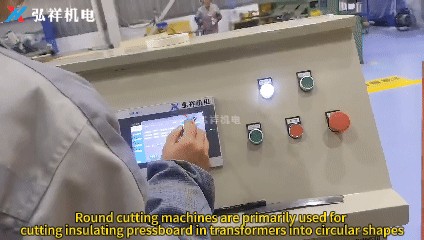
What is the real priority before buying transformer wood processing equipment?
The core buying intent behind this topic is practical decision-making. Most readers are not simply asking what this equipment is; they want to know how to avoid buying the wrong machine, how to compare suppliers, and how to make sure the equipment meets production, quality, and business requirements.
For transformer manufacturing and insulation part processing, the biggest priority is whether the machine can deliver repeatable precision on electrical insulating cardboard, insulating laminated wood, and similar materials without causing damage, waste, or unstable output. In this field, equipment quality directly affects downstream assembly, insulation performance, dimensional consistency, and production efficiency.
That means buyers should not evaluate equipment by brochure claims alone. They should check whether the machine fits their material types, product tolerances, workflow, operator skill level, and future capacity plans.
Check whether the equipment matches your actual transformer insulation materials
One of the most common buying mistakes is selecting a machine based on general woodworking capability rather than transformer-specific material performance. Transformer wood processing equipment often works with insulating laminated wood, electrical insulating cardboard, layer-pressed wood, and custom insulation parts. These materials behave differently from ordinary wood boards.
Before buying, confirm:
- Which insulation materials the machine is designed to process
- Acceptable material thickness range and board dimensions
- Whether machining causes edge cracking, delamination, burrs, or thermal damage
- Whether the cutting, drilling, slotting, shaping, or molding method is suitable for electrical insulation components
- Whether the equipment can handle both standard parts and customized parts
If your production includes multiple insulation materials, request real sample testing. A reliable Transformer electrical layer-pressed wood processing equipment manufacturer in China should be able to demonstrate processing results on your own materials, not just standard samples.
Precision is not optional in transformer part production
For many buyers, precision is the deciding factor. In transformer applications, dimensional deviation can create assembly problems, reduce consistency, increase fitting time, and even affect insulation reliability in the final product. That is why High precision transformer electrical layer-pressed wood processing equipment is often preferred by technical evaluators and quality teams.
Key precision checkpoints include:
- Positioning accuracy and repeatability
- Spindle stability and tool path consistency
- Tolerance control for grooves, holes, edges, and profiles
- Surface finish quality after machining
- Consistency over long production runs, not only during trial pieces
Ask suppliers for measurable data, not vague promises. Check machine testing reports, tolerance standards, sample inspection records, and customer case references from transformer-related industries.
Evaluate automation based on your production reality, not trend alone
Automation can significantly improve output and reduce dependency on manual skill, but it should match your production environment. Automated transformer electrical layer-pressed wood processing equipment is especially valuable when you need batch consistency, shorter lead times, lower labor intensity, and reduced setup variation.
However, automation should be assessed carefully:
- Does it reduce manual positioning errors?
- Can operators learn the system easily?
- Does the control system support recipe storage for repeat orders?
- Can the machine integrate into your existing workflow?
- Is maintenance manageable for your team?
For some companies, semi-automatic equipment may actually offer better value than a fully automated line if product variety is high and production volume is moderate. The best choice depends on throughput goals, labor cost, operator capability, and product complexity.
Look beyond purchase price and compare total cost performance
Many procurement decisions fail because evaluation focuses too heavily on the machine’s initial quotation. A Cost-effective transformer electrical layer-pressed wood processing equipment solution should mean strong long-term value, not merely a lower upfront cost.
When assessing cost performance, compare:
- Material waste rate
- Tool consumption and replacement frequency
- Energy usage
- Labor savings
- Production speed and output stability
- Downtime risk
- Maintenance cost
- Service life of key components
In many cases, slightly higher-quality equipment produces a better financial outcome because it reduces scrap, improves yield, and prevents costly interruptions. For finance approvers and decision-makers, this lifecycle view is far more useful than comparing quotations line by line.
Supplier capability matters as much as machine specification
A machine may look competitive on paper, but the supplier’s actual engineering and service capability often determines whether the project succeeds. This is especially important when purchasing from a Transformer electrical layer-pressed wood processing equipment manufacturer in China.
Buyers should verify:
- Whether the supplier has transformer industry experience
- Whether they offer R&D and design support
- Whether they can customize equipment for special process requirements
- Whether they provide installation, training, and after-sales service
- Whether spare parts and remote support are available
- Whether export experience exists for your region
Gaomi Hongxiang Electromechanical Technology Co., Ltd., for example, serves global customers and integrates R&D, design, production, sales, installation, training, and after-sales service. For buyers, this type of integrated capability is useful because it reduces project coordination risk and improves long-term support reliability.
Do not skip checks on safety, quality control, and compliance
For quality managers, safety officers, and project leaders, equipment selection should also include operational safety and quality assurance. Transformer part processing often requires stable, controlled machining to minimize defects and protect both operators and materials.
Important checkpoints include:
- Machine guarding and emergency stop systems
- Dust collection and workplace cleanliness support
- Electrical safety and control cabinet quality
- Process stability under continuous use
- Inspection convenience for quality control personnel
- Documentation, manuals, and training support
If your company operates under internal audit standards or industry-specific quality procedures, make sure the supplier can support the necessary documentation and acceptance process.
Ask for proof through testing, references, and trial evaluation
One of the best ways to reduce purchasing risk is to move from marketing claims to direct validation. Before finalizing an order, ask the supplier to process your drawings or your actual insulation materials. This gives technical teams, operators, and procurement staff a shared basis for comparison.
Useful pre-purchase validation steps include:
- Sample machining using your own material
- Review of finished part tolerances
- Cycle time testing
- Operator interface demonstration
- Review of similar customer applications
- Factory audit or remote video inspection
This is especially important for companies sourcing internationally, where after-sales distance can make early validation even more valuable.
Questions buyers should ask before signing a contract
To make a stronger final decision, buyers should prepare a practical checklist. Here are some of the most important questions:
- Can the equipment process all required transformer insulation materials?
- What tolerance level can be guaranteed in actual production?
- What is the expected output capacity per shift?
- How much operator training is required?
- What wear parts are needed and how often are they replaced?
- What after-sales response time can the supplier provide?
- Is customization available for special parts or future expansion?
- What acceptance standards will be used before delivery?
These questions help different stakeholders align their priorities, from technical suitability to financial justification and operational reliability.
Final decision: buy for process fit, stability, and long-term value
Before buying transformer wood processing equipment, the smartest approach is to evaluate process compatibility, precision, automation suitability, supplier competence, safety, and total cost performance together. The right equipment should not only machine parts successfully in a demo; it should support stable production, quality consistency, manageable maintenance, and long-term business value.
For companies involved in transformer manufacturing and insulation part production, choosing the right Transformer electrical layer-pressed wood processing equipment manufacturer in China can make a meaningful difference in efficiency, defect control, and project reliability. Whether your priority is High precision transformer electrical layer-pressed wood processing equipment, Automated transformer electrical layer-pressed wood processing equipment, or a Cost-effective transformer electrical layer-pressed wood processing equipment solution, the best purchase decision will always come from matching the machine to your real materials, production needs, and service expectations.
NAVIGATION
MESSAGE
Request A Quote?