0000-00
When evaluating automated transformer electrical layer-pressed wood processing equipment, buyers need to look beyond price and focus on precision, efficiency, material compatibility, and after-sales support. For procurement teams in transformer manufacturing, the right equipment can improve insulation component quality, reduce waste, and strengthen long-term production stability. Understanding these key comparison points helps ensure a smarter and more cost-effective investment.
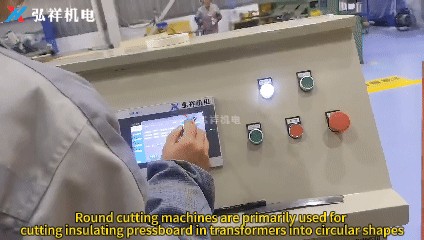
Understanding the role of automated transformer electrical layer-pressed wood processing equipment
Automated transformer electrical layer-pressed wood processing equipment is designed to process insulation-related laminated wood components used in power transformers. These parts are not decorative accessories; they directly support electrical insulation structure, mechanical stability, and dimensional consistency inside transformer assemblies. In transformer manufacturing, layer-pressed wood parts may be used for clamping structures, spacers, support blocks, and other insulating structural elements that must meet strict dimensional and performance requirements.
Because transformer production depends on repeatability, modern manufacturers increasingly prefer automated transformer electrical layer-pressed wood processing equipment over conventional manual or semi-manual methods. Automation helps reduce variation between batches, lowers the risk of operator-dependent errors, and makes it easier to scale production for export-oriented businesses serving multiple regional markets. For procurement teams, this means the equipment should be assessed not only as a machine tool purchase, but as a production capability investment tied to product quality and delivery reliability.
Why the transformer industry pays close attention to this equipment
The transformer sector is under constant pressure to deliver stable quality, short lead times, and consistent compliance with customer specifications. Electrical laminated wood and related insulation parts must often fit within tightly controlled tolerances. If cutting accuracy, drilling alignment, edge quality, or surface condition is poor, downstream assembly can be delayed and the final transformer may face avoidable performance risks.
This is why automated transformer electrical layer-pressed wood processing equipment has become a serious topic in machine tool selection. Buyers are looking for systems that can maintain precision over long production cycles, process multiple component types efficiently, and adapt to different insulation board or laminated wood grades. In addition, international transformer suppliers need equipment that can support standardized production across product lines for domestic sales and export markets such as Southeast Asia, South America, India, Pakistan, and Russia.
Industry overview: what procurement teams should compare first
Before going into technical details, buyers can start with a structured comparison of the most practical evaluation points. This helps separate equipment that is merely functional from equipment that is truly suitable for transformer insulation manufacturing.
Core technical factors behind a reliable equipment decision
Precision and repeatability
For transformer insulation components, one accurate sample is not enough. Procurement teams should ask how the automated transformer electrical layer-pressed wood processing equipment performs over continuous production. Stable spindle performance, rigid machine structure, reliable positioning systems, and consistent clamping all influence whether dimensions remain stable over time. Repeatability is especially important when producing matched parts for batch assembly.
Material adaptability
Electrical laminated wood, insulating cardboard, and related composite materials may differ in hardness, internal structure, moisture behavior, and cutting response. Good automated transformer electrical layer-pressed wood processing equipment should support a practical range of materials and thicknesses without causing chipping, burrs, delamination, or excessive wear. Buyers should verify whether the machine has already been tested on materials similar to their own production requirements.
Process capability
Not every machine offers the same machining scope. Some systems are better suited for cutting only, while others integrate drilling, slotting, profiling, edge shaping, and multi-step component processing. A broader process range can reduce part transfers and improve efficiency, but only if the machine remains easy to program and maintain. Procurement teams should match process capability with actual transformer part drawings instead of buying based on general claims.
Production efficiency
Efficiency should be measured in terms of total output flow, not peak speed alone. Loading and unloading time, tool change time, programming simplicity, nesting efficiency, and scrap control all matter. In many factories, a machine advertised as fast may still underperform if setup is slow or material handling is inconvenient. The best automated transformer electrical layer-pressed wood processing equipment supports both productivity and process stability.
Business value beyond machine specifications
Procurement decisions in machine tool equipment should connect directly to business outcomes. For transformer manufacturers, the value of automated transformer electrical layer-pressed wood processing equipment often appears in four areas: lower defect rates, reduced dependence on highly specialized manual labor, better delivery performance, and stronger capacity to handle customized orders. These benefits may not always be visible in the initial quotation, but they usually determine total return over the equipment lifecycle.
Suppliers that combine R&D, design, manufacturing, installation, training, and after-sales support can offer additional advantages. A company with experience in transformer assembly and insulation component manufacturing is more likely to understand practical requirements such as insulation material behavior, workshop workflow, and coordination with downstream assembly. This kind of background can reduce implementation risk for buyers who need dependable production rather than a generic machine.
Typical application categories in transformer production
The usefulness of automated transformer electrical layer-pressed wood processing equipment becomes clearer when viewed through real production categories. Different transformer factories may emphasize different part families depending on product size, voltage level, and insulation design.
Practical evaluation steps for procurement teams
A sound equipment assessment usually starts with internal production mapping. Buyers should clarify which transformer parts are produced most often, what materials are used, what tolerances are required, and where current bottlenecks exist. This prevents overbuying or selecting a machine that looks advanced but does not solve the most important workshop problems.
Next, request sample processing based on actual drawings and materials. A live or documented test gives a far more realistic picture than a brochure. Review not only dimensional results, but also cut finish, processing rhythm, ease of operation, and scrap levels. For automated transformer electrical layer-pressed wood processing equipment, real sample validation is one of the most reliable ways to judge fit.
It is also important to compare software usability, maintenance access, spare parts availability, and training support. If operators cannot learn the control system quickly or if common consumables are difficult to source, production efficiency may suffer after installation. Procurement teams should involve engineering, production, quality, and maintenance personnel in the final review to avoid a narrow decision based only on purchase price.
Common selection mistakes to avoid
One common mistake is focusing too heavily on headline speed while overlooking long-term stability. Another is assuming all automated transformer electrical layer-pressed wood processing equipment handles insulation laminated wood equally well. Material-specific performance matters. Buyers also sometimes underestimate installation, training, and service needs, especially when the equipment will support a busy production schedule with export commitments.
A further risk is choosing a machine with insufficient upgrade flexibility. Transformer product portfolios often change over time. Equipment that can adapt to new part types, process adjustments, or wider automation integration may offer better long-term value than a lower-cost but narrowly configured option.
How to align equipment choice with supplier capability
In this field, the machine and the supplier should be evaluated together. A capable supplier should be able to explain the full process logic behind automated transformer electrical layer-pressed wood processing equipment, including part design understanding, material behavior, production planning, installation requirements, and post-delivery support. For buyers in transformer manufacturing, this broader competence can be as important as the mechanical configuration itself.
A manufacturer with integrated services covering R&D, design, production, sales, installation, training, and after-sales support is often better prepared to help customers move from equipment purchase to stable output. This is particularly relevant when the goal is not just replacing a machine, but improving the entire insulation component manufacturing process.
Moving toward a better long-term investment
Choosing automated transformer electrical layer-pressed wood processing equipment is ultimately about building reliable transformer production capacity. The best decision balances precision, process compatibility, productivity, service response, and future adaptability. Procurement teams that compare these factors carefully are more likely to secure equipment that supports quality improvement, waste reduction, and dependable delivery over many years.
If your organization is reviewing machine tool solutions for transformer insulation parts, a structured technical discussion with an experienced supplier can shorten the evaluation cycle and improve decision confidence. By matching equipment capability to real production needs, buyers can turn an equipment purchase into a stronger manufacturing advantage.
NAVIGATION
MESSAGE
Request A Quote?