0000-00
For project managers balancing cost, precision, and delivery timelines, investing in custom transformer insulation cardboard processing equipment can be a strategic move rather than a simple capital expense. When product specifications vary, quality standards tighten, and outsourcing slows production, the right equipment helps improve consistency, reduce waste, and strengthen manufacturing control—making it easier to decide when such an investment is truly worth it.
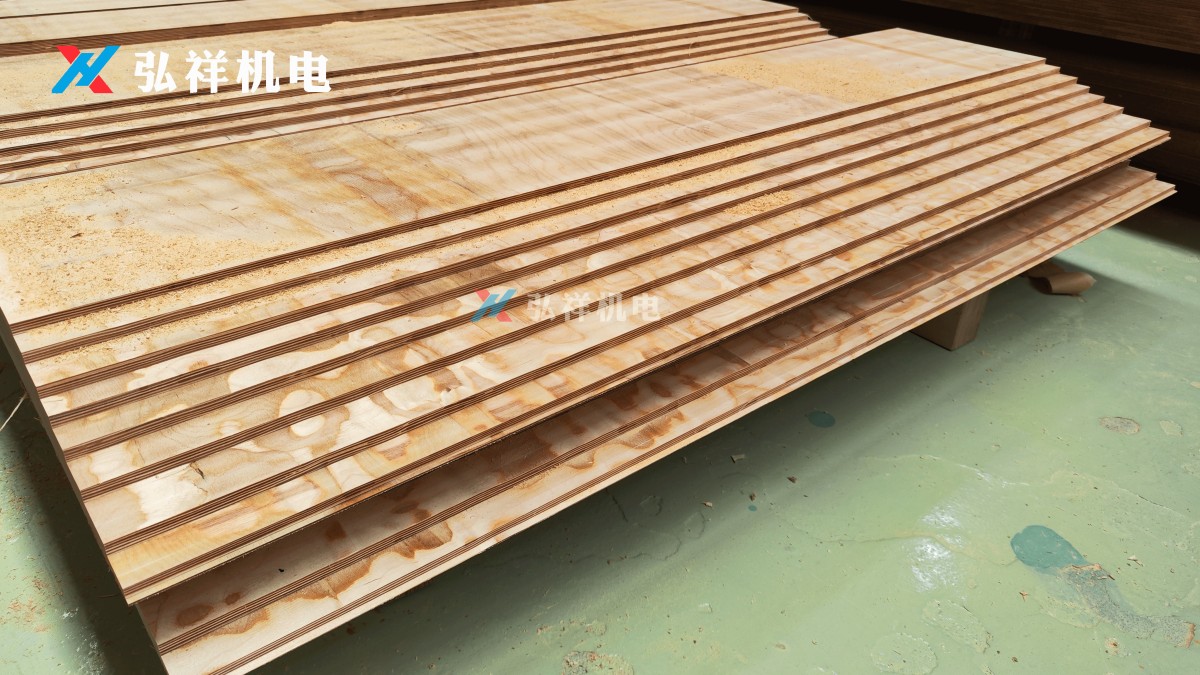
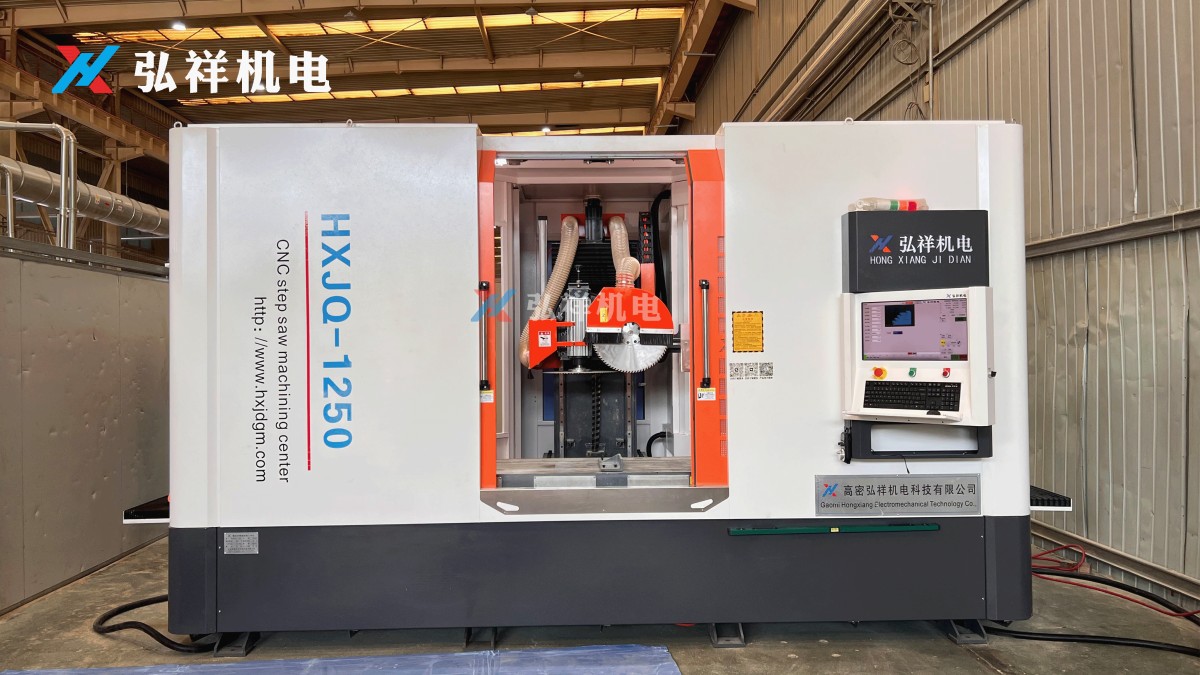
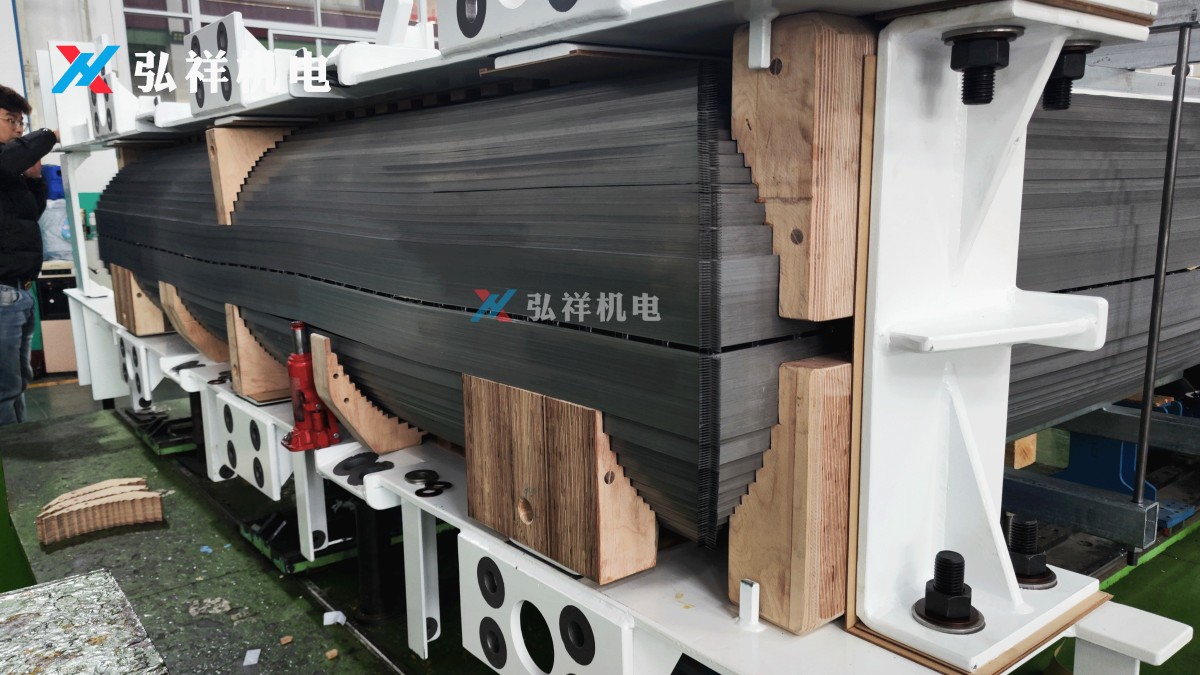
Why scenario differences matter before buying custom equipment
In transformer manufacturing, insulation cardboard is not a generic material stage that can be handled the same way in every factory. Project managers often face different production realities: some plants process a stable series of parts every week, while others handle frequent design changes, mixed dimensions, and urgent order adjustments. In these different operating environments, the value of Custom transformer insulation cardboard processing equipment changes significantly. What is efficient for one workshop may be excessive or insufficient for another.
The machine tool equipment decision is usually tied to three measurable pressures: delivery cycle, scrap rate, and labor dependence. If a project team repeatedly loses 2 to 5 days waiting for outsourced cutting, grooving, forming, or shaping of insulating cardboard parts, then equipment investment starts to affect delivery reliability rather than only unit cost. Likewise, when dimensional tolerance becomes more demanding, in-house processing can reduce the variability introduced by multiple suppliers and manual rework steps.
Another reason scenario analysis matters is that transformer insulation parts are often linked to upstream and downstream processes. Cardboard processing accuracy affects assembly fit, pressboard positioning, insulation spacing, and final internal consistency. For project leaders, the real question is not simply whether custom equipment is advanced. The practical question is whether it matches product mix, annual volume, process complexity, and customer approval requirements within a 12- to 36-month investment horizon.
Common factors that change the investment logic
- Order volatility: factories with monthly specification changes above 20% usually gain more from flexible custom setups than from rigid standard machines.
- Part diversity: when one transformer project requires 30 to 100 insulation part types, setup efficiency becomes a major cost driver.
- Tolerance and repeatability: if repeated manual trimming causes fit issues, machine consistency becomes a schedule-protection tool.
- Supplier lead time: outsourced cycles beyond 7 to 14 days can create avoidable delays in assembly planning.
For this reason, project managers should evaluate Custom transformer insulation cardboard processing equipment through specific application scenarios rather than through a broad “buy or not buy” discussion. The rest of the article focuses on those scenarios and how to judge fit.
Three typical application scenarios where custom equipment becomes attractive
The most practical way to assess Custom transformer insulation cardboard processing equipment is to map it to production conditions. Not every operation needs the same machine configuration, and not every custom solution should be built around maximum automation. In many cases, the right answer is a process-focused custom line designed around actual insulation part geometry, feeding method, cutting sequence, and workshop workflow.
The three scenarios below are common in transformer-related manufacturing and service operations. They differ in batch rhythm, engineering control, and tolerance sensitivity. Each one creates a different justification for custom equipment investment, from cycle-time reduction to process standardization and quality traceability.
Before reviewing the details, compare the scenarios at a high level. This helps project owners quickly identify where their operation fits today and where it may move over the next 1 to 3 years.
This comparison shows that custom equipment value is usually strongest when variability and delivery pressure exist at the same time. If a factory has stable products, low complexity, and dependable local subcontractors, the return may be slower. But when variation, quality sensitivity, and lead-time risk accumulate together, the business case becomes much stronger.
Scenario 1: high-mix production with frequent drawing updates
This scenario is common in manufacturers serving multiple transformer models or regional customer requirements. A project manager may be handling several active jobs, each with different insulation cardboard shapes, punching positions, thickness needs, or processing sequences. In such a setting, standard machine tool equipment often struggles because repeated fixture changes and manual alignment consume time and increase the chance of inconsistency.
Custom transformer insulation cardboard processing equipment becomes valuable here when it is designed for quick changeover, programmable positioning, and repeatable handling of multiple part profiles. Even saving 10 to 20 minutes per changeover can be meaningful if a workshop performs 8 to 15 setup transitions in a day. That improvement is not only about labor efficiency; it also reduces interruption to assembly planning.
For this scenario, project teams should focus less on peak machine speed and more on flexible usability. The ideal solution often includes modular tooling, easy parameter recall, and process compatibility with various board dimensions. This is one of the clearest cases where Custom transformer insulation cardboard processing equipment justifies itself through reduced complexity cost.
Scenario 1 priorities
- Fast switching between part types without long calibration interruptions.
- Reliable dimensional repeatability over small and medium batches.
- Simple operator training, ideally within several days rather than several weeks.
Scenario 2: replacing unstable outsourcing in a growing assembly operation
A second common scenario appears when a transformer plant originally relied on outside vendors for insulation cardboard processing but now faces capacity growth. At first, outsourcing may have worked because monthly demand was low and internal resources were limited. However, once order volume rises, the weaknesses become visible: supplier delivery slips, inconsistent edge quality, or urgent rework that disrupts transformer assembly sequencing.
In this case, custom equipment is often worth considering when the cost of delay exceeds the direct processing cost difference. For example, if a delayed insulation part set holds back winding or assembly for 2 or 3 days, the total project impact extends beyond the part itself. Lost workshop time, rescheduling, and expediting can quickly erase the apparent savings of external processing.
Project managers in this situation should assess not only unit economics but also schedule stability. Custom transformer insulation cardboard processing equipment can function as a supply-chain risk reduction tool. It gives the factory more control over urgent replenishment, prototype correction, and small-batch priority orders that subcontractors may not handle efficiently.
Scenario 3: special design projects and export-oriented production
The third scenario involves customized transformer projects, technical exports, or orders that require tighter process discipline. These projects may involve customer-specific dimensional rules, internal approval procedures, or stronger emphasis on repeatability across multiple deliveries. Here, Custom transformer insulation cardboard processing equipment helps by turning workmanship into a more controlled process rather than relying too heavily on operator memory and manual adaptation.
This matters especially when the same part family will be reproduced over several shipment batches across 6 to 18 months. Stable processing parameters make it easier to maintain part-to-part consistency. The project team also benefits from clearer process definition when discussing inspections, change notices, and replacement production. For export-oriented operations, predictability is often more valuable than simply producing the cheapest first batch.
In this scenario, the right custom machine tool solution should support documentation-friendly production, straightforward maintenance, and enough process rigidity to limit quality drift. The equipment does not need to be overbuilt, but it should be purpose-fit for recurring special requirements.
What different scenarios should evaluate before approving the investment
Once the application scenario is clear, the next step is structured evaluation. Project managers should avoid judging Custom transformer insulation cardboard processing equipment only by purchase price. A sound decision compares workflow impact, changeover pattern, labor dependence, and the quality cost of inconsistency. In many factories, the hidden expenses of delay and rework are more important than the machine’s invoice value.
The most useful evaluation model is practical: define the part family, the expected monthly throughput, the tolerance sensitivity, and the operator skill available on site. Typical reviews cover a 3- to 6-month forecast window and then test whether the proposed machine configuration still makes sense under a 20% to 30% change in order mix. This prevents buying an inflexible setup that fits only the current project.
The following matrix can help teams compare needs by scenario and identify which requirements should be treated as mandatory rather than optional.
This matrix makes one point clear: the same Custom transformer insulation cardboard processing equipment category can be justified for different reasons. A good supplier should therefore discuss process objectives in detail, not just offer a generic machine list. That is especially important in transformer manufacturing, where cardboard processing is closely tied to assembly quality and overall production rhythm.
A practical pre-approval checklist
- List the top 10 to 20 insulation part types by frequency and complexity.
- Measure current outsourcing lead time, internal waiting time, and average rework frequency.
- Confirm whether one machine must cover cutting only, or also grooving, shaping, forming, or multi-step handling.
- Check operator availability, training period, maintenance capability, and spare-part support expectations.
- Review how the equipment will connect to assembly scheduling and material flow, not just isolated processing.
A project manager who completes this checklist will usually see more clearly whether the investment serves true production needs or simply responds to short-term pressure.
Common misjudgments that make the equipment seem more or less worthwhile than it is
Some companies delay investment in Custom transformer insulation cardboard processing equipment because they compare the purchase only against current outsourced part prices. That approach misses the impact of scheduling disruptions, quality drift, and engineering response speed. If one urgent design revision takes 48 hours longer because all corrected parts must be sent outside, the project cost is broader than procurement can see in a simple quotation comparison.
The opposite mistake is overbuying. A factory with stable dimensions, low monthly variation, and predictable local processing support may not need a highly customized multi-function line. In that case, a more focused configuration may be sufficient. Custom does not have to mean complex. In many successful projects, the best solution is a machine tailored to 2 or 3 critical operations while leaving low-impact tasks manual or semi-manual.
Another frequent misjudgment is ignoring implementation readiness. Even a technically sound machine will underperform if material handling, drawings, operator training, and maintenance planning are not prepared. A realistic installation and ramp-up period may range from several weeks to a few months depending on process scope. Project teams should include this transition time in their business case instead of expecting instant full-capacity output.
Warning signs that require careful review
- The machine proposal is built around generic capacity claims but not your actual insulation part geometry.
- No one has mapped the process from material input to assembly release.
- The project assumes one operator can manage everything without testing workflow reality.
- The supplier cannot explain training, commissioning, or after-sales support in practical terms.
For transformer manufacturers and project leaders, the best investment decisions come from matching the custom equipment scope to a proven operational problem. When the problem is real and recurring, the return is usually clearer and more sustainable.
How to move from scenario analysis to a workable equipment plan
After identifying the right scenario, project managers should translate that insight into an equipment plan that covers processing scope, workflow, delivery expectation, and support needs. For Custom transformer insulation cardboard processing equipment, the planning stage should include the material range, target part categories, desired throughput, accuracy expectation, and future expansion possibility. Clear inputs at this stage reduce later modification costs and make supplier communication much more efficient.
A good project path usually starts with sample review and process confirmation. If several representative insulation parts can be assessed early, the machine builder can suggest whether the best solution is a standalone machine, a multi-step station, or an integrated processing arrangement. For many teams, this is more valuable than beginning with an abstract equipment specification sheet. The plan should also address service needs such as installation, operator training, and after-sales response expectations.
Gaomi Hongxiang Electromechanical Technology Co., Ltd. serves global customers with assembly and manufacturing services for power transformers, along with processing and manufacturing of electrical insulating cardboard, insulating laminated wood, and insulating parts. This practical link between materials, parts, and transformer assembly gives project managers a more grounded basis for discussing Custom transformer insulation cardboard processing equipment in relation to real production tasks rather than isolated machine functions.
Why choose us
If you are evaluating whether Custom transformer insulation cardboard processing equipment is worth the investment, we can support the decision with application-based discussion instead of a one-size-fits-all recommendation. Our team works across transformer assembly and insulation material processing, which helps align equipment design with actual manufacturing flow, not just machine theory.
You can contact us to discuss key project points such as part drawings, processing scope, expected delivery cycle, workshop layout, sample support, and custom machine configuration. We can also communicate around operator training, commissioning steps, and how the solution should fit your current production stage—whether you are replacing outsourcing, expanding in-house capacity, or supporting specialized transformer projects.
For a more accurate recommendation, send your insulation cardboard part types, approximate monthly demand, required process steps, and timeline targets. We can then help you review parameter confirmation, product selection, delivery planning, custom solution direction, quotation communication, and practical implementation priorities based on your specific scenario.
NAVIGATION
MESSAGE
Request A Quote?