0000-00
When complex profiles, variable dimensions, and higher accuracy demands make standard cutting inefficient, a CNC Special-shaped Cutting Saw becomes the smarter choice. For buyers comparing Transformer insulation parts processing equipment for laminated wood, electrical cardboard, and Electrical laminated wood applications, this solution improves consistency, reduces waste, and supports efficient production of Transformer insulation components with greater flexibility.
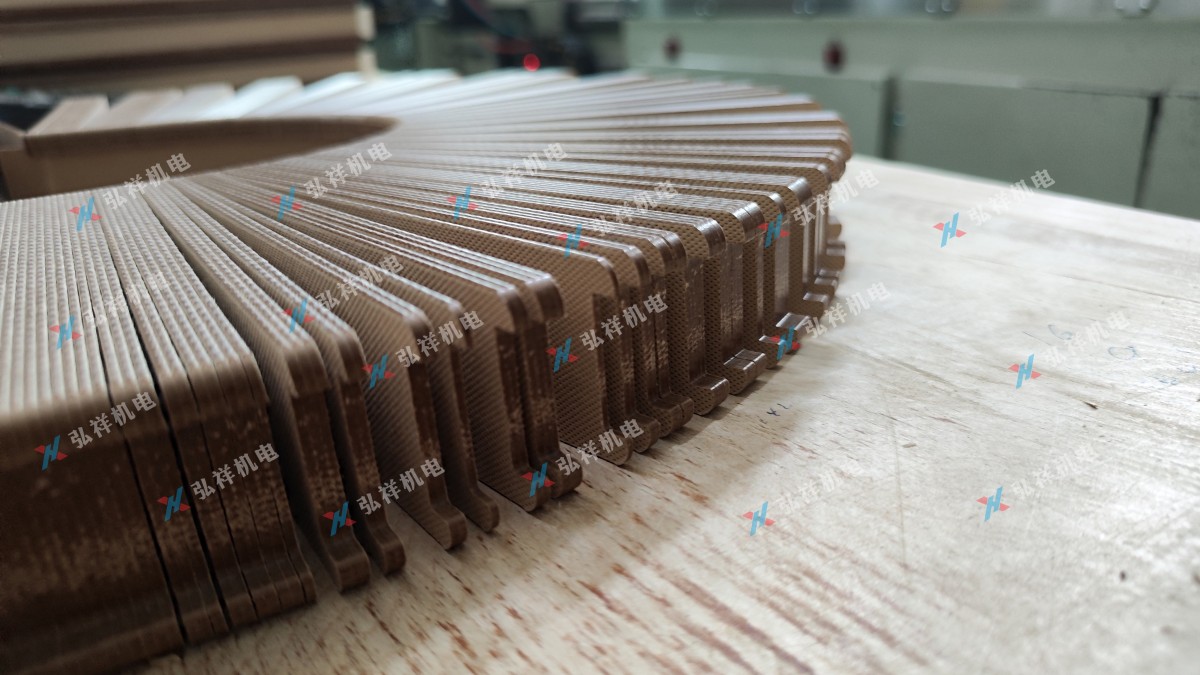
In transformer insulation manufacturing, the cutting stage often determines whether downstream assembly runs smoothly or becomes expensive and slow. For operators, technical evaluators, procurement teams, and project managers, the question is not simply whether a machine can cut. The real issue is whether it can repeatedly process irregular geometries, maintain dimensional control within practical tolerances, and adapt to changing production orders without excessive setup time.
This matters even more when working with electrical insulating cardboard, insulating laminated wood, electrical laminated wood, and related insulation parts, where profile accuracy affects fit, insulation reliability, rework rates, and overall material utilization. For companies serving multi-specification transformer components, selecting the right CNC special-shaped cutting saw can influence production stability over the next 3 to 5 years, not just the next purchase cycle.
Gaomi Hongxiang Electromechanical Technology Co., Ltd. focuses on equipment and manufacturing services for power transformer applications, including the processing of electrical insulating cardboard, insulating laminated wood, insulating parts, and EVA molding. For buyers evaluating special cutting equipment, the decision should be based on application fit, process range, operating efficiency, maintenance practicality, and long-term production value rather than on headline price alone.
What a CNC Special-shaped Cutting Saw Solves Better Than Standard Cutting Equipment
A standard cutting machine performs well when the workpiece shape is simple, dimensions are repeated in high volume, and tolerance demands are moderate. In many transformer insulation workshops, however, actual parts include bevels, stepped contours, slots, arcs, and customized profiles that may change from batch to batch. In these cases, manual positioning or fixed-tool cutting often creates inconsistency and increases scrap.
A CNC special-shaped cutting saw is better suited when the product mix includes more than 10 to 20 part variants per week, when edge quality must remain stable across multiple material types, or when repeat orders require dimensional deviation to stay within a narrow range such as ±0.2 mm to ±0.5 mm depending on material thickness and cutting conditions. This is where programmable motion control becomes practical rather than optional.
For laminated wood and electrical cardboard applications, the advantage is not only precision. It also includes better process repeatability, lower dependency on operator skill, and faster switching between drawings. A workshop that spends 20 to 40 minutes resetting fixtures for each profile can often reduce changeover time significantly when using a CNC system with stored programs and defined tool paths.
Another important point is material behavior. Electrical insulating cardboard and laminated wood do not always react like metal or ordinary wood boards. Fiber orientation, density variation, board thickness, and cutting heat can all affect edge integrity. A dedicated CNC special-shaped cutting saw is usually selected because it can be matched more carefully to insulation material processing requirements rather than treated as a general-purpose saw.
Typical production pain points
- Irregular parts require repeated manual measurement, increasing labor time by 15% to 30% in small-batch production.
- Multi-angle or curved profiles are hard to stabilize with ordinary fixtures, leading to edge deviation and rework.
- Frequent drawing changes make template-based cutting inefficient for project-based transformer component orders.
- Material waste rises when nesting, positioning, and repeatability are not controlled in one CNC process flow.
The following comparison helps clarify when the investment case becomes stronger. It is especially useful for technical buyers and financial approvers who need to weigh equipment cost against labor savings, defect reduction, and output flexibility.
The key takeaway is simple: if your production still revolves around straight cuts and long, unchanged runs, a basic machine may remain sufficient. But if your workshop processes diverse transformer insulation parts, frequent drawing revisions, or tighter fit-up requirements, a CNC special-shaped cutting saw usually offers stronger operational value.
Best-Fit Applications in Transformer Insulation Part Processing
The better fit depends on process reality, not machine labels. In transformer insulation production, CNC special-shaped cutting saws are most valuable when component geometry is varied and batch sizes are mixed. This often applies to insulation spacers, structural support parts, stepped laminated components, profiled board pieces, and other customized parts used in medium and large transformer assemblies.
Electrical insulating cardboard processing is a common example. Thickness may vary across different production tasks, and edge condition matters because damaged edges can affect handling, fit, and subsequent assembly. When one production plan includes 5 mm sheets, another uses 20 mm board sections, and a third needs custom contour cuts, a CNC-controlled saw becomes more practical than repeating manual setup routines.
Insulating laminated wood and electrical laminated wood often place even greater demands on consistency. These materials are used where mechanical support and electrical insulation performance both matter. Parts may require repeated dimensional accuracy over 50, 100, or 500 pieces, especially for export-oriented production schedules. In that environment, stable programming and controlled cutting paths help quality teams reduce inspection variation.
For project managers and decision-makers, another advantage is flexibility. If a factory serves customers in Southeast Asia, South America, India, Pakistan, Russia, and domestic markets, product specifications can vary by customer drawing, transformer type, and order quantity. Equipment that can move efficiently from one profile family to another supports business responsiveness without multiplying manual workstations.
When the application profile favors CNC cutting
- More than 30% of daily jobs involve irregular shapes rather than straight panels.
- The workshop processes at least 3 material categories, such as insulating cardboard, laminated wood, and insulation assemblies.
- Customer drawings change frequently, often within 1 to 2 production cycles.
- Inspection failures are linked to profile deviation, edge damage, or repeatability gaps.
- Output planning requires shorter lead times, often under 7 to 15 days for mixed-part orders.
To make application matching more concrete, the table below shows where a CNC special-shaped cutting saw tends to deliver the highest practical value in transformer insulation processing.
This fit is especially relevant for enterprises that combine R&D, design, production, installation, training, and after-sales service. When the business model covers both equipment use and finished-part manufacturing, flexibility at the cutting stage improves the reliability of the whole production chain rather than only one machine cell.
How to Evaluate Machine Configuration, Accuracy, and Production Efficiency
A CNC special-shaped cutting saw should be evaluated as a production system, not as a single specification sheet. Buyers should examine at least 4 areas: cutting range, accuracy stability, machine rigidity, and control convenience. These factors affect whether the machine can maintain output over shifts, materials, and order changes instead of performing well only in a sample test.
For transformer insulation materials, tolerance expectations should remain realistic and process-based. In many practical cutting applications, repeatability in the range of ±0.2 mm to ±0.5 mm may be considered useful depending on material density, board thickness, clamping method, and blade condition. A supplier should be able to explain what accuracy is repeatable in real production rather than quoting an isolated ideal value.
Efficiency also depends on program handling and fixture design. A machine with fast movement is not automatically efficient if operators still spend 25 minutes aligning each irregular workpiece. Technical teams should ask how drawings are imported, how zero points are set, how many common programs can be stored, and how quickly operators can move from one part family to the next after training.
Maintenance and operator safety should be included early in evaluation. A procurement decision that ignores blade access, dust collection, emergency stop layout, and training requirements often leads to hidden costs within the first 6 to 12 months. Quality and safety managers should verify that the machine supports a disciplined operating process rather than depending on informal shop-floor habits.
Core technical questions to ask suppliers
Performance and process questions
- What material thickness range is typically processed for electrical cardboard and laminated wood?
- What is the practical repeatability range under continuous operation, not only under no-load testing?
- How long does a standard program change or setup shift take for irregular parts?
- What blade, clamping, and dust-control arrangements are recommended for fiber-based insulation materials?
Operation and service questions
- How many days of operator training are generally needed before stable use, such as 2 to 5 days for basic operation?
- What routine maintenance tasks are required daily, weekly, and monthly?
- What spare parts are considered fast-wear items in the first year of operation?
- What response process supports after-sales troubleshooting for export customers?
The table below summarizes practical evaluation points that are useful for technical assessment teams, purchasers, and financial approvers reviewing total equipment value.
A sound purchase decision usually comes from connecting these factors to output goals. If the machine reduces waste, shortens setup, and stabilizes dimensional quality across mixed orders, the return is often visible in labor utilization, customer delivery performance, and lower rejection rates rather than in one isolated speed metric.
Procurement, Implementation, and Cost-Control Considerations
For procurement and business evaluation teams, the better fit is rarely the cheapest machine and rarely the most complex one either. The right choice aligns with output structure, labor capability, quality requirements, and customer order volatility. A factory producing largely repetitive straight parts may not need a special-shaped CNC solution immediately. A factory handling mixed insulation components every week probably does.
Implementation should be viewed in stages. Stage 1 is process confirmation, including material types, thickness ranges, part complexity, and sample requirements. Stage 2 is equipment configuration and acceptance planning. Stage 3 is installation, training, and stable production ramp-up. In many projects, the practical ramp-up window for trained operators is around 1 to 3 weeks depending on part complexity and digital readiness.
Financial approvers should also look beyond initial purchase cost. Three hidden cost drivers are common: excessive scrap from unstable cutting, labor tied up in repeated measuring and trimming, and delayed delivery caused by long setup cycles. If a CNC special-shaped cutting saw reduces these losses across even 2 shifts or several mixed batches per week, the cost picture changes materially.
For distributors, agents, and overseas customers, service capability is part of the purchase itself. A supplier with integrated design, production, installation, training, and after-sales support can often reduce coordination risk. This is especially important when the buyer needs machine adaptation for specific transformer insulation parts rather than a one-size-fits-all cutting solution.
A practical 5-step procurement process
- Define the top 20 to 30 representative parts by material, thickness, and profile type.
- Confirm accuracy targets, edge quality expectations, and batch-size patterns.
- Review machine configuration against setup time, operator skill level, and workshop layout.
- Clarify installation scope, training duration, spare parts planning, and acceptance criteria.
- Evaluate long-term service responsiveness for domestic or export operation needs.
The table below highlights common decision factors and their impact on project success. It can be used in internal purchasing reviews where technical, operational, and commercial teams must agree on one equipment direction.
In many cases, the most reliable cost-control strategy is to match the machine to actual part families and workflow discipline. That approach lowers the risk of overbuying on paper while underperforming on the shop floor.
Common Questions, Risks, and Practical Selection Advice
Buyers often make two opposite mistakes. The first is assuming a standard saw can continue handling increasingly complex profiles with only more operator effort. The second is buying advanced CNC equipment without defining material range, part structure, and acceptance standards. Both errors create cost. A successful selection starts with process clarity and realistic production targets.
Another common risk is evaluating the machine using only sample pieces prepared under ideal conditions. In real production, the machine must process multiple part types over long shifts, deal with different board conditions, and remain safe for operators with varying experience levels. A meaningful review should include test cuts on actual insulation materials and typical order combinations.
Maintenance teams should also pay attention to daily service access. If routine cleaning, blade inspection, or component checks are too inconvenient, preventive maintenance tends to be skipped. Over 6 months, that can reduce cut quality and increase unplanned downtime. Good equipment selection includes maintainability as a real operating factor, not just a service promise.
For companies planning long-term growth in transformer component manufacturing, the strongest option is usually equipment that balances profile flexibility, manageable training requirements, and service support. That balance is especially valuable when serving both domestic and export markets with changing insulation part specifications.
How do I know if my factory really needs a CNC special-shaped cutting saw?
If irregular or custom-profile parts account for a significant share of production, if setup changes happen several times per shift, or if quality issues are linked to manual positioning and profile inconsistency, the case becomes strong. Many workshops reach this point when product variety rises above a simple straight-cut workflow.
Which indicators matter most during selection?
Focus on 4 to 6 indicators: practical repeatability, setup time, material adaptability, program handling, maintenance convenience, and service support. These directly affect output stability, labor load, and long-term operating cost in transformer insulation parts processing.
What is a realistic implementation timeline?
A typical project may include several phases: technical confirmation, machine preparation, delivery, installation, trial cutting, and operator training. Depending on customization depth and site readiness, ramp-up to stable production may take from 1 week for simple projects to several weeks for mixed-material, mixed-profile operations.
What should quality and safety teams check before acceptance?
They should verify cut accuracy on representative parts, edge condition across different materials, repeatability over repeated cycles, emergency stop function, dust-control effectiveness, and clarity of operating procedures. Acceptance should be tied to actual production scenarios, not only empty-run tests.
When complex insulation parts, mixed specifications, and tighter dimensional control begin to strain a standard cutting process, a CNC special-shaped cutting saw becomes the better fit because it supports repeatable quality, faster changeovers, and more controlled use of laminated wood, electrical insulating cardboard, and electrical laminated wood. For manufacturers, evaluators, and procurement teams, the best results come from matching equipment capability to real part complexity, workflow needs, and service expectations.
Gaomi Hongxiang Electromechanical Technology Co., Ltd. combines R&D, design, production, sales, installation, training, and after-sales service for transformer-related processing needs. If you are assessing transformer insulation parts processing equipment or planning a more flexible cutting solution, contact us to discuss your application, request a tailored recommendation, or learn more about suitable machine configurations for your production goals.
NAVIGATION
MESSAGE
Request A Quote?