0000-00
Choosing the right transformer electrical layer-pressed wood processing equipment for power industry applications directly affects insulation quality, production efficiency, and long-term cost control. As a transformer electrical layer-pressed wood processing equipment manufacturer in China, Gaomi Hongxiang delivers high-precision, automated, and cost-effective solutions designed for electrical insulation production, helping buyers, engineers, and project teams identify equipment that best matches modern power industry manufacturing demands.
For most power industry manufacturers, the best equipment is not simply the fastest or the most automated. The right choice is the machine line that can consistently process insulating laminated wood and related insulation parts to the required dimensional accuracy, surface quality, and batch stability while keeping labor, waste, downtime, and maintenance under control. In practical terms, if your production serves transformers and electrical insulation systems, equipment fit should be judged by material adaptability, machining precision, automation level, production volume, and after-sales support rather than by price alone.
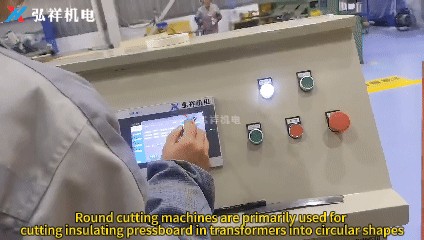
What power industry buyers really need from layer-pressed wood equipment
When users search for the best layer-pressed wood equipment for power industry production, they are usually trying to answer a practical purchasing question: which machine configuration can support stable insulation component manufacturing without creating quality risk or unnecessary cost. This is especially important in transformer production, where insulating laminated wood parts must meet strict expectations for structural reliability, dimensional consistency, and process repeatability.
Different stakeholders look at this from different angles:
- Engineers and technical evaluators want precision, process stability, and compatibility with insulation materials.
- Operators and maintenance teams care about ease of use, setup efficiency, machine reliability, and service access.
- Procurement and financial approvers focus on total cost of ownership, production efficiency, and investment return.
- Quality and safety managers need predictable output, traceable processes, and reduced defect risk.
- Business decision-makers want equipment that supports expansion, export competitiveness, and long-term manufacturing capacity.
This means the most suitable solution is usually the one that balances technical performance with commercial value. In the power industry, layer-pressed wood equipment must do more than cut material. It must support insulation manufacturing standards, reduce production variation, and fit into the wider transformer assembly workflow.
Which equipment type usually fits transformer insulation production best?
For most transformer and electrical insulation manufacturers, the best-fit layer-pressed wood processing equipment is a high-precision, application-specific production solution rather than a generic woodworking machine. Electrical insulating laminated wood requires more controlled processing than standard wood-based products because the end use is functional insulation, not decorative fabrication.
In many cases, the ideal setup includes:
- Precision cutting equipment for stable sizing and clean edges
- CNC machining or profiling equipment for repeatable complex part geometries
- Pressing or forming-related support systems where the product structure requires process integration
- Dust collection and cleanliness support to improve product quality and operator safety
- Material handling and batch management options for higher-volume production environments
If production mainly involves standardized transformer insulation parts, a dedicated automated or semi-automated line is often the best choice. If production includes frequent model changes, small batches, or custom projects, a flexible machine configuration with easier program switching may be more suitable. In short, the best equipment depends on whether your factory prioritizes volume efficiency, precision customization, or a balance of both.
How to judge whether a machine is truly suitable for power industry manufacturing
Buyers often compare machines by speed, power, or price, but these metrics alone do not show whether the equipment is a good fit for transformer insulation production. A more useful evaluation method is to review the machine against the actual production demands of the power industry.
Key evaluation points include:
1. Material compatibility
The equipment should be designed to process electrical insulating cardboard, insulating laminated wood, and related insulation parts without causing edge damage, delamination, excessive burrs, or unstable dimensions. Machines optimized for ordinary panel processing may not deliver acceptable results for insulation materials.
2. Machining precision and consistency
In transformer production, consistency across batches matters as much as single-piece accuracy. Equipment should maintain stable tolerances, clean processing performance, and reliable repeatability under continuous production conditions.
3. Automation level
Automation can reduce labor dependence, improve efficiency, and lower the risk of operator-related variation. However, the right automation level should match your plant’s order structure, staffing capability, and budget. More automation is not always better if it adds complexity without improving throughput in your actual use case.
4. Equipment durability and uptime
Power industry production often values reliability over theoretical peak speed. A machine with stable daily performance and easy maintenance usually creates better long-term value than a faster system with frequent downtime.
5. Process integration ability
The best equipment should fit your overall workflow, from incoming material handling to finished insulation part output. If the machine creates bottlenecks in loading, programming, inspection, or downstream assembly, its real production value will be limited.
6. Supplier support capability
Equipment selection is not only about the machine itself. It also depends on whether the supplier can provide installation, training, spare parts, technical adjustment, and ongoing service. This is especially important for export projects and factories that need rapid commissioning.
What problems can the wrong equipment create?
Choosing unsuitable layer-pressed wood equipment can create a chain of problems that affects quality, cost, and project schedules. Many factories only discover these issues after installation, when production targets are already under pressure.
Common risks include:
- Inconsistent dimensions that affect transformer assembly quality
- Poor surface or edge quality that increases rework
- Material waste caused by inaccurate cutting or unstable processing
- Excessive manual intervention that raises labor cost
- Frequent stoppages due to weak machine reliability
- Limited flexibility when customer specifications change
- Delayed return on investment because actual output falls below expectation
For procurement teams and management, this is why initial purchase price should never be the only decision factor. A lower-cost machine can become more expensive over time if it increases scrap rates, slows production, or fails to meet insulation processing requirements.
What level of automation makes the most sense?
The best automation level depends on your production model. For many power industry manufacturers, the ideal choice is not full automation at any cost, but practical automation that improves consistency and lowers operating risk.
A semi-automatic solution may be best if:
- Your product range changes frequently
- You handle many customized transformer insulation parts
- You want lower initial investment with good flexibility
- Your team is experienced in manual setup and process control
A more automated solution may be best if:
- You run stable, repeat-order production
- You need higher throughput and lower labor dependence
- You want better process standardization across shifts
- You are scaling production for domestic or export demand
For many growing factories, a modular approach is often the most strategic option. It allows the business to start with a configuration that matches current output and upgrade later as order volume and technical requirements increase.
How buyers should compare suppliers, not just machine specifications
In industrial equipment purchasing, supplier capability is often as important as the machine configuration itself. A technically good machine can still become a poor investment if the supplier cannot support commissioning, application optimization, and after-sales service.
When comparing suppliers, buyers should ask:
- Do they understand transformer and electrical insulation production?
- Can they support processing of insulating cardboard, laminated wood, and insulation parts in one business scope?
- Do they offer R&D, design, manufacturing, installation, training, and after-sales service?
- Do they have export experience and the ability to support international customers?
- Can they customize equipment for specific production scenarios?
- Do they help reduce long-term operating cost, not just sell a machine?
Gaomi Hongxiang Electromechanical Technology Co., Ltd. stands out in this area because it integrates R&D and design, production, sales, installation, training, and after-sales service. Its focus on power transformer assembly and manufacturing services, along with the processing of electrical insulating cardboard, insulating laminated wood, and insulating parts, gives customers a more application-oriented equipment partnership instead of a generic machinery supply relationship.
Why application-specific equipment creates better long-term value
The power industry does not benefit most from general-purpose equipment that must be constantly adapted. It benefits most from equipment designed around actual insulation manufacturing tasks. This improves not only production efficiency, but also inspection performance, operator learning speed, and process predictability.
Application-specific equipment typically delivers stronger value through:
- Higher first-pass yield because the machine better matches the material and part requirements
- Lower waste due to stable cutting and machining performance
- Shorter training time because workflows are designed for the target application
- Better product consistency across operators and shifts
- Improved scalability when production volume grows
- Lower total ownership cost over the machine lifecycle
This is especially important for manufacturers supplying demanding domestic and export markets, where stable quality and reliable delivery performance directly affect competitiveness.
A practical selection checklist for decision-makers
If your team is currently evaluating transformer electrical layer-pressed wood processing equipment, the following checklist can help simplify the decision process:
- Define the exact insulation materials and part types you need to process
- Confirm required precision, output, and batch size
- Evaluate whether your production is standard, custom, or mixed
- Choose an automation level that matches labor conditions and order volume
- Estimate total cost of ownership, not just purchase cost
- Review maintenance accessibility and spare parts support
- Assess supplier experience in transformer and insulation manufacturing
- Ask whether the solution can be customized or upgraded later
- Check training, installation, and after-sales response capability
- Compare expected yield improvement and waste reduction potential
This approach helps both technical and commercial stakeholders make a more balanced decision. It also reduces the risk of buying equipment that looks competitive on paper but performs poorly in real production.
Conclusion: the best-fit equipment is the one that improves quality, efficiency, and control together
So, which layer-pressed wood equipment fits power industry production best? In most cases, the answer is a high-precision, reliable, and application-specific solution built for transformer insulation manufacturing rather than standard woodworking. The best equipment should process insulating laminated wood and related insulation materials accurately, support stable batch production, match the right level of automation, and come from a supplier capable of long-term technical support.
For buyers, engineers, and factory managers, the smartest decision is to evaluate equipment based on production fit, insulation quality, lifecycle cost, and supplier capability as one complete package. When these factors are aligned, the result is not just a machine purchase, but a stronger and more efficient power industry manufacturing system.
NAVIGATION
MESSAGE
Request A Quote?