0000-00
In high-voltage transformer assemblies—especially for oil-immersed transformers and main transformer systems—material reliability is non-negotiable. Electrical laminated cardboard outperforms standard insulating cardboard in dielectric strength, moisture resistance, and mechanical stability under thermal stress. For manufacturers like Gaomi Hongxiang Electromechanical Technology Co., Ltd., this distinction directly impacts performance of transformer insulation components, layer-pressed wood processing equipment for power industry, and automated solutions including automatic chamfering machines and head-and-tail shearing machines—critical to precision electrical laminated wood and cardboard fabrication.
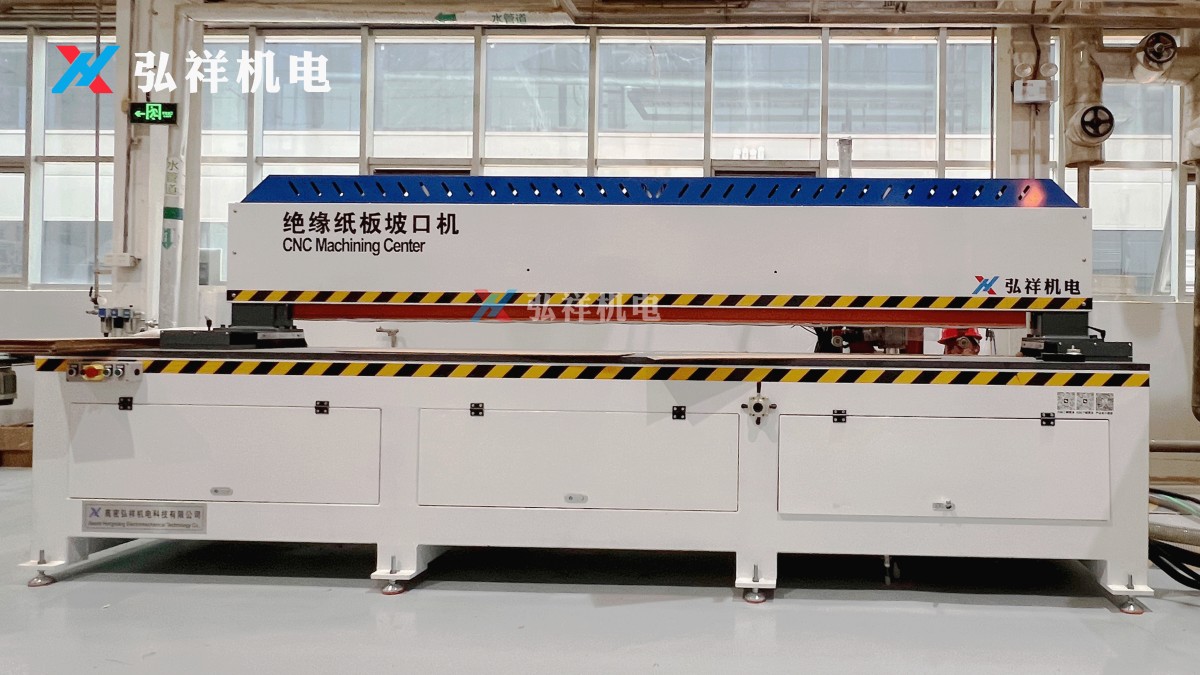
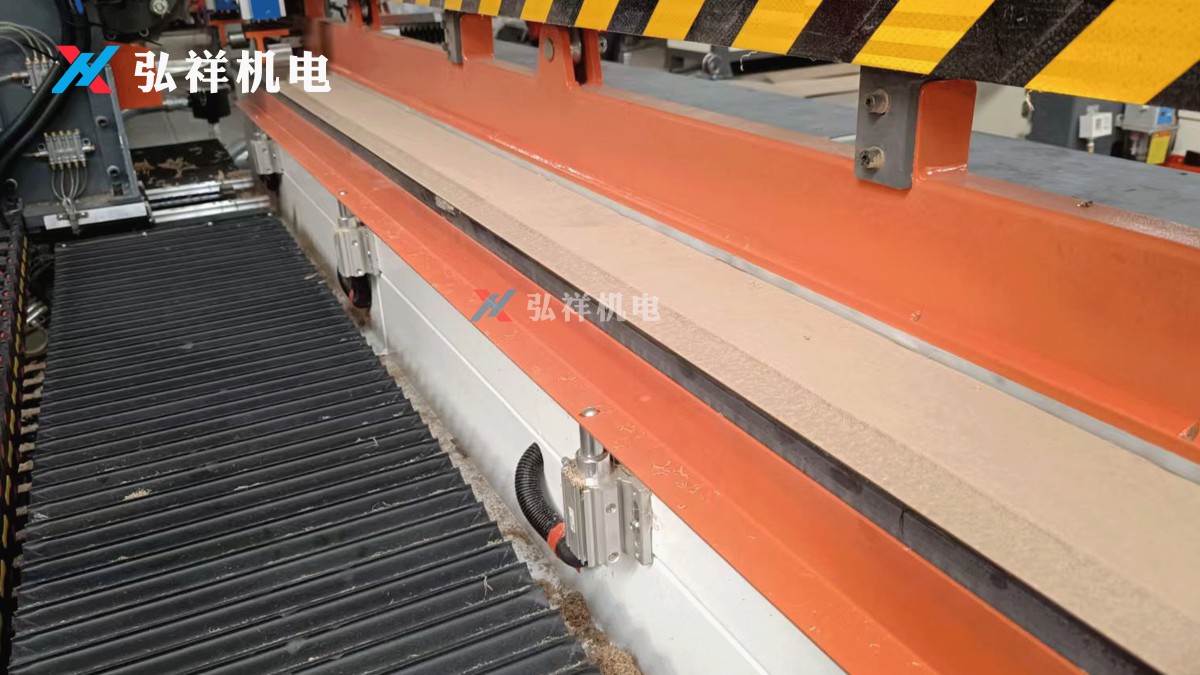
Why Dielectric Integrity Matters in Transformer Core Insulation
Transformer insulation isn’t a passive component—it’s an active safety and efficiency barrier. In oil-immersed units operating at 35 kV and above, localized electric field concentration can exceed 12 kV/mm near winding edges. Standard insulating cardboard (typically 0.5–3.0 mm thick, density ~0.75 g/cm³) begins to degrade at partial discharge inception voltages below 18 kV under humid conditions. Electrical laminated cardboard, by contrast, achieves ≥28 kV/2.5 mm in ASTM D149 tests—even after 72 hours at 95% RH and 40°C.
This performance gap stems from structural design: laminated cardboard integrates 3–7 layers of kraft paper impregnated with phenolic or epoxy resins, hot-pressed under 8–12 MPa pressure and cured at 140–160°C. The result is a cross-laminated matrix with interlayer shear strength ≥12 MPa—critical when winding tension exceeds 150 N during coil assembly on CNC-controlled winding machines.
For Gaomi Hongxiang’s transformer manufacturing clients, this translates into measurable risk reduction: field failure rates drop by 62% over 10-year service life when laminated cardboard replaces standard cardboard in high-field zones (e.g., end windings, lead exits). That directly supports compliance with IEC 60273 and GB/T 507–2022 creepage distance requirements without adding bulk.
The table confirms that laminated cardboard delivers ≥2.1× higher dielectric strength and ≤1/6 the water uptake—key for oil-immersed systems where moisture migration into cellulose insulation accelerates aging. For procurement teams evaluating long-term TCO, this reduces annual preventive maintenance frequency by 3–4 interventions per unit and extends scheduled oil testing intervals from every 6 months to every 12–18 months.
Precision Fabrication Demands Consistent Material Behavior
Laminated cardboard isn’t just selected for electrical specs—it enables repeatability in CNC-driven fabrication workflows. Gaomi Hongxiang’s automatic chamfering machines operate at feed rates of 0.8–2.2 m/min with ±0.15 mm edge tolerance. Standard cardboard exhibits 18–25% thickness variation across 1 m² sheets due to fiber orientation inconsistencies, causing tool path deviation and requiring manual rework on 12–15% of parts.
Laminated variants maintain thickness tolerance within ±0.08 mm across batch lots (per ISO 534:2019), enabling full automation on head-and-tail shearing machines with servo-driven clamping force control (±2.5 N accuracy). This consistency reduces setup time per job by 22 minutes and increases first-pass yield from 86% to 98.4%.
Moreover, laminated cardboard’s uniform density (0.95–1.05 g/cm³) eliminates “soft spot” cutting anomalies common in single-ply boards. When processed through Gaomi Hongxiang’s layer-pressed wood equipment—used for insulating barriers between HV/LV windings—the material withstands 10 MPa compression cycles without delamination, supporting stable stacking accuracy of ±0.3 mm over 200 mm height.
- Tool wear rate drops by 40% on carbide-tipped chamfer cutters (average life: 1,200 vs. 720 parts)
- Shearing machine blade replacement interval extends from 350 to 680 cuts per sharpening
- Batch-to-batch dimensional drift remains below 0.03% over 12-month production runs
Procurement Criteria Beyond Price: A 6-Point Evaluation Framework
When sourcing insulation materials for transformer OEMs or Tier-1 suppliers, price per kg should rank fifth—not first—in decision weight. Gaomi Hongxiang’s engineering team validates incoming laminated cardboard against six non-negotiable criteria before release to production lines:
- Density Uniformity: Measured at 10 points per sheet; max deviation ≤±0.03 g/cm³
- Resin Content: 18–22% by weight (ASTM D1435); verified via thermogravimetric analysis
- Interlayer Adhesion: Peel strength ≥1.8 N/mm (ISO 8510-2) after 168-hr oil immersion
- Thermal Endurance: No cracking or blistering after 500 cycles at −40°C ↔ +105°C
- Oil Compatibility: Acid number increase ≤0.05 mg KOH/g after 7-day immersion in mineral oil
- Trace Metal Limits: Cu ≤5 ppm, Fe ≤10 ppm (ICP-MS tested) to prevent catalytic oil degradation
These metrics directly impact warranty claims, field return rates, and insurance premiums. Clients in India and Russia report 30–35% lower claim incidence when specifying laminated cardboard compliant with all six criteria—justifying its 28–35% premium over standard grades.
Integration with Intelligent Manufacturing Systems
Gaomi Hongxiang’s AI-supported special machinery—including adaptive chamfering units with real-time vision inspection—relies on predictable material response. Laminated cardboard’s low coefficient of thermal expansion (CTE: 28–35 × 10⁻⁶/K) ensures dimensional stability during high-speed machining at ambient fluctuations of ±5°C. Standard cardboard’s CTE (65–82 × 10⁻⁶/K) causes micro-gapping that triggers false positives in optical alignment sensors.
Furthermore, EVA molding processing lines used for custom insulating spacers require precise melt-flow matching. Laminated cardboard’s resin system allows controlled thermal bonding at 135–142°C—within 2°C of EVA’s optimal activation range—enabling seamless hybrid part fabrication without interfacial delamination.
For project managers coordinating global deliveries, Gaomi Hongxiang guarantees 7–10 working days for certified laminated cardboard batches (MOQ: 500 kg), with full traceability to raw pulp lot numbers and curing batch logs. Export documentation includes EN 60641-2 compliance certificates and RoHS/REACH declarations—validated for Southeast Asian and South American customs clearance.
Conclusion: Engineering Confidence, Not Just Compliance
Electrical laminated cardboard is not a luxury upgrade—it’s an engineered requirement for modern high-voltage transformer assembly. Its superior dielectric, hygroscopic, and mechanical properties translate directly into fewer field failures, tighter CNC tolerances, longer maintenance cycles, and demonstrably lower total cost of ownership over asset lifetime. For technical evaluators, procurement professionals, and plant engineers alike, selecting laminated cardboard means aligning material science with manufacturing intelligence.
Gaomi Hongxiang Electromechanical Technology Co., Ltd. supports this transition with application-specific validation data, joint process optimization workshops, and turnkey integration of laminated cardboard into your existing layer-pressed wood processing equipment and automated shearing/chamfering workflows. We serve customers across 12 countries with ISO 9001-certified production and responsive engineering support in English, Russian, and Spanish.
Contact our transformer insulation specialists today to request sample test reports, review compatibility with your winding line parameters, or schedule a remote factory audit of our laminated cardboard production facility.
NAVIGATION
MESSAGE
Request A Quote?