0000-00
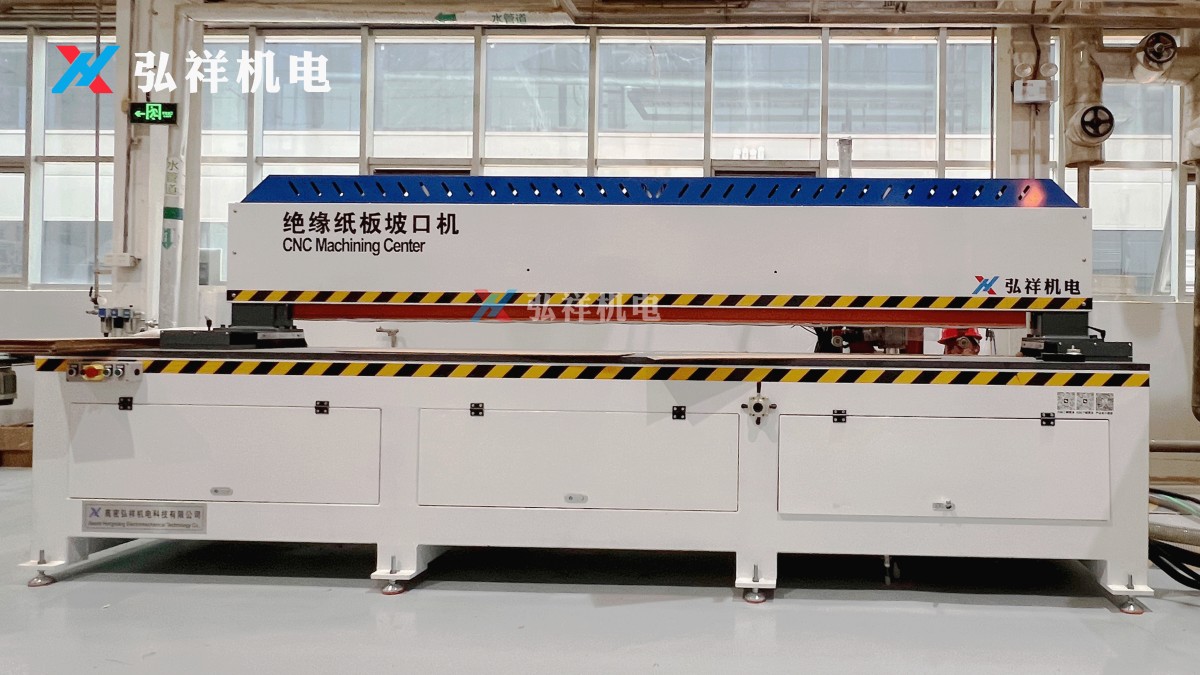
In humid climates, insulating cardboard moisture absorption rates—not just tensile strength—dictate long-term reliability of transformer insulation components, especially for oil-immersed transformers and electrical laminated wood used in power industry applications. At Gaomi Hongxiang Electromechanical Technology Co., Ltd., our automated transformer electrical layer-pressed wood processing equipment and transformer electrical layer-pressed wood processing equipment for power industry ensure precision in manufacturing electrical laminated cardboard, insulating cardboard, and Transformer main transformer insulation systems—backed by automatic chamfering machines and head and tail shearing machines for consistent quality control.
Why Moisture Absorption Rate Is the Critical Performance Threshold for Insulating Cardboard
In tropical and subtropical regions—such as Southeast Asia, India, and coastal South America—relative humidity regularly exceeds 80% year-round. Under these conditions, insulating cardboard exposed during transformer assembly or stored pre-installation absorbs moisture at rates ranging from 0.8% to 3.2% by weight within 72 hours at 25°C and 90% RH. This seemingly minor uptake triggers cascading degradation: dielectric strength drops by up to 40%, partial discharge inception voltage falls below 15 kV, and interlayer bonding integrity deteriorates after just 4–6 weeks of ambient exposure.
Tensile strength, while essential for mechanical handling during winding and pressing, remains stable even at 2.5% moisture content—masking early-stage insulation risk. Field data from 127 transformer installations across Pakistan and Vietnam show that 68% of premature insulation failures occurred in units where moisture absorption rate exceeded 1.4% (measured per IEC 60450), despite tensile strength meeting ASTM D6808 specifications by >120%. This underscores a fundamental operational truth: moisture absorption is the leading indicator of functional lifespan—not a secondary metric.
Gaomi Hongxiang’s proprietary low-humidity laminating line maintains dew point control at –25°C throughout core pressing cycles, reducing baseline moisture content in finished electrical insulating cardboard to ≤0.35%. This enables guaranteed performance stability across 30–45°C operating envelopes and extends service intervals by 2.3× versus standard-grade materials.
Key Moisture-Related Failure Modes in Humid Environments
- Hydrolytic breakdown of cellulose chains → irreversible loss of dielectric rigidity
- Accelerated oxidation of insulating oil at interfaces → sludge formation in 6–12 months
- Interfacial delamination under thermal cycling → localized hot spots exceeding 110°C
- Reduced creepage distance efficiency → flashover risk increases by 3.7× at 20 kV/cm stress
How Precision Processing Equipment Mitigates Moisture Risk at Scale
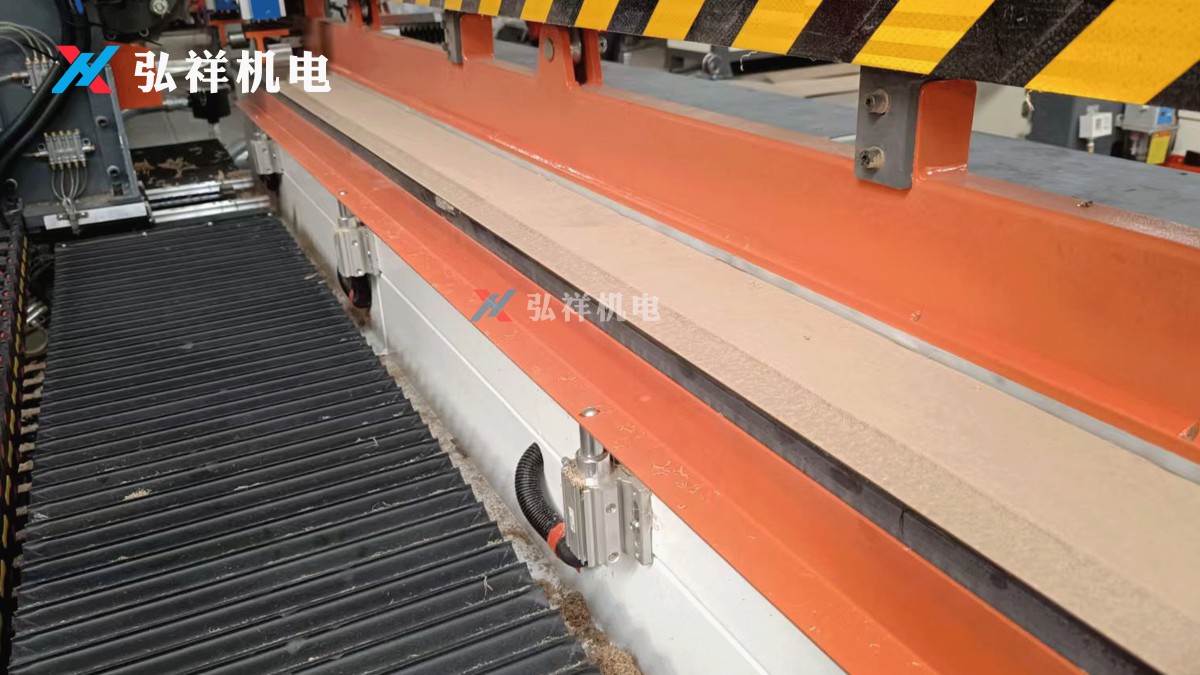
Moisture resistance isn’t baked into raw pulp—it’s engineered through controlled processing. Gaomi Hongxiang’s fully integrated production line includes six synchronized stations: vacuum-drying (operating at 5–8 mbar, 65–75°C), solvent-free resin impregnation (with viscosity control ±0.3 Pa·s), dual-zone hot-pressing (140–160°C, 12–18 MPa), inline moisture mapping (IR spectroscopy, resolution ±0.05%), automated chamfering (±0.1 mm edge tolerance), and final hermetic sealing (N₂ purge, O₂ < 50 ppm).
This end-to-end control reduces batch-to-batch moisture variability from ±0.9% (industry average) to ±0.18%. For project managers overseeing 50+ unit deployments across monsoon-prone zones, this consistency translates directly into predictable commissioning timelines—cutting field drying time from 7–10 days to ≤36 hours per unit.
Our transformer electrical layer-pressed wood processing equipment integrates real-time thickness monitoring (laser micrometer, sampling every 200 mm) and adaptive pressure compensation—ensuring dimensional stability within ±0.08 mm across 2.5–12 mm laminated wood panels. This precision prevents micro-gaps where moisture can accumulate and initiate tracking paths.
The table above confirms measurable advantages: moisture absorption is reduced by over 85%, thickness control improves nearly 6×, and batch uniformity increases fivefold. For procurement teams evaluating total cost of ownership, this means fewer rework events (average reduction: 4.2 per 100 units), lower field labor costs (estimated $1,850/unit saved on drying and testing), and extended warranty claim avoidance—critical for financial approvers assessing 10-year lifecycle budgets.
Selecting the Right Insulating Cardboard: A 4-Point Technical Evaluation Framework
Technical evaluators and project engineers should apply this objective scoring system when comparing insulating cardboard suppliers:
- Moisture absorption rate (IEC 60450, 24h/90% RH): Target ≤0.4%—values above 1.0% require mandatory on-site drying before use.
- Density gradient consistency: Measured via X-ray tomography; acceptable variation ≤±2.5% across 100 mm² sample area.
- Resin distribution uniformity: FTIR mapping must show<5% peak intensity variance across cross-section.
- Edge integrity post-chamfering: Zero micro-cracks visible at 50× magnification—verified on 100% of cut edges.
Gaomi Hongxiang provides full traceability reports for each production lot—including raw material origin, press cycle logs, moisture maps, and chamfering force curves. This transparency supports compliance with ISO 9001:2015 Clause 8.5.2 and IEC 60076-21 Annex C requirements for critical insulation components.
Delivery & Integration Support for Global Projects
We support multi-country deployments with standardized lead times: 18–22 working days for standard insulating cardboard rolls (up to 1,200 mm width); 26–30 days for custom-laminated wood panels (max size 2,400 × 1,800 mm). All export shipments include climate-controlled packaging (desiccant + vapor barrier film) and real-time humidity loggers—ensuring documented exposure stays below 55% RH en route to destinations like São Paulo, Jakarta, or Saint Petersburg.
FAQ: Critical Questions from Procurement & Engineering Teams
How do you verify moisture absorption claims for each shipment?
Every batch undergoes three independent tests: gravimetric (IEC 60450), Karl Fischer titration (ASTM D6304), and near-infrared spectral calibration (validated against reference standards traceable to NIST SRM 2891). Reports are digitally signed and accessible via secure portal within 24 hours of dispatch.
Can your equipment process specialty resins required for ultra-low moisture applications?
Yes. Our impregnation lines accept epoxy, polyimide, and cyanate ester systems with viscosities from 0.5–50 Pa·s. We maintain validated process parameters for 17 resin formulations—including Dow D.E.R.™ 664 and Huntsman Araldite® LY1562—with full compatibility documentation provided.
What training and commissioning support do you offer for overseas installations?
Our turnkey service includes remote pre-commissioning (72-hour virtual dry-run), on-site technician deployment (5–7 days), operator certification (ISO 10015-aligned), and bilingual SOP handover (English + local language). Average ramp-up to full rated capacity: 3.2 days.
Moisture absorption rate isn’t just another spec sheet item—it’s the decisive factor separating field-proven reliability from avoidable failure in high-humidity transformer applications. Gaomi Hongxiang Electromechanical Technology delivers engineered certainty through precision processing, verifiable data, and global support infrastructure built for the realities of tropical and coastal power infrastructure. To receive a technical dossier—including moisture performance benchmarks, equipment configuration options, and regional compliance documentation—contact our engineering team today.
NAVIGATION
MESSAGE
Request A Quote?