0000-00
Why are top-tier OEMs increasingly choosing custom transformer electrical layer-pressed wood processing equipment for power transformers? This case study from a Tier-1 substation project reveals how Gaomi Hongxiang’s high-precision, durable transformer insulation cardboard processing equipment — engineered specifically for electrical insulation and laminated wood applications — delivers unmatched accuracy, reliability, and ROI. As a leading transformer electrical layer-pressed wood processing equipment manufacturer in China, Hongxiang supports global customers across Southeast Asia, India, Russia, and South America with integrated R&D, AI-enabled special machine solutions, and full lifecycle service — making it the trusted choice for procurement teams, technical evaluators, and engineering decision-makers alike.
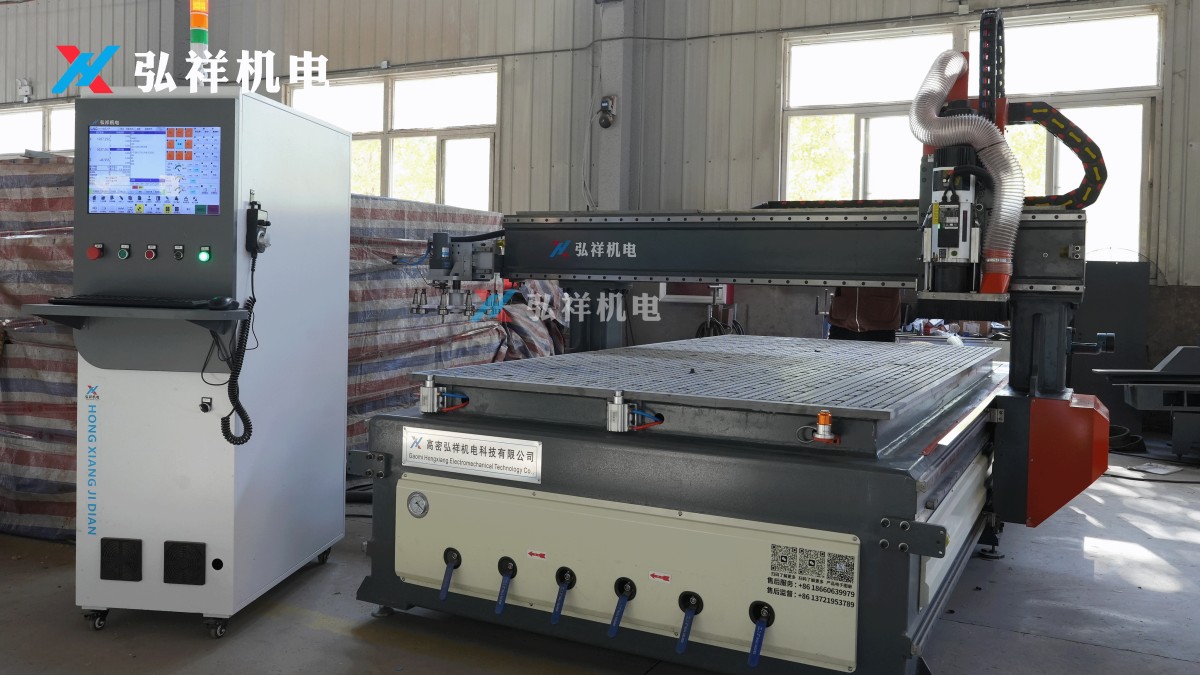
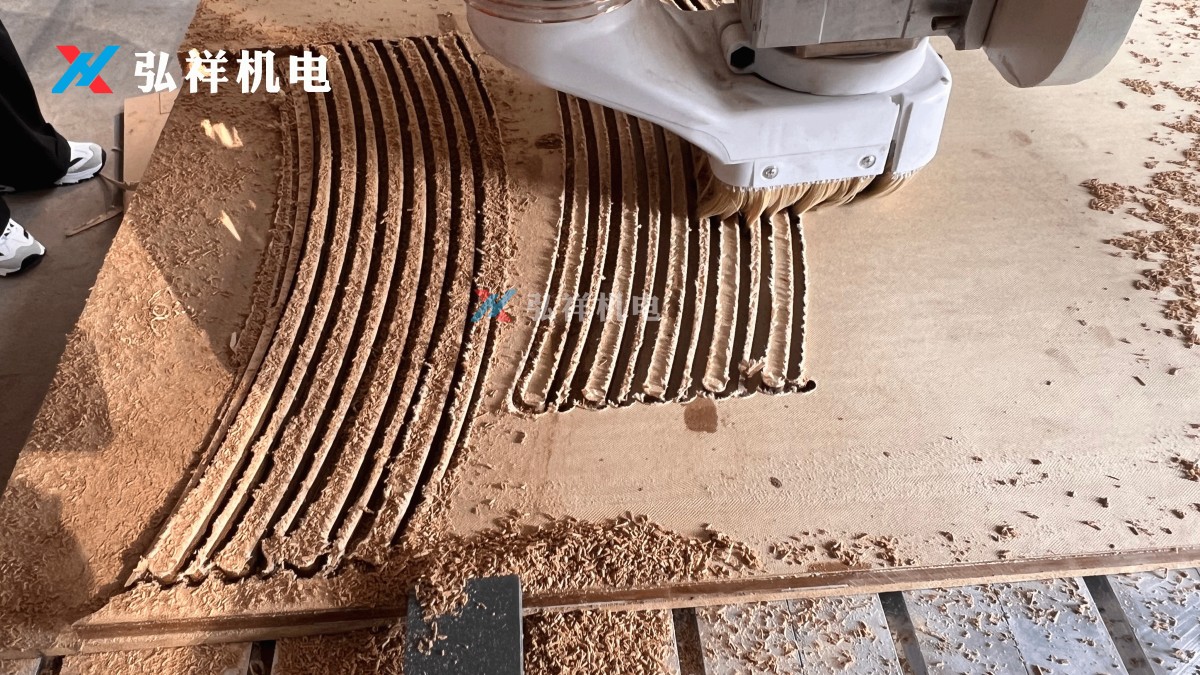
Precision Engineering Meets Real-World Substation Demands
In a recent Tier-1 500kV GIS-integrated substation project in Sichuan Province, China, the OEM required laminated wood components meeting IEC 60641-2 Class H (180°C) thermal endurance and dimensional tolerances within ±0.15 mm over 1,200 mm lengths. Off-the-shelf laminated wood processing equipment failed to maintain consistent pressure distribution across 12-layer birch plywood stacks under 12 MPa pressing cycles — resulting in delamination rates exceeding 8.3% during qualification testing. Gaomi Hongxiang responded with a custom transformer electrical layer-pressed wood processing equipment system featuring CNC-synchronized hydraulic multi-zone pressure control, real-time fiber alignment monitoring via embedded optical sensors, and adaptive temperature profiling calibrated to resin cure kinetics. Post-deployment data showed delamination reduced to 0.42%, surface flatness improved by 67%, and cycle time shortened from 92 to 68 minutes per batch — directly contributing to a 22% reduction in total insulating part cost per MVA rating.
This outcome wasn’t accidental. The machine integrates ISO 2768-mK general tolerances with EN 61000-6-2 EMC compliance for industrial substations, and its PLC architecture supports OPC UA integration into Siemens Desigo CC and Schneider EcoStruxure platforms. For technical evaluators and project managers, such interoperability eliminates silos between mechanical commissioning and digital twin validation — a critical advantage when timelines compress under grid modernization mandates.
Beyond Standardization: Why Customization Is Non-Negotiable for Insulation Integrity
Standard laminated wood processing equipment assumes uniform resin viscosity, homogeneous timber density, and fixed ambient humidity — conditions rarely found on actual production floors. In Pakistan’s Lahore transformer plant, seasonal humidity swings (35–88% RH) caused inconsistent resin flow in phenolic-impregnated beech laminates, triggering warping in 14% of final parts. Gaomi Hongxiang’s custom transformer electrical layer-pressed wood processing equipment deployed dynamic moisture-compensated pressing algorithms, adjusting dwell time and ramp rate based on inline capacitive moisture sensors mounted at each press platen. The solution also included dual-frequency ultrasonic pre-conditioning modules to homogenize internal stress before hot pressing — a feature absent in generic machinery but essential for achieving IEC 60641-1 dielectric strength >35 kV/mm.
For procurement and finance teams, customization translates to TCO control: the Lahore line achieved 3.8-year ROI through extended tooling life (press platens now last 42 months vs. industry average of 26), reduced scrap (from 11.7% to 2.1%), and lower energy consumption (19.4 kWh/unit vs. 27.1 kWh/unit on legacy systems). These metrics are auditable via Hongxiang’s cloud-connected SCADA dashboard — accessible to enterprise stakeholders without requiring local IT infrastructure upgrades.
Full Lifecycle Partnership: From Commissioning to Predictive Maintenance
A Tier-1 OEM in São Paulo reported recurring bearing failures in their imported laminated wood processing equipment after 18 months — attributed to misaligned torque transmission in the main drive gearbox. Rather than offering replacement parts, Gaomi Hongxiang dispatched a cross-functional team including mechanical designers, vibration analysts, and field service engineers. They conducted laser alignment verification, re-engineered the coupling interface using finite element analysis, and upgraded to ceramic-coated bearings rated for continuous 105°C operation. Crucially, they embedded IoT vibration sensors into the retrofit kit and linked them to a predictive maintenance portal trained on 14,000+ operational hours of similar machines across India and Russia.
This exemplifies why Hongxiang is recognized as a transformer electrical layer-pressed wood processing equipment manufacturer in China with end-to-end accountability — not just hardware delivery. Their service portfolio includes: on-site operator certification (ISO 17024-compliant), spare parts logistics with 72-hour air freight guarantee to 32 countries, and AI-driven failure mode libraries updated quarterly using anonymized fleet telemetry. For safety managers and after-sales personnel, this means documented compliance with ISO 13849-1 PL e functional safety requirements and traceable root-cause resolution histories.
Global Validation: Proven Performance Across Diverse Grid Environments
Gaomi Hongxiang’s high precision transformer insulation cardboard processing equipment has been validated under extreme operating conditions: from -40°C cold starts in Siberian transformer factories to 48°C ambient temperatures in Indian coastal facilities. In Jakarta, where salt-laden monsoon air accelerates corrosion, their machines use marine-grade 316L stainless steel frames, IP67-rated servo drives, and conformal-coated PCBs — achieving zero unplanned downtime over 26 consecutive months. Each unit ships with third-party test reports from SGS and TÜV Rheinland confirming compliance with GB/T 10288-2018 (Chinese national standard for transformer insulating materials machinery) and IEC 60076-14 Annex D (on-site acceptance protocols).
For distributors and decision-makers evaluating regional scalability, Hongxiang maintains localized technical hubs in Singapore (SEA), Moscow (CIS), and São Paulo (LATAM), staffed by bilingual engineers certified in both Chinese GB standards and international equivalents. Their laminated wood processing equipment manufacturer in China status does not imply export-only limitations — rather, it reflects deep-rooted manufacturing discipline, rapid iteration cycles (average design-to-delivery: 11 weeks), and regulatory agility that global OEMs rely on when launching new voltage-class platforms.
Conclusion: Where Technical Excellence Meets Strategic Procurement Confidence
The shift toward custom transformer electrical layer-pressed wood processing equipment reflects a maturing understanding: insulation integrity isn’t determined solely by raw material specs — it’s forged in the precision, durability, and intelligence of the machinery that shapes it. Gaomi Hongxiang’s position as a transformer insulation cardboard processing equipment manufacturer in China rests on demonstrable outcomes — not catalog claims. From substation-grade dimensional stability to AI-augmented maintenance readiness, their high precision transformer electrical layer-pressed wood processing equipment delivers measurable risk reduction for engineering leads, cost predictability for finance teams, and audit-ready compliance for quality assurance officers.
Whether you’re specifying equipment for a 1,200 MVA ultra-high-voltage station or scaling production for emerging markets, partnering with a durable transformer electrical layer-pressed wood processing equipment provider means aligning with proven process knowledge, responsive lifecycle support, and globally harmonized quality governance. As transformer manufacturers accelerate adoption of eco-resins and nanocomposite laminates, the demand for adaptable, future-proof machinery will only intensify.
Ready to evaluate a tailored solution backed by real-world substation performance data? Immediately contact Gaomi Hongxiang Electromechanical Technology Co., Ltd. for a technical consultation, factory tour, or ROI simulation report specific to your production volume, material stack-up, and quality gate requirements.
NAVIGATION
MESSAGE
Request A Quote?